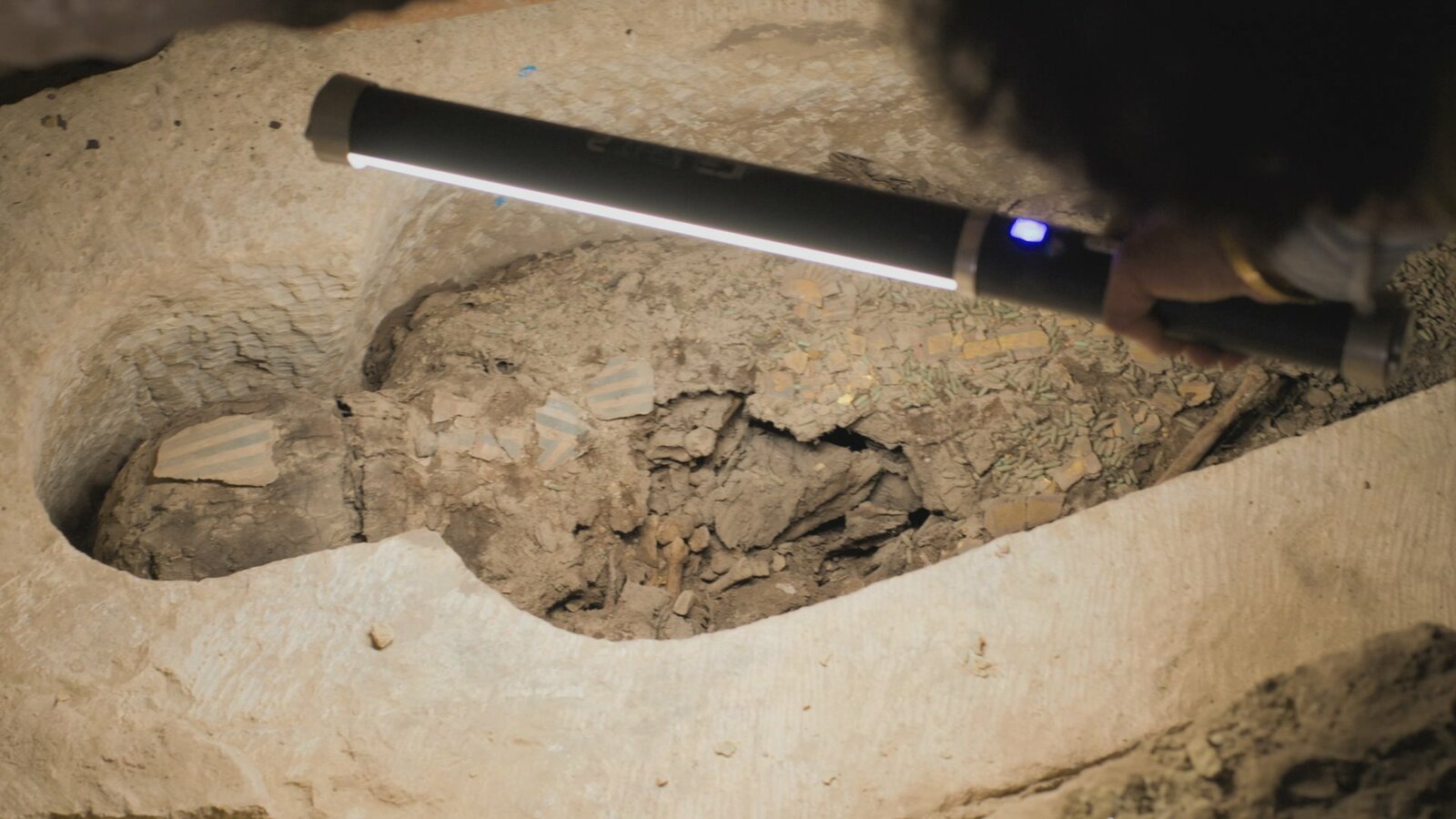
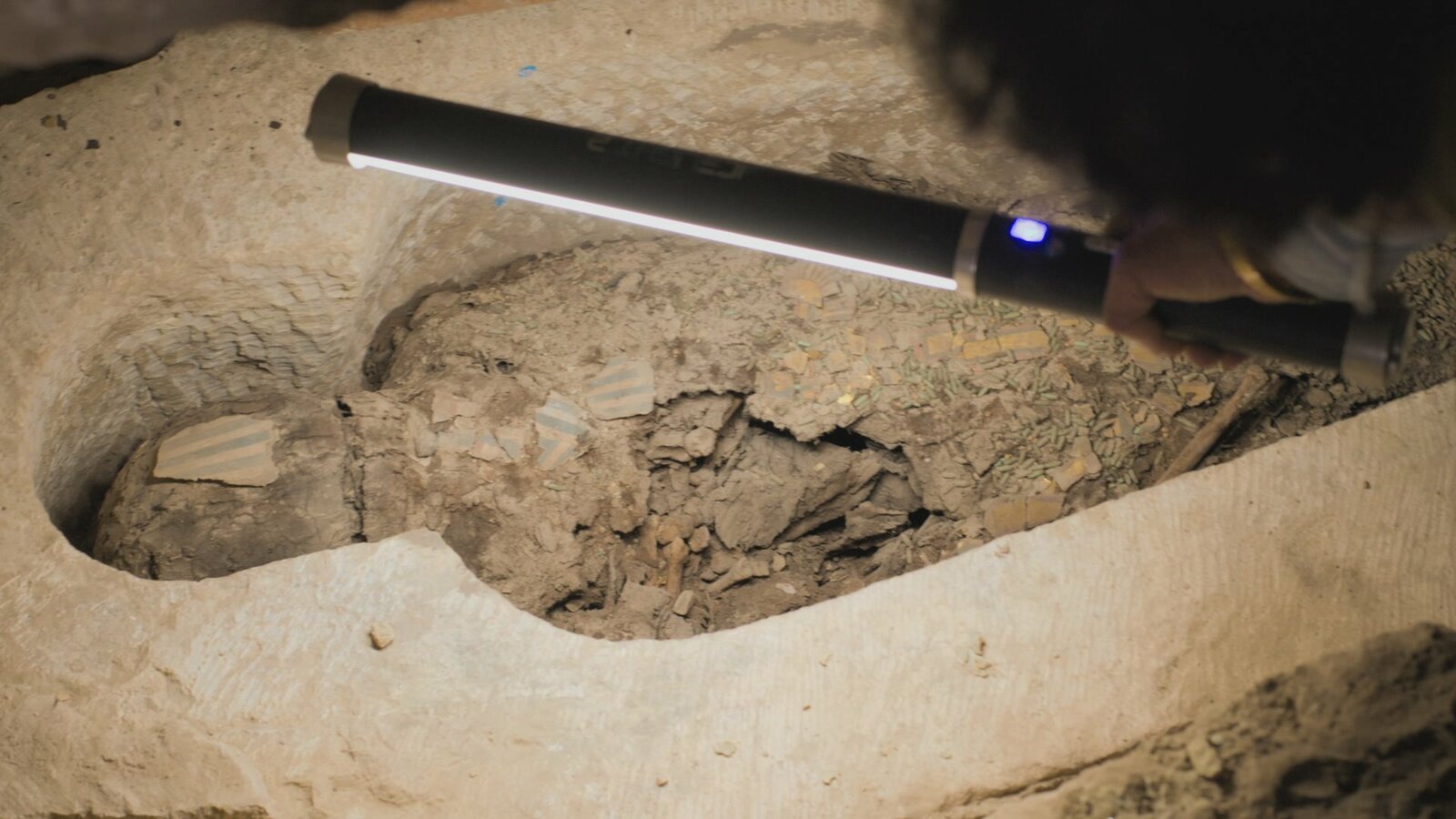
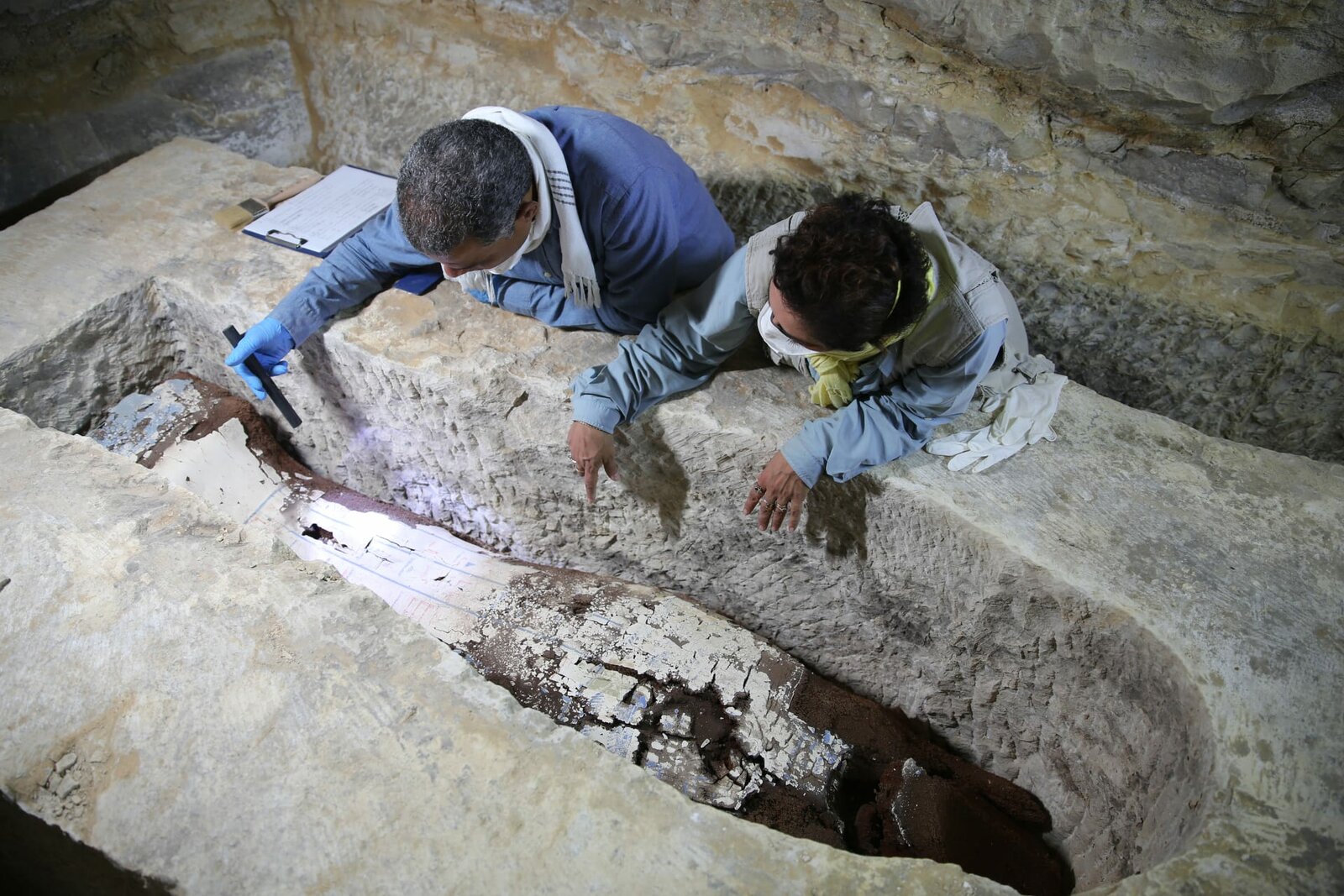
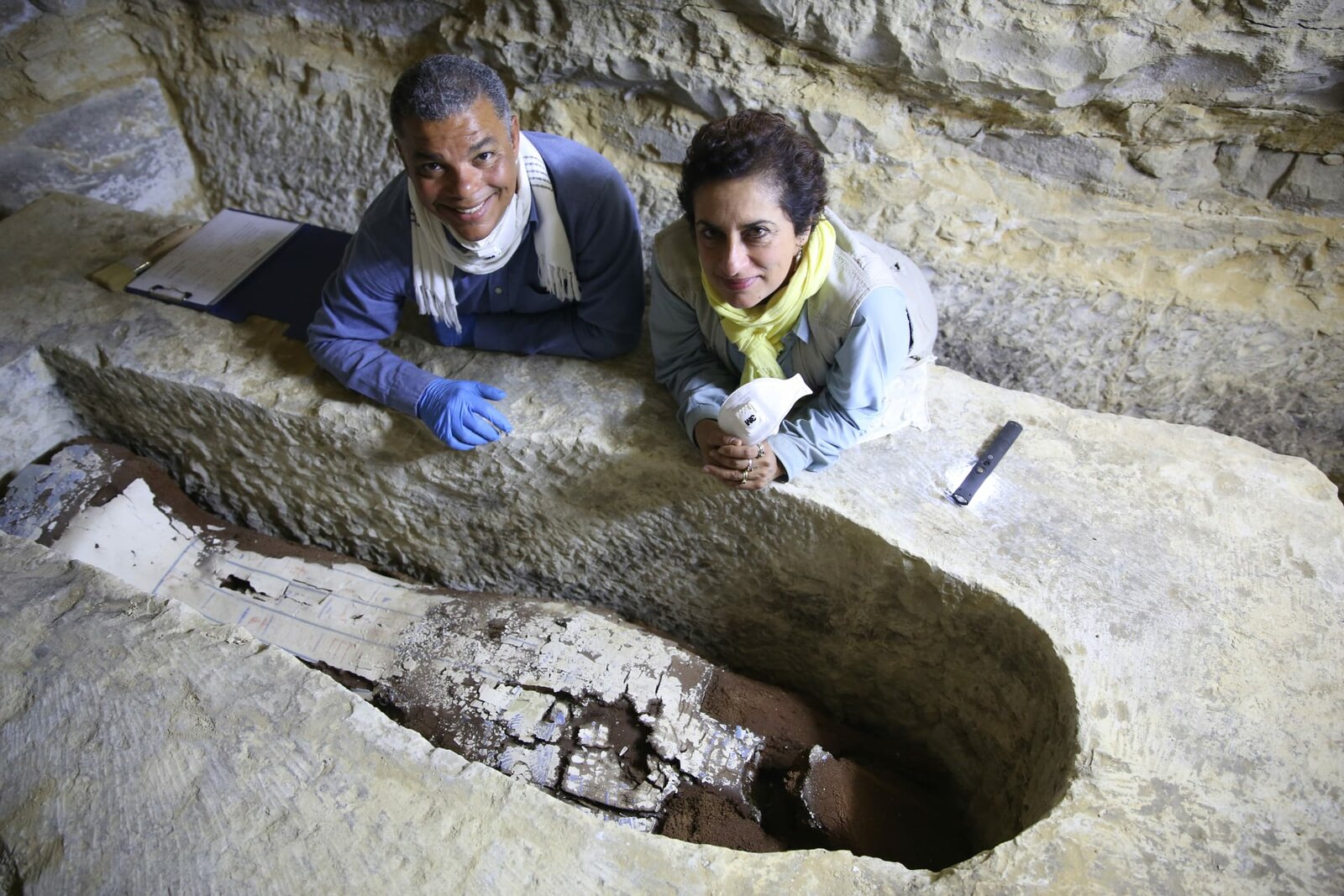
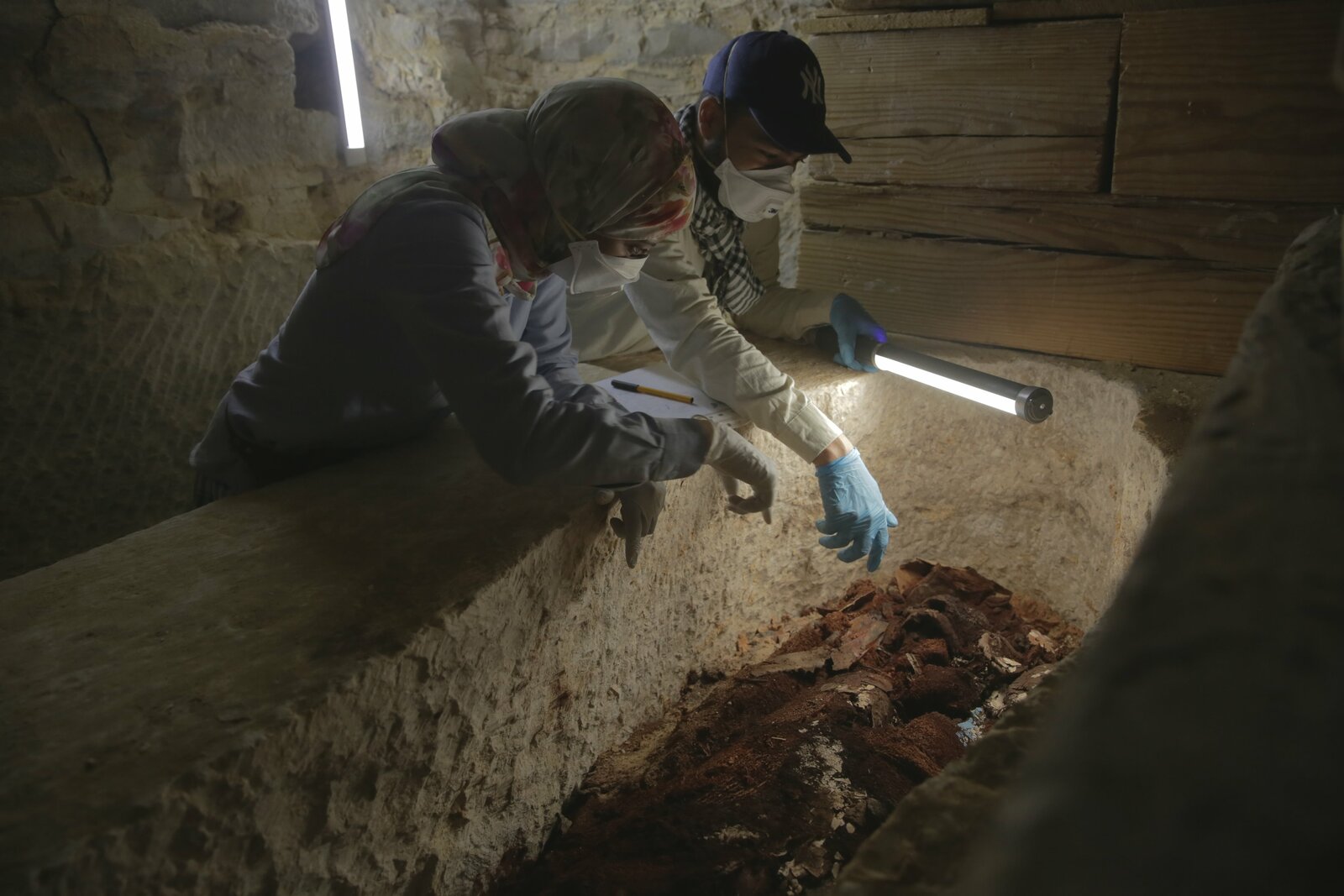
Professor Salima Ikram uses a light wand to illuminate a mummy in a 2,600 year old burial complex. Painted cartonnage and dozens of beads can be seen, indicating this was a high class burial.
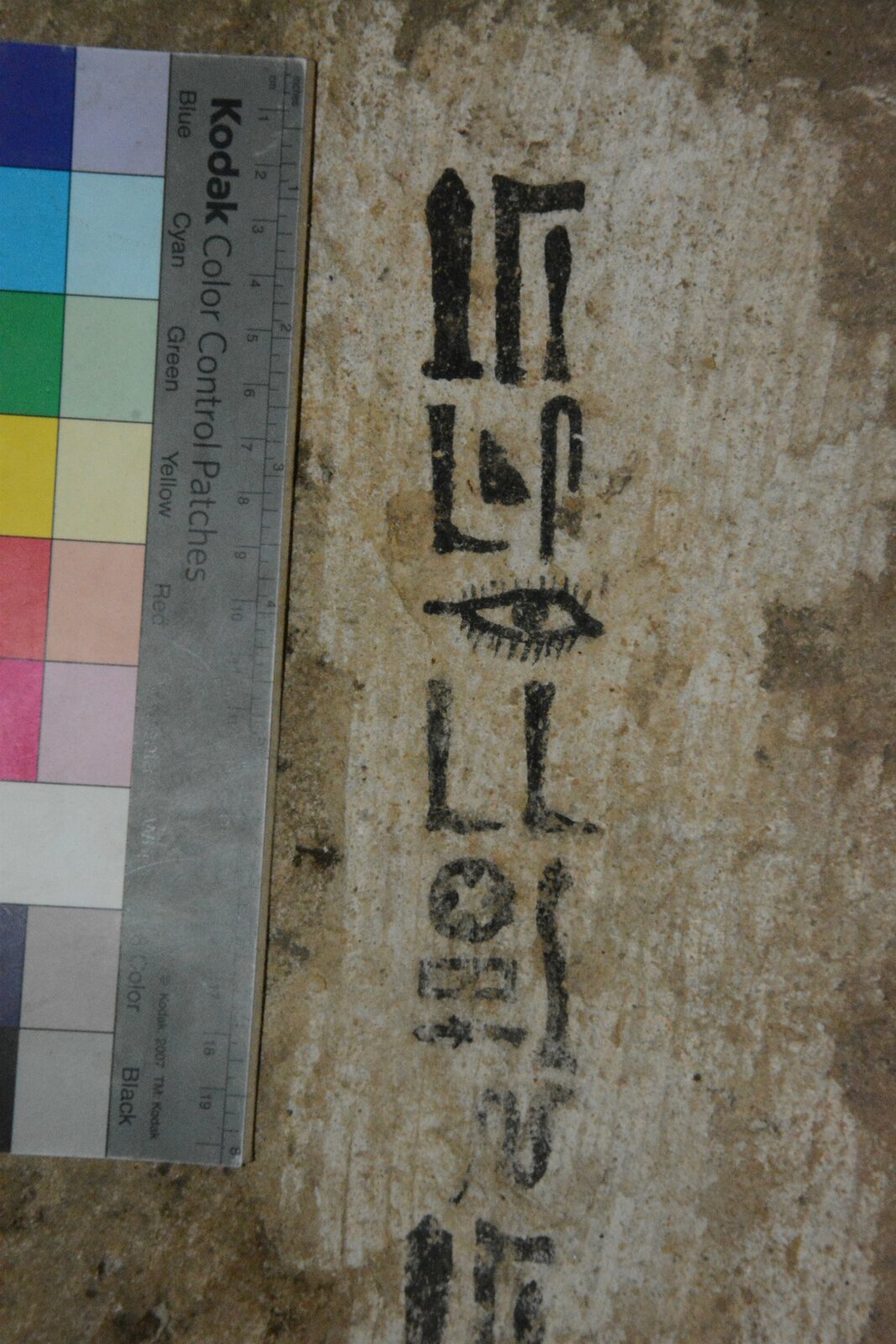
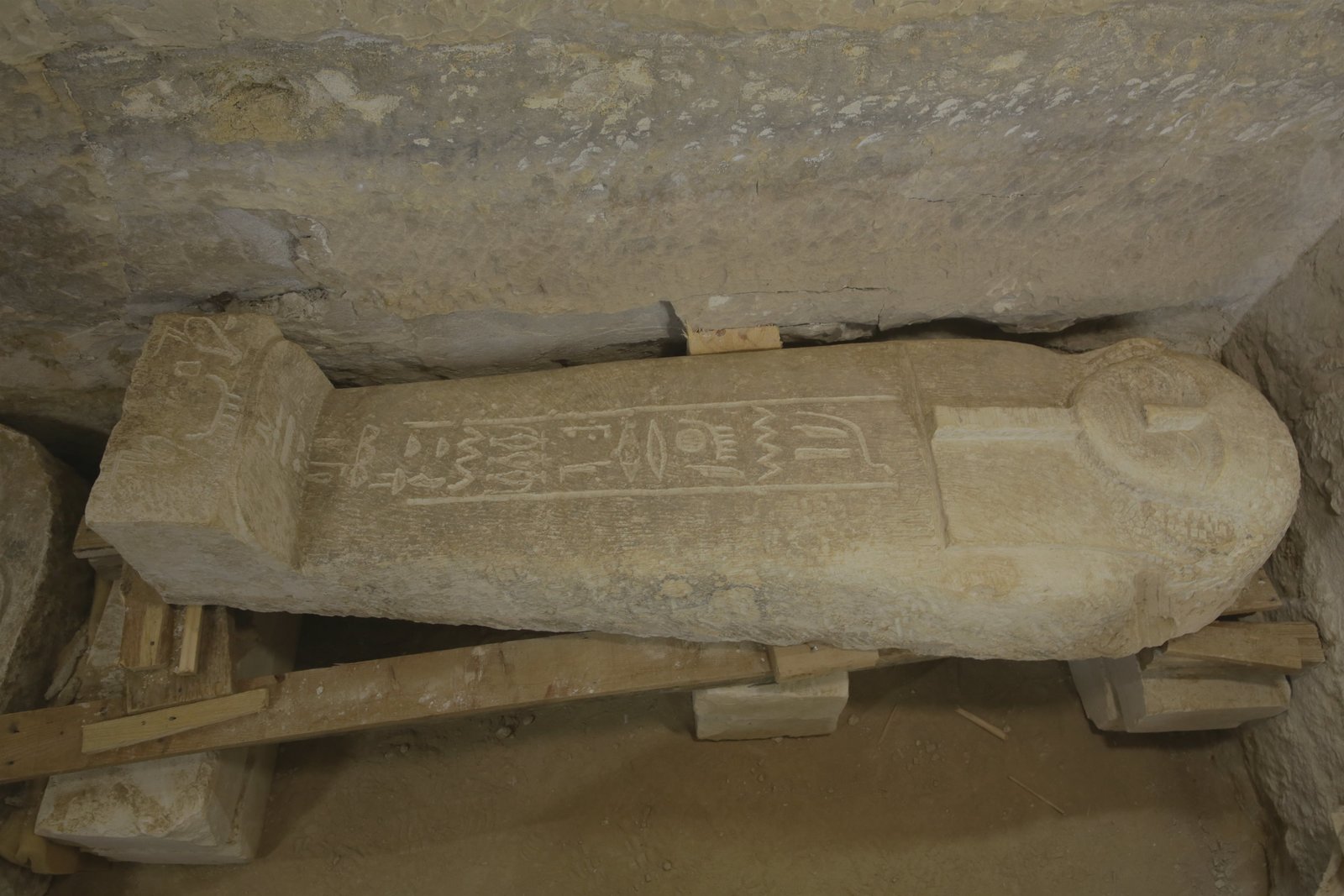
A photographic record of part of the painted inscription on the sarcophagus of Tjanimit. This first section mentions that Tjanimit is a priest of the great god Amun, and of the mysterious serpent goddess Niut-Shaes. The snake hieroglyph forming part of her name lies towards the bottom of the image.
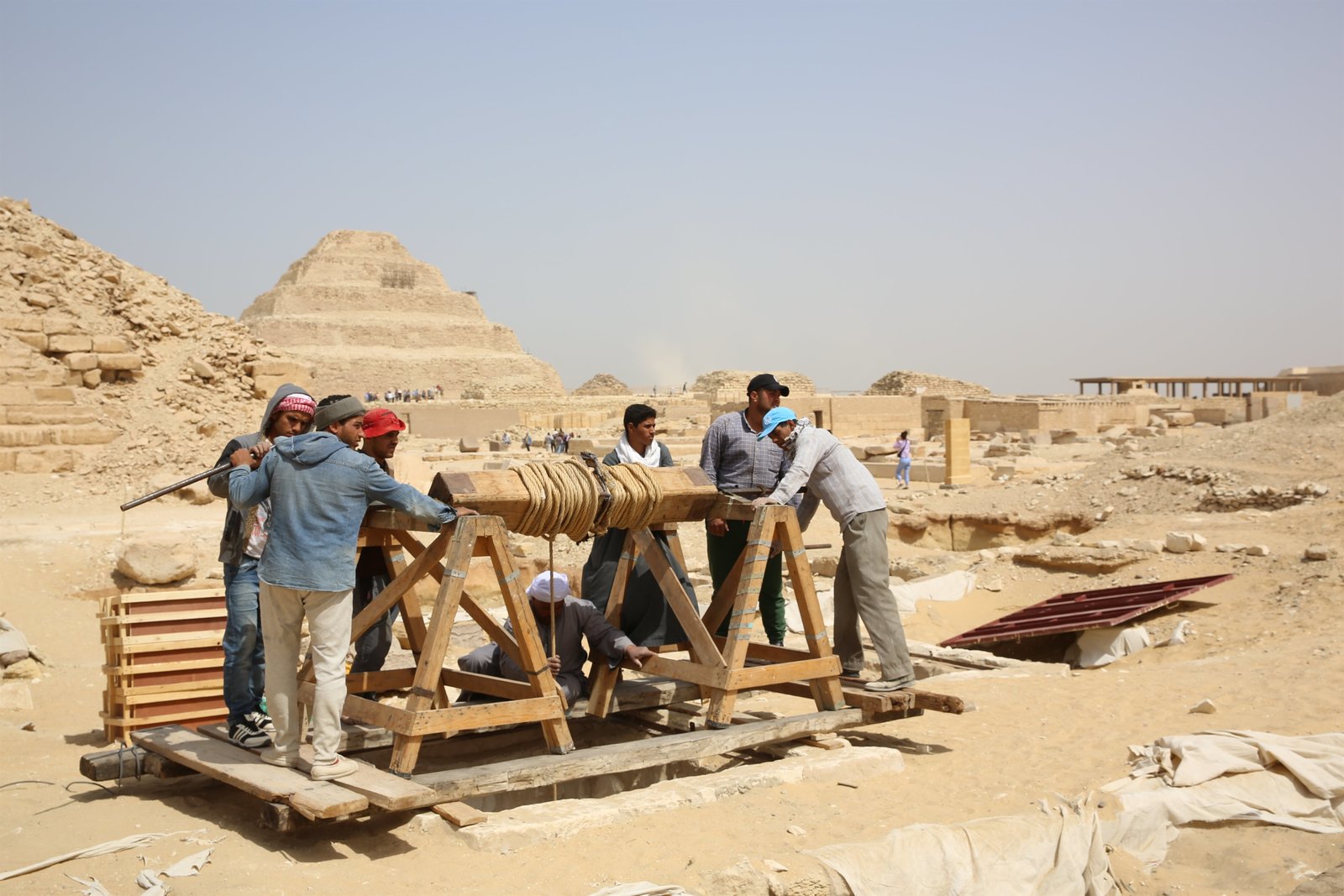
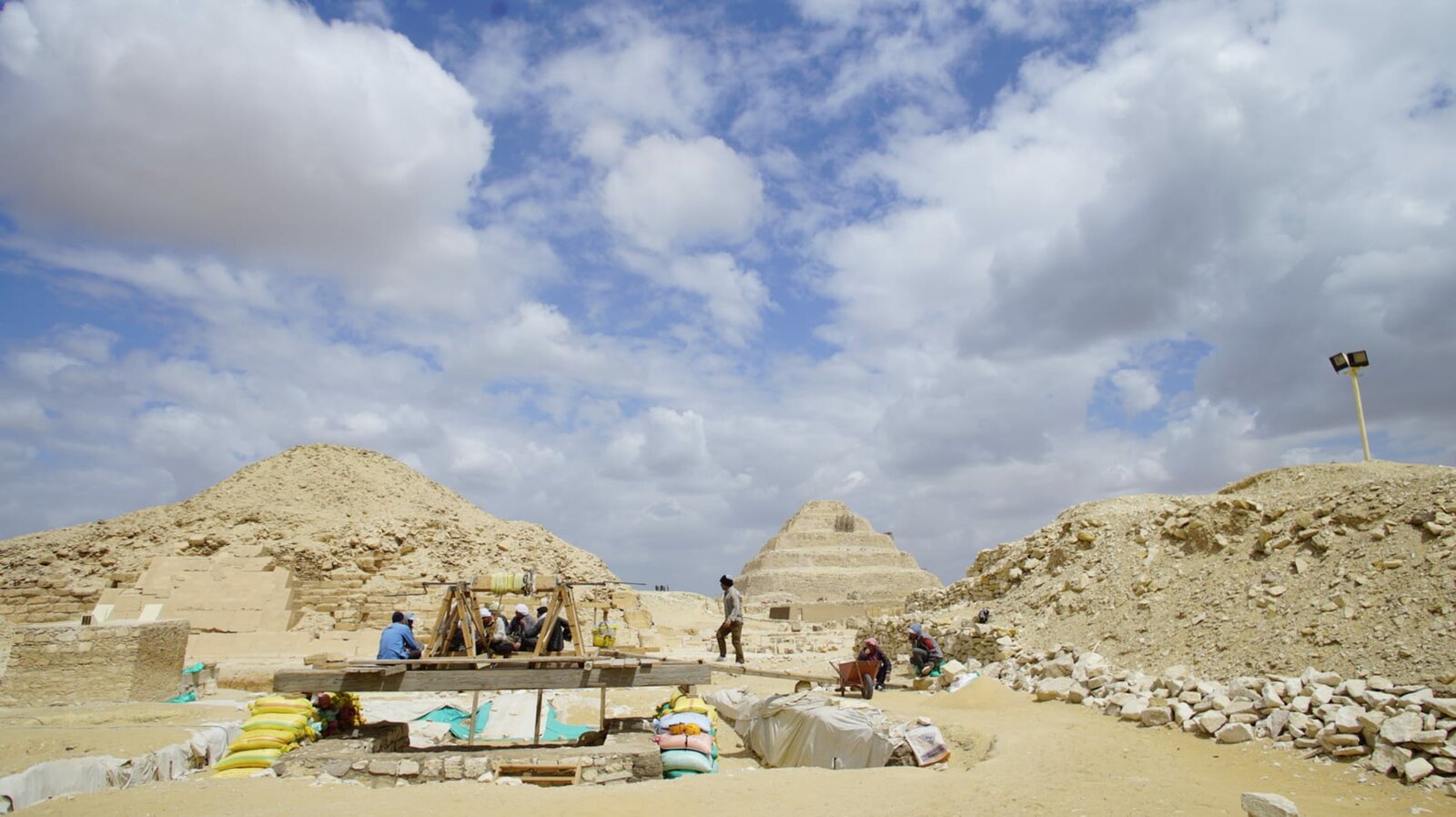
Saqqara was a cemetery for over 3000 years. The core of the team's dig site is a 100 foot deep shaft known as K24, now topped with a manual winch. Its location represents 'prime real estate' for a sacred site of mummification, as the great Step Pyramid of Saqqara watches over the tombs and shafts. (National Geographic/Piers Leigh)
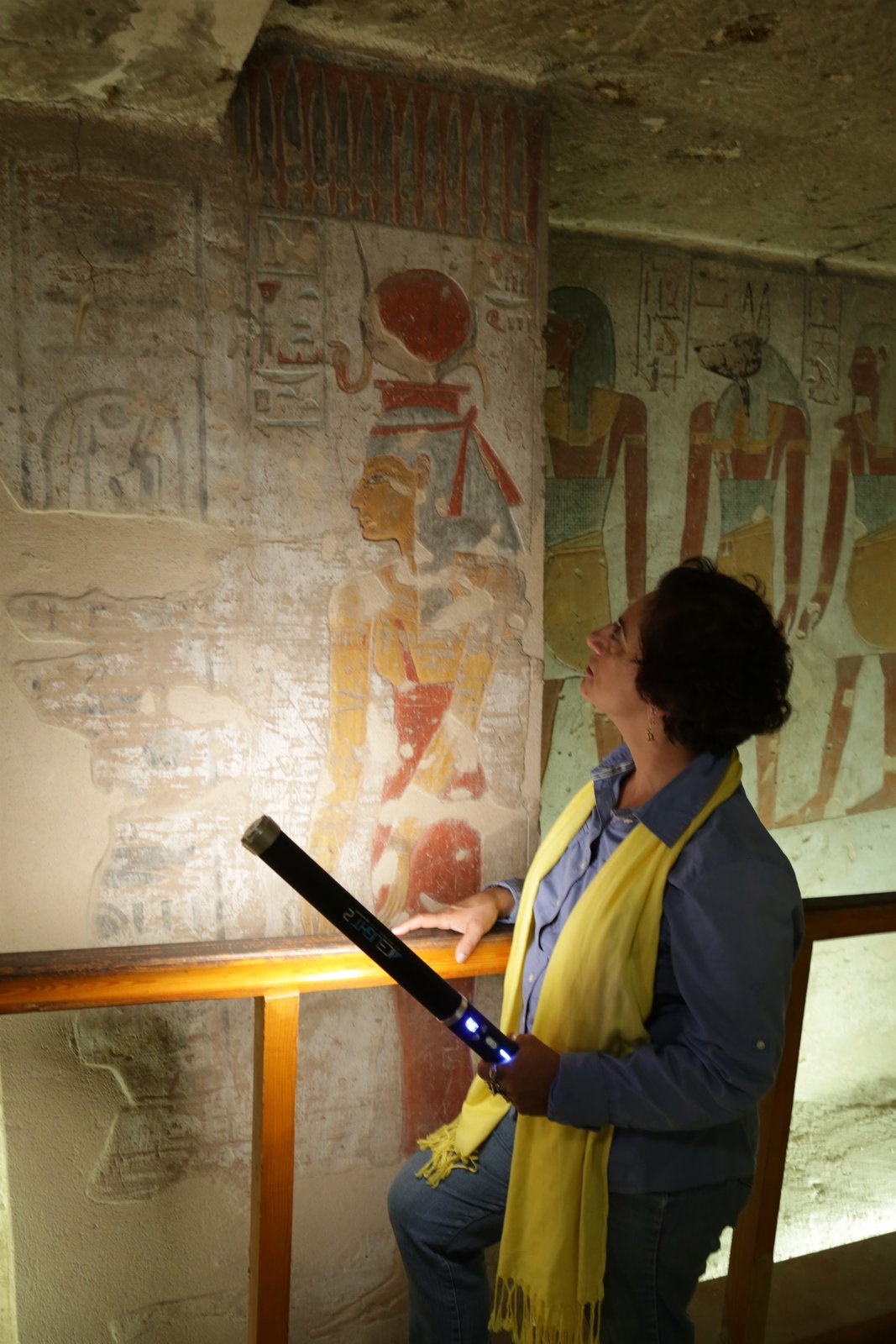
Luxor, Egypt - Professor Salima Ikram investigates the highly decorated Tomb of Queen Tawosret in the Valley of the Kings. These beautiful illustrations depict many powerful gods, as well as fierce demons from the Book of the Dead.
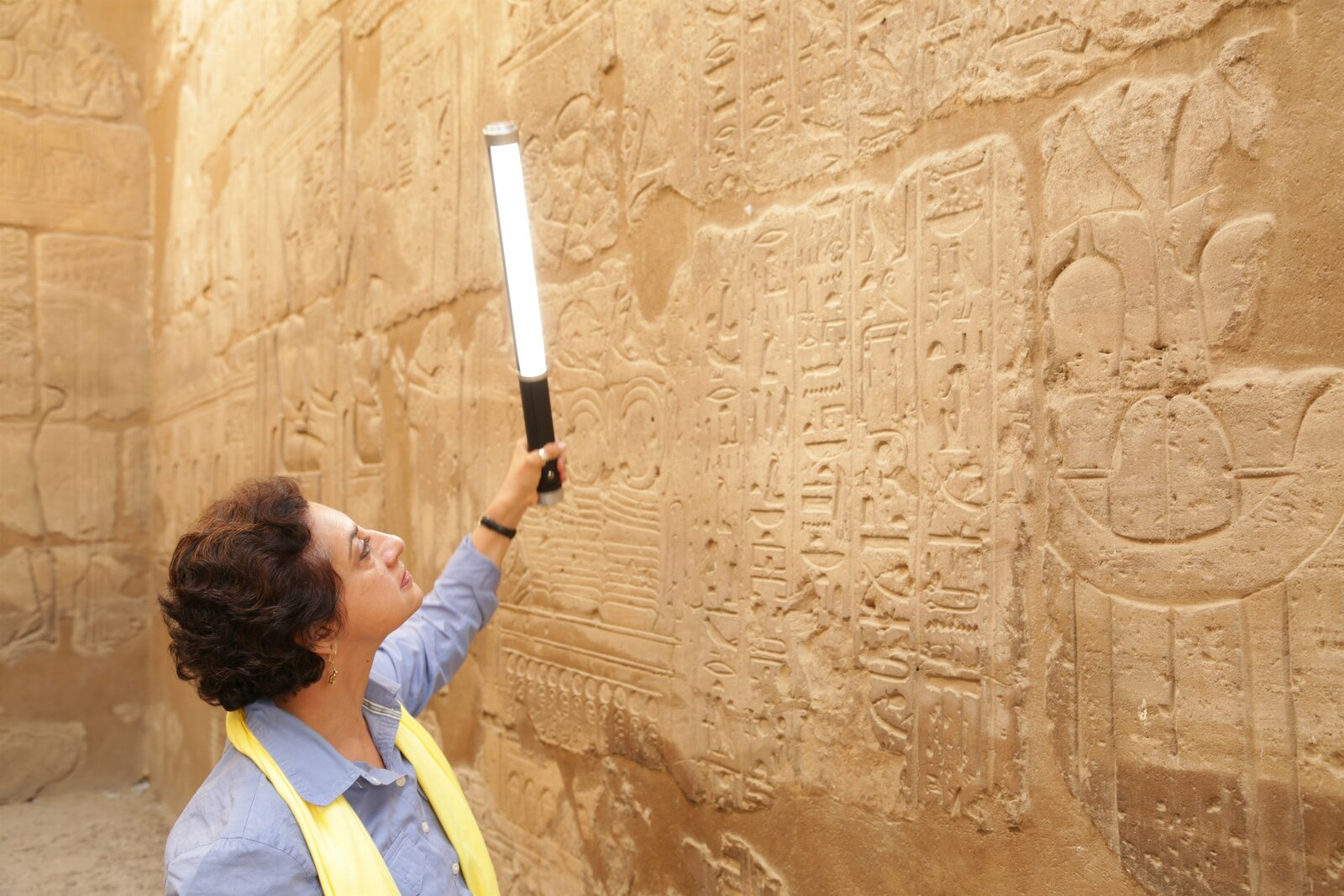
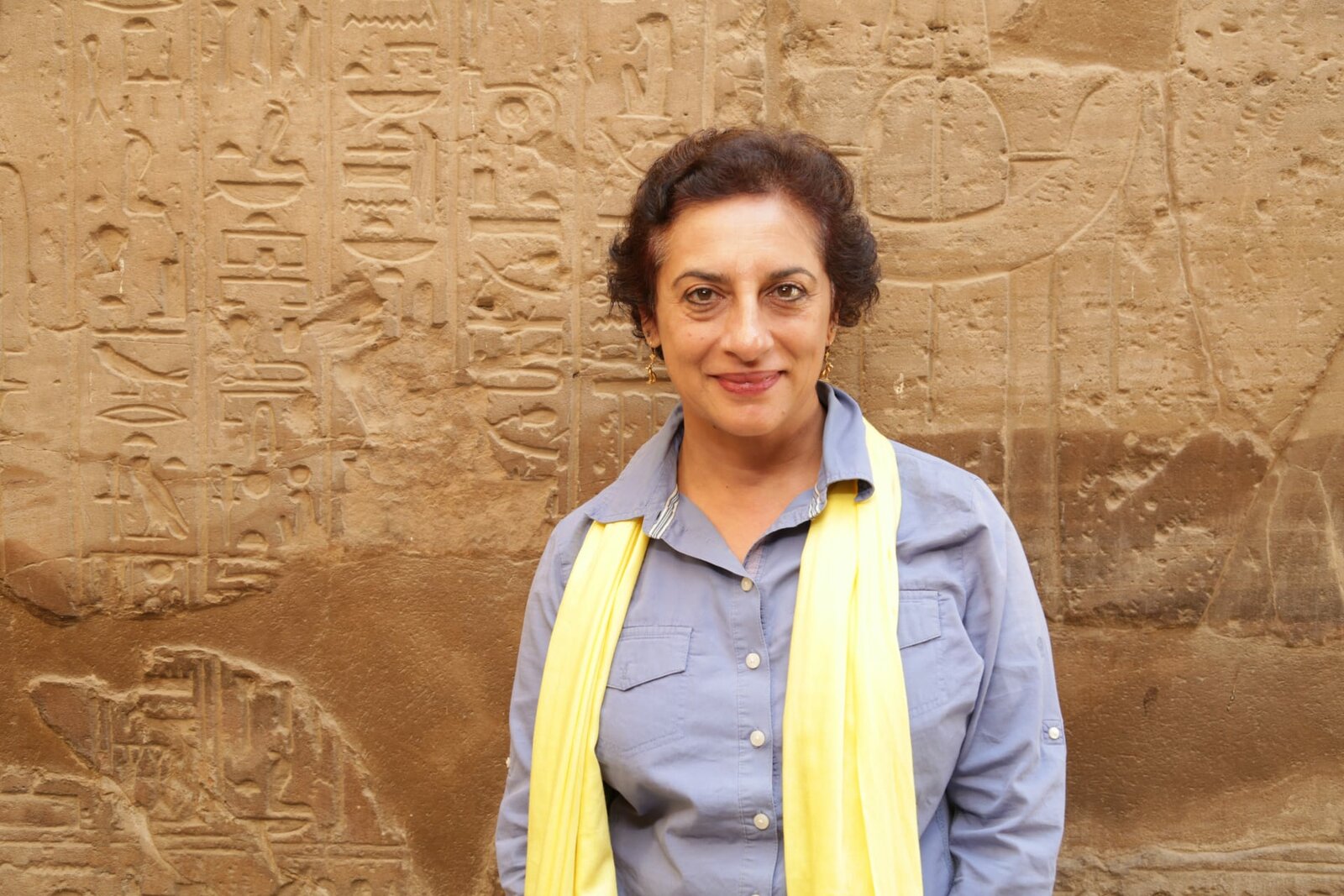
Prof Salima Ikram uses a light wand to illuminate hieroglyphs on the walls of Luxor Temple. Although the visit takes place in daylight, the wand helps to manipulate light and shadow around the engraved symbols, and allows for easier reading of the 3D text. (National Geographic/Bianca Zamfira)
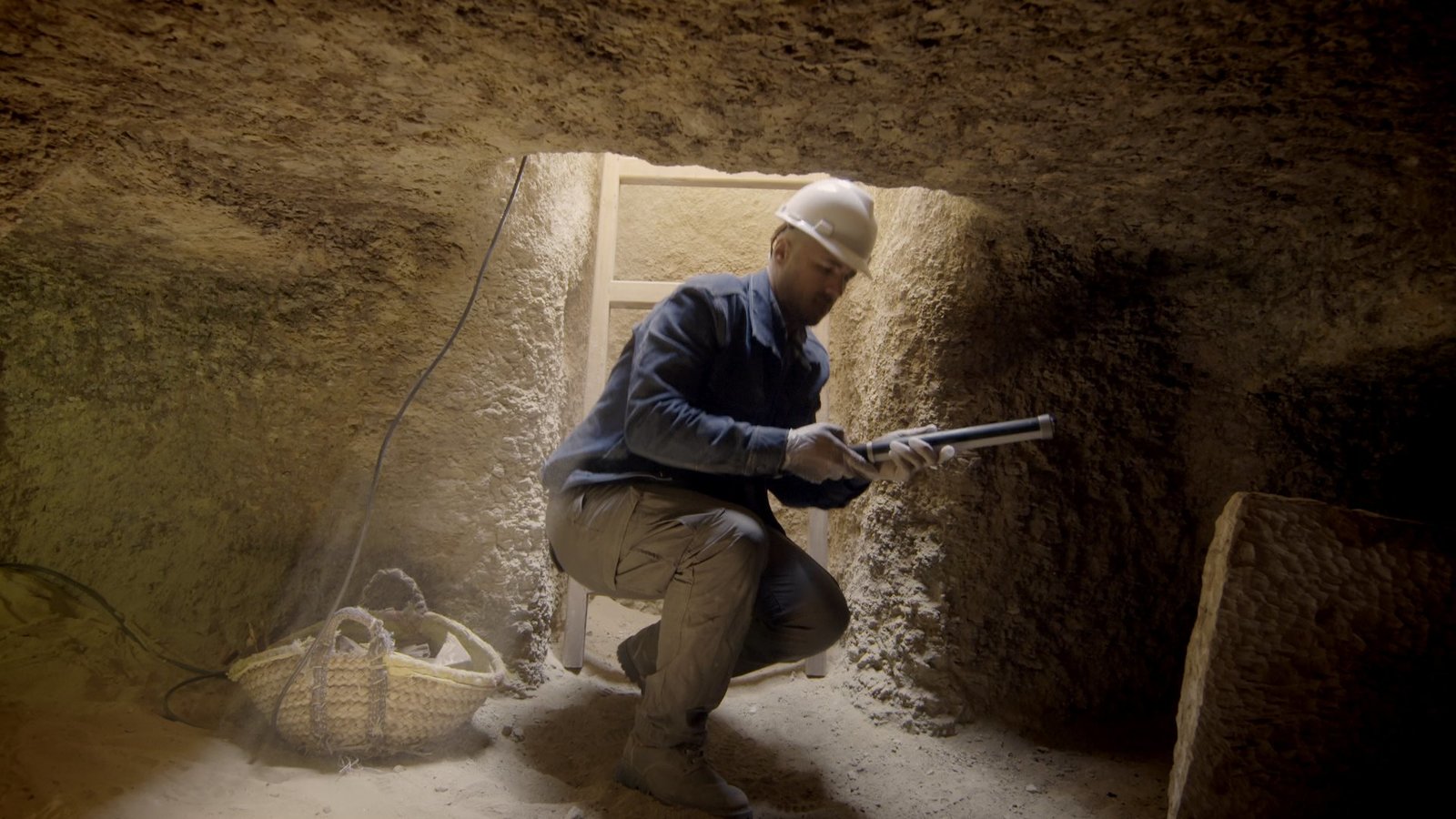
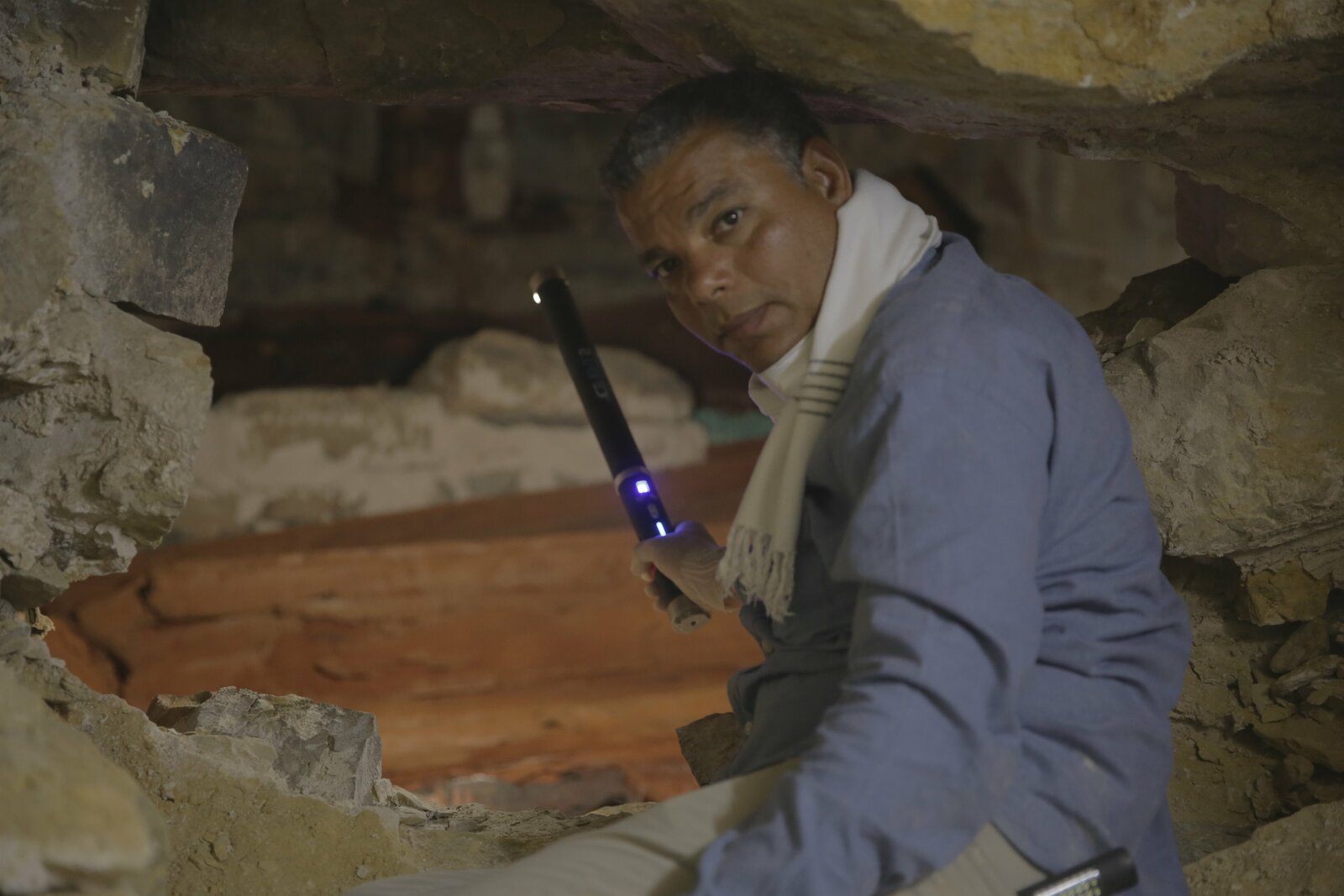
Der Archäologe Mohammed Rehan betritt den 4 m tiefen Schacht L25 auf dem Gelände der Mumienwerkstatt von Saqqara. Diese kleine Kammer enthält Beweise für antike Verbrechen und gewaltsame Zerstörung - die beiden Sarkophage hier wurden in der Antike geraubt und zerstört.
Professor Salima Ikram uses a light wand to illuminate a mummy in a 2,600 year old burial complex. Painted cartonnage and dozens of beads can be seen, indicating this was a high class burial.
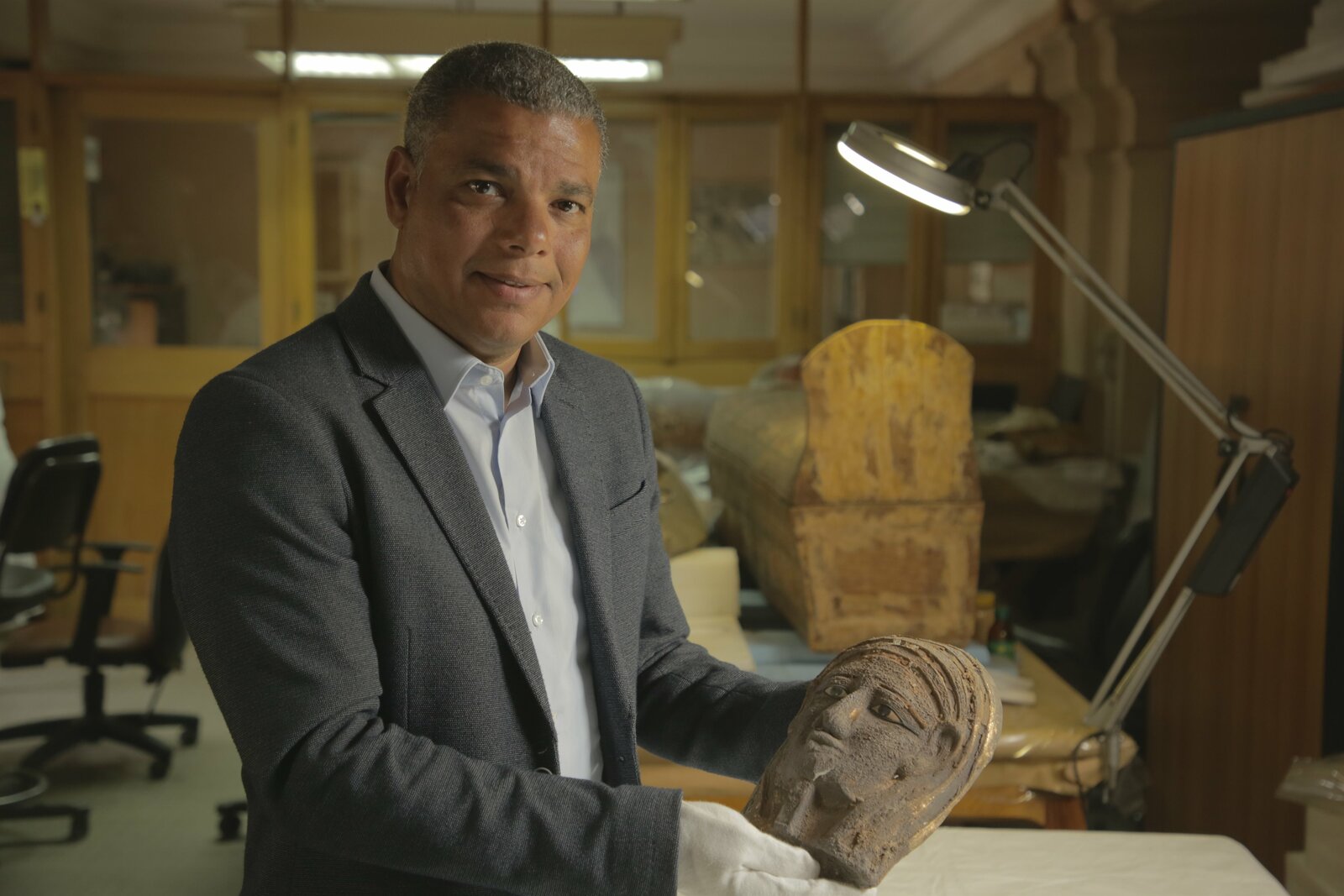
In the conservation laboratories of the Egyptian museum, Ramadan Hussein is reunited with the gilded silver mummy mask he discovered in the tombs of Saqqara. It's the first found in Egypt since 1939. In Ancient Egypt silver was double the value of gold and thought to represent the bones of the gods.
Saqqara, Egypt - The mummy workshop and communal burial shaft lie in the shadow of two of Saqqara's most famous pyramids - the Step Pyramid and the Unas Pyramid. Workers approach the winch used to carry priceless artifacts out of the tomb shaft. (National Geographic/Rafael Libson-Hochenberg)
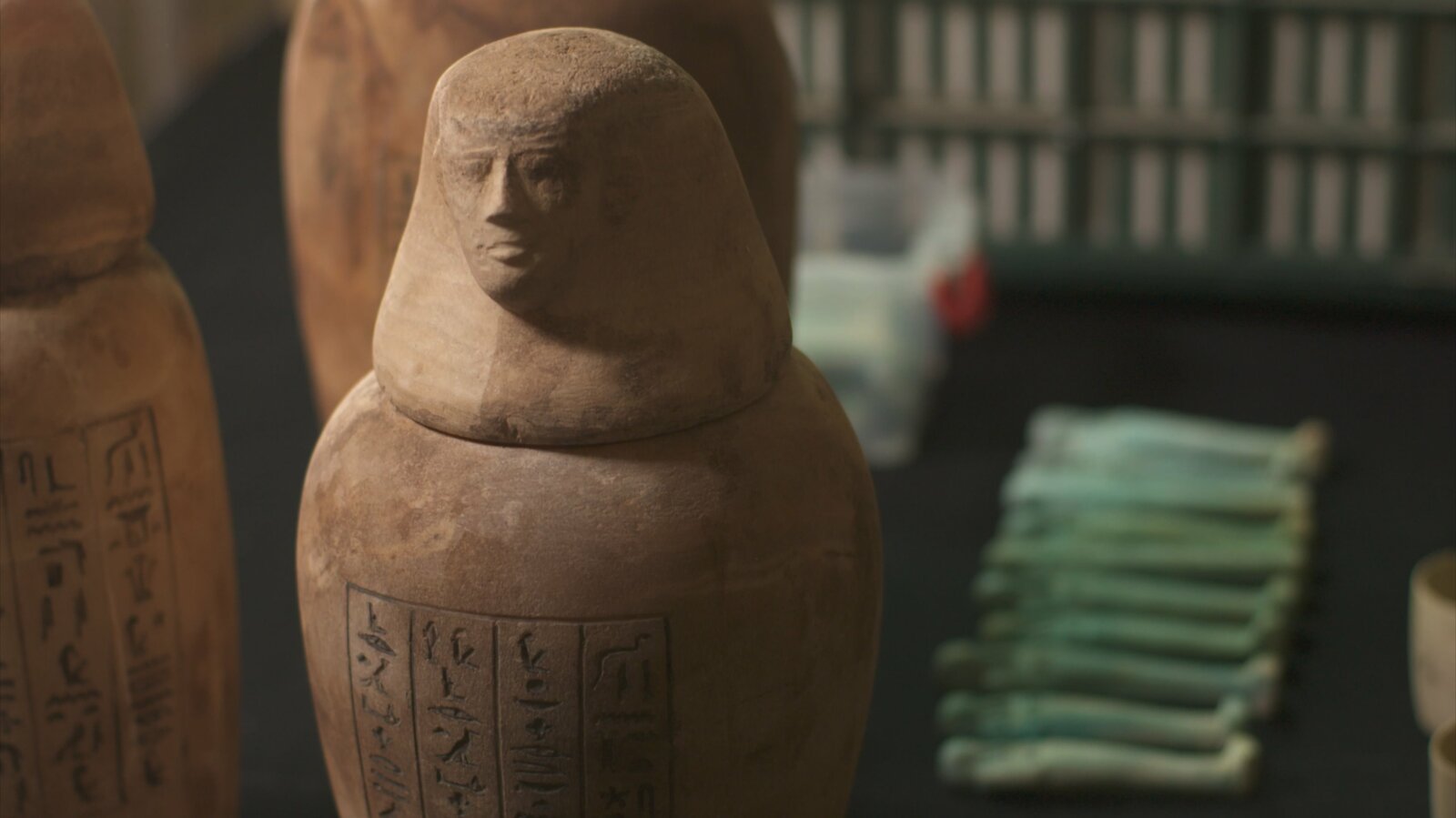
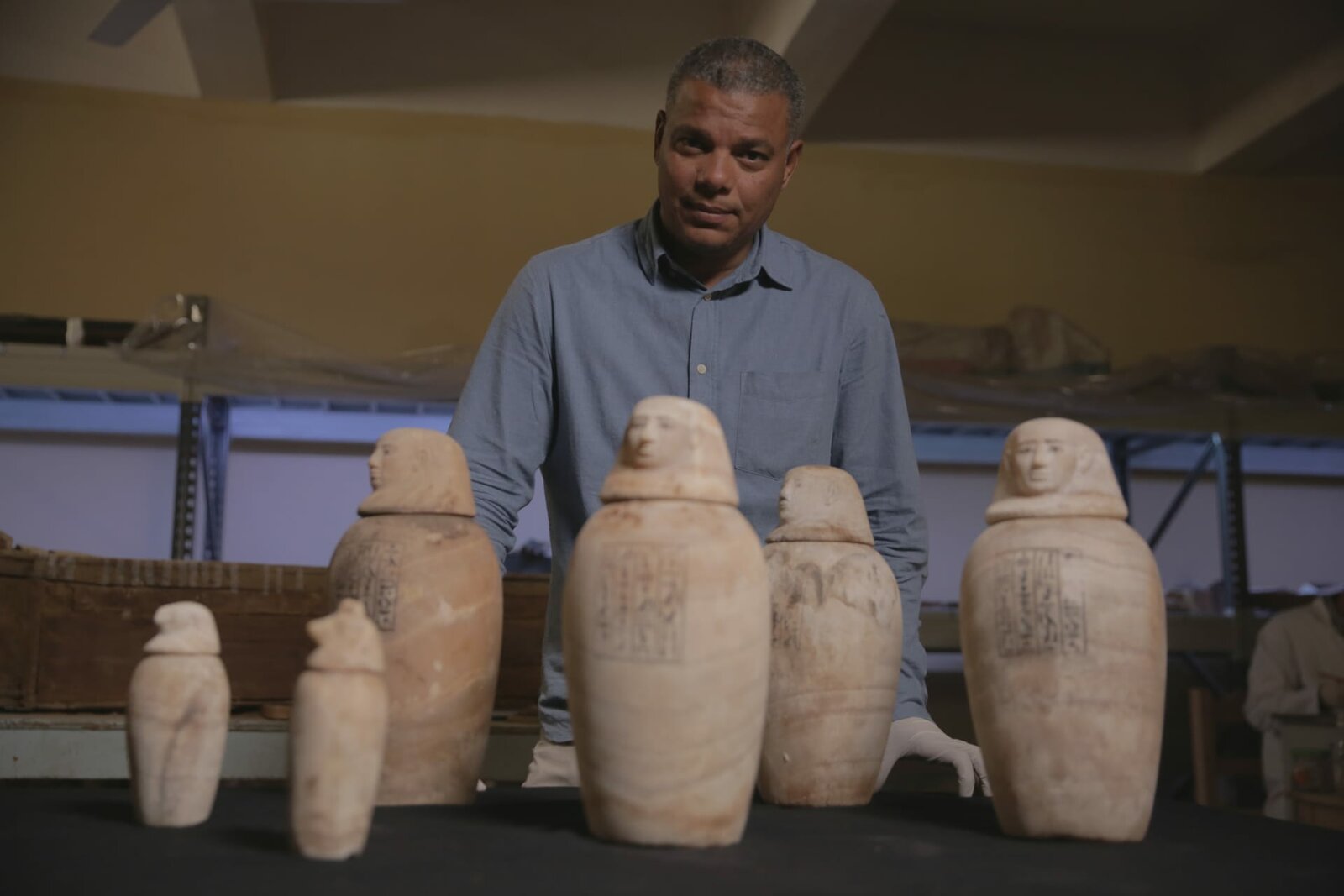
Saqqara, Egypt - Dr. Ramadan Hussein examines the unprecedented set of six canopic jars discovered inside the burial chamber of Didi-Bastet. It was the norm to only be buried with four. (National Geographic/Piers Leigh)
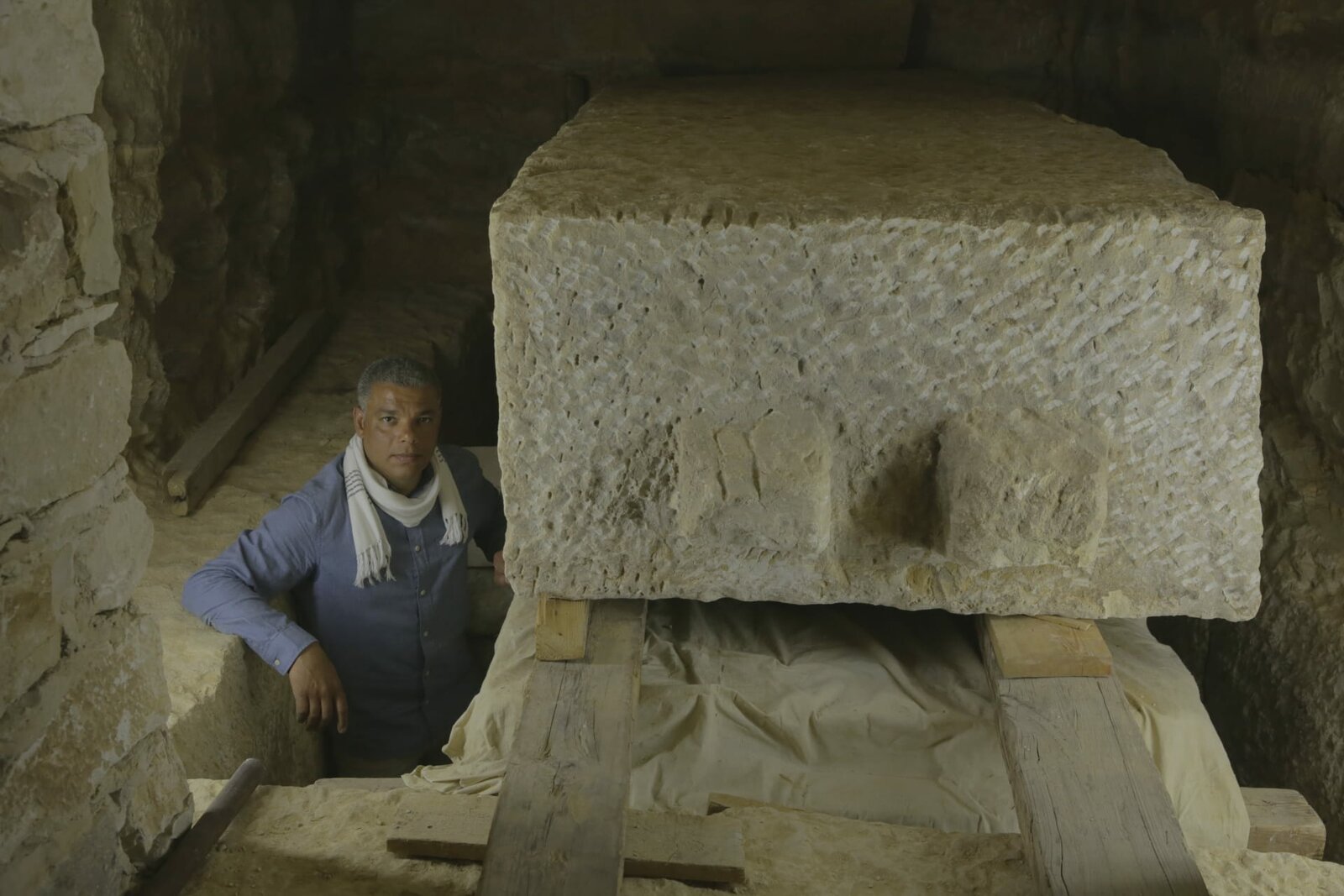
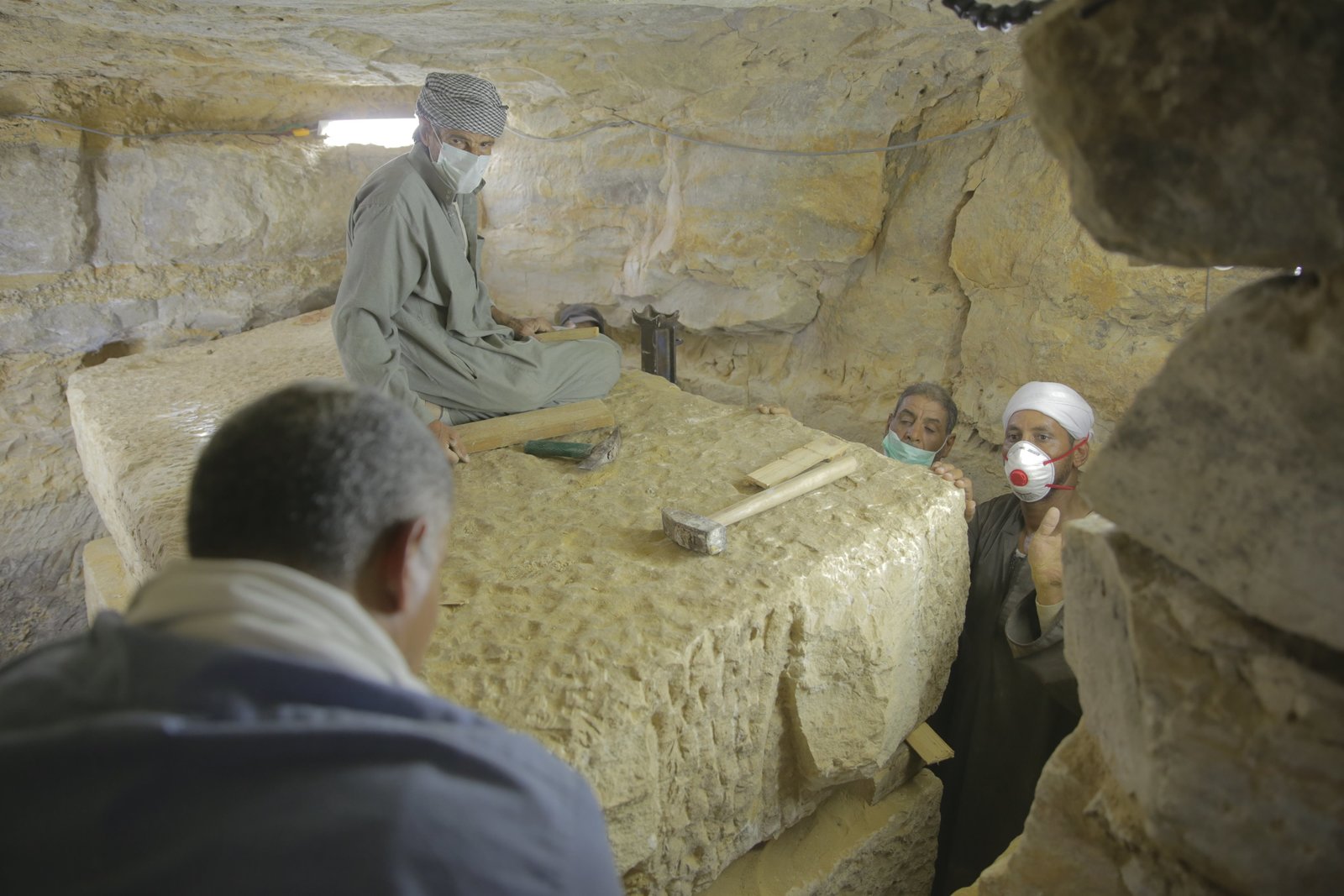
Saqqara, Egypt - Dr. Ramadan Hussein stands in a burial chamber housing a single sarcophagus. The lid alone weighs five tons. It's been lifted a few inches and now it needs to be slid out of the chamber to reveal the mummy within. (National Geographic/Piers Leigh)
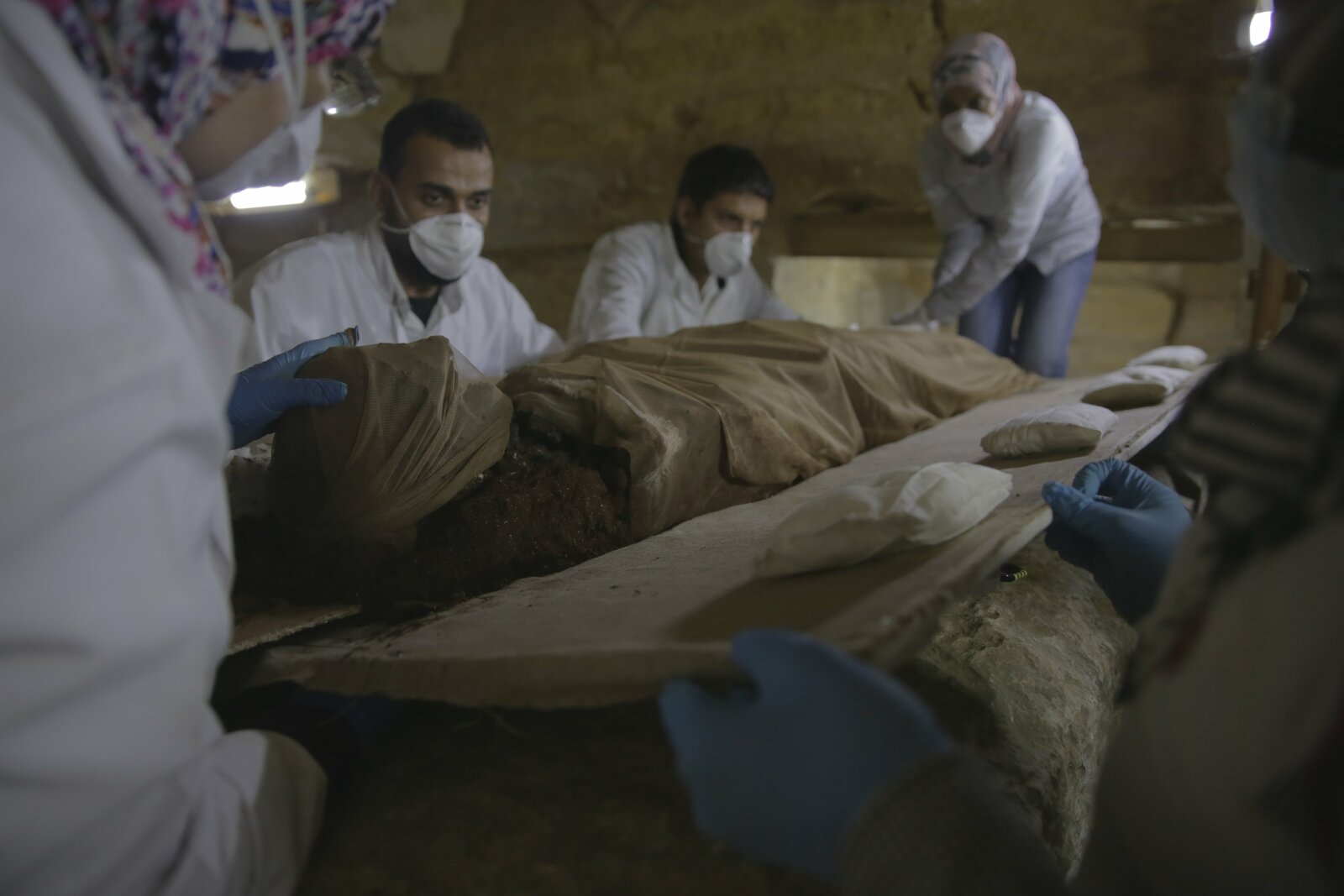
Wrapped in a protective shroud, the mummy of Tadihor is delicately moved onto a board to prepare her remains for x-ray. This next chapter in Tadihor's story should unveil even more clues about her long-forgotten identity.
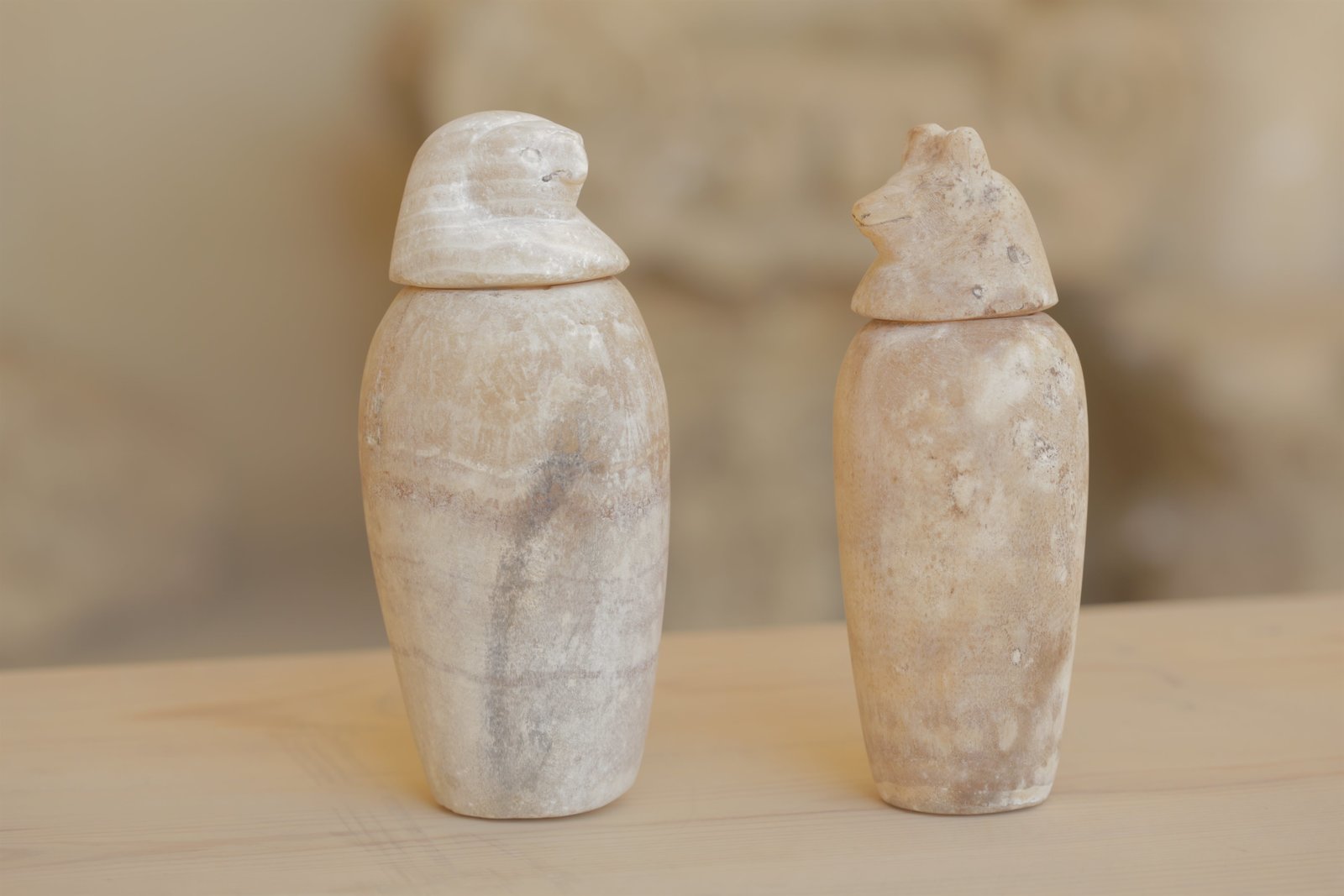
Saqqara, Egypt - The mummy of a woman called Didi Bastet was found with an unprecedented six canopic jars. The two extra jars are distinctive - one bears a falcon head, the other the head of a jackal - both are carved from stunning calcite and show little sign of their age. (National Geographic/Piers Leigh)
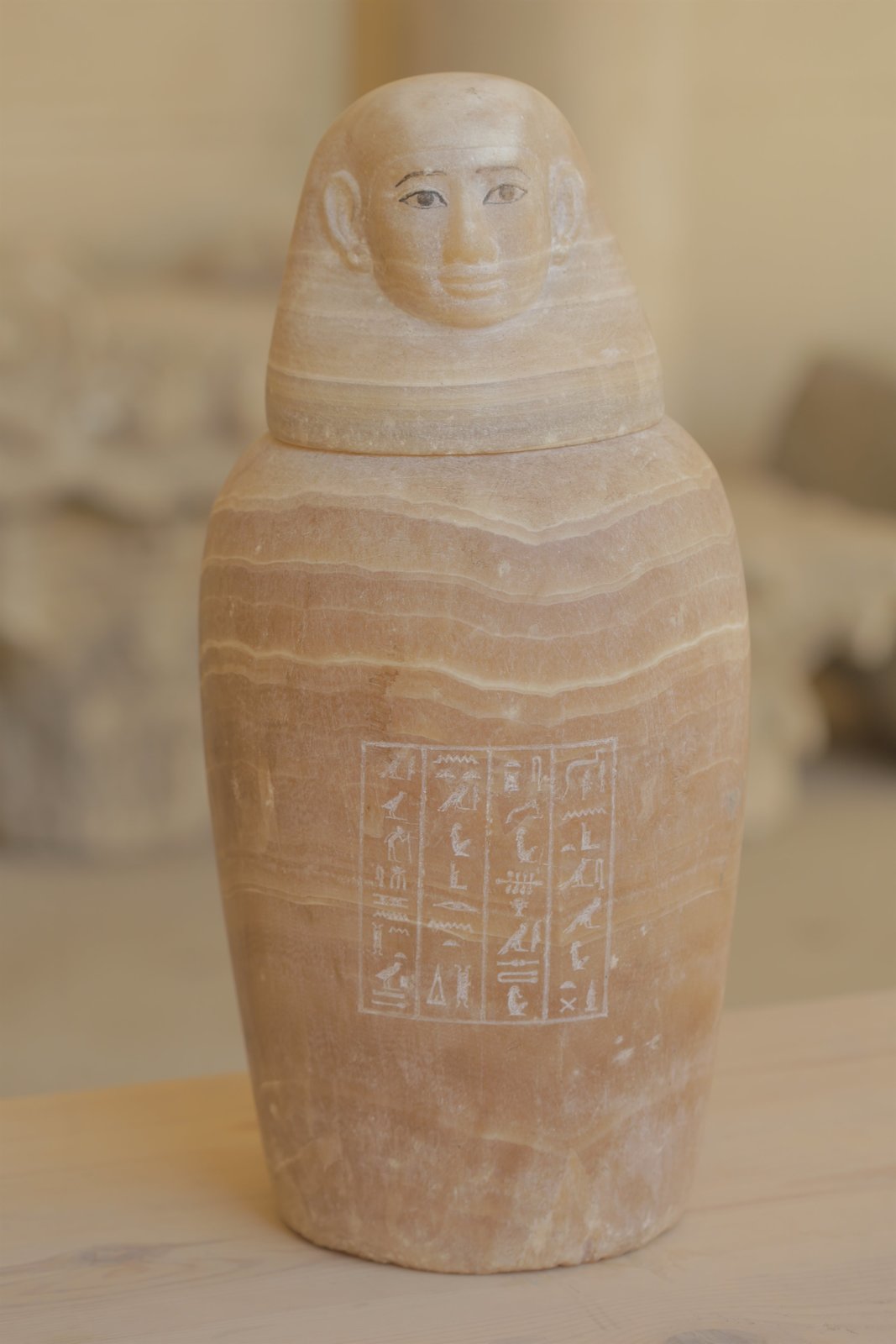
One of Ayawet's finely carved canopic jars, topped with a lid in the image of the human-headed god Imsety. Canopic jars were made to contain the key organs removed from the body during the mummification process. It was Imsety's role to protect the liver. (National Geographic/Piers Leigh)
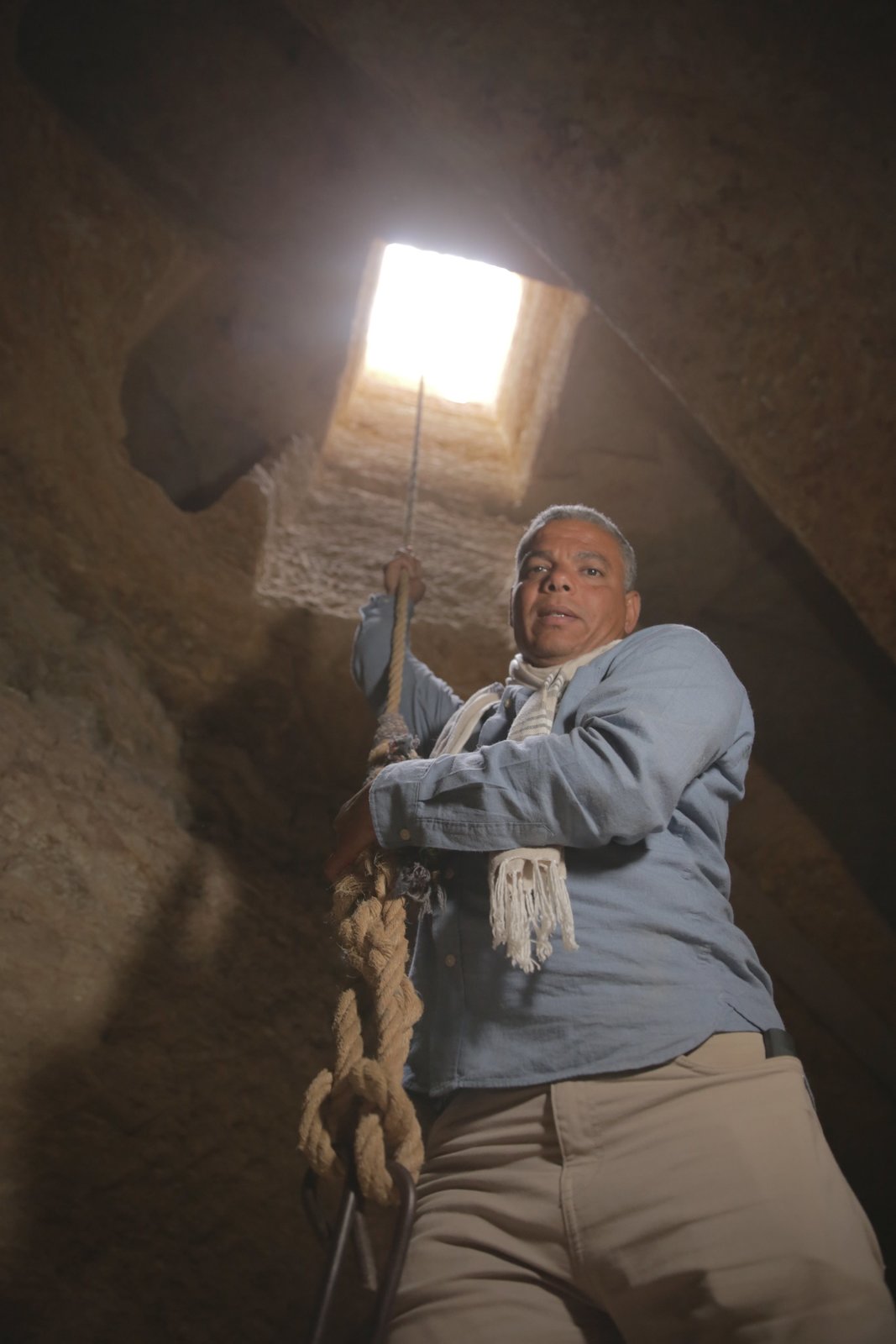
Dr Ramadan Hussein grasps a rope that will return him to the surface from deep in the mummy workshop. At the top of the access shaft is a manual winch that will hoist him out of the 30ft deep chamber. (National Geographic/Will Churchill)
The lid of the priest Ayput's stone sarcophagus, rests atop stone blocks and wooden runners after its removal. The lid is one of the lightest found in K24, but still required the strength of three people to carefully remove it. (National Geographic/Piers Leigh)
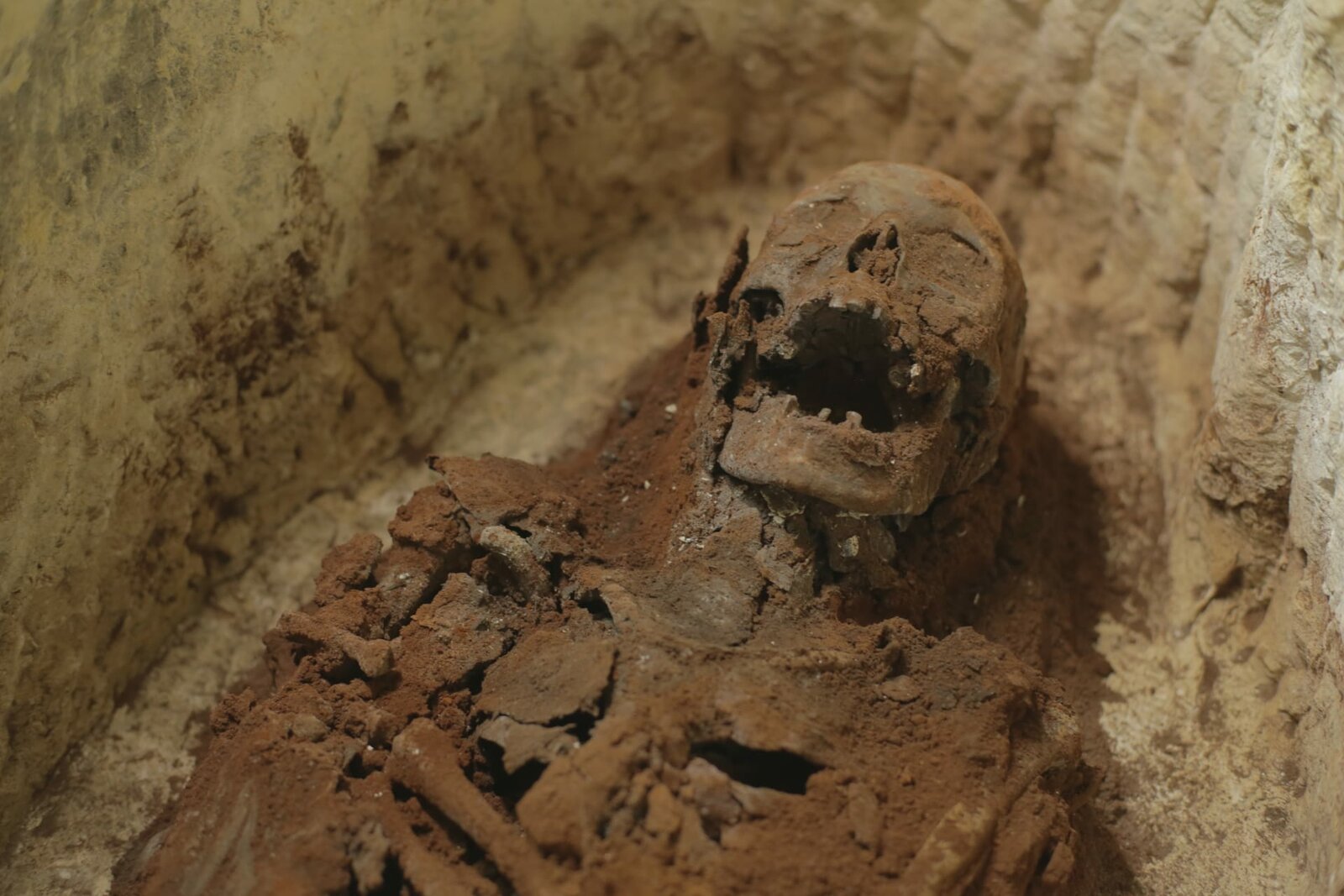
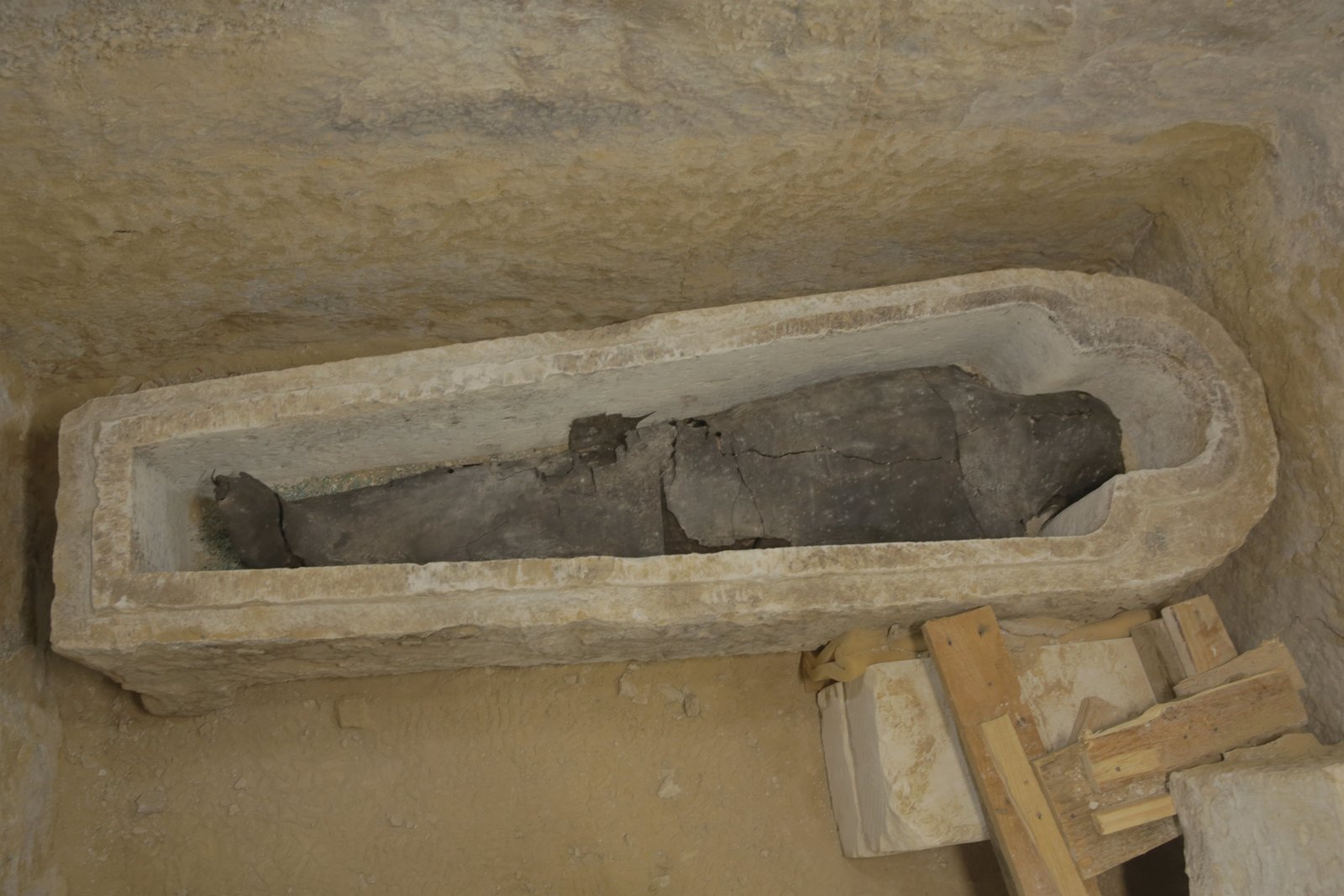
The mummy of the priest Ayput is fully revealed. This type of sarcophagus is known as 'anthropoid,' since it takes the shape of a person. The lid, the base, the internal area and the mummy all correspond in this human shape. (National Geographic/Piers Leigh)
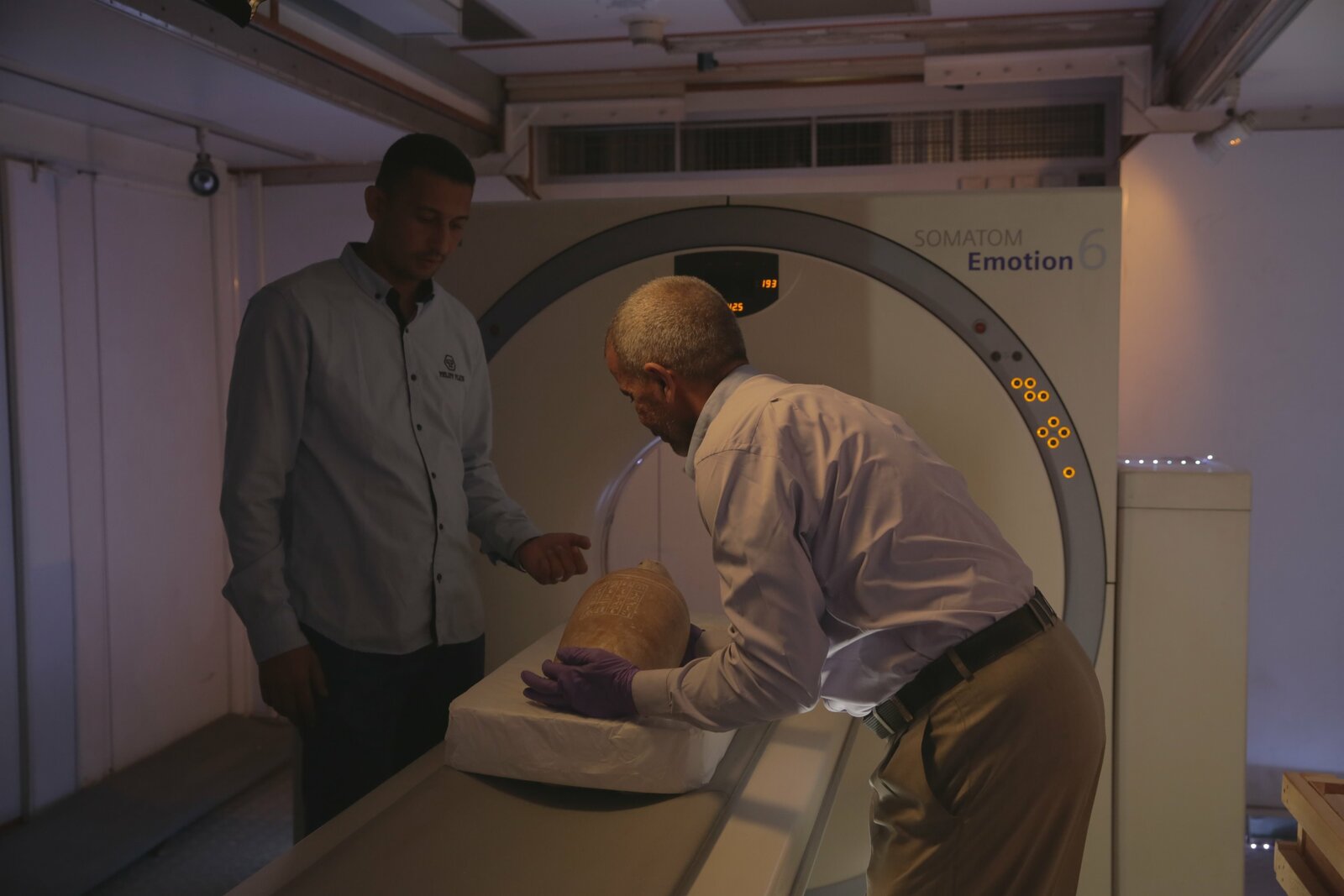
A radiographer and Ministry of Antiquities inspector carefully place Ayawet's stone canopic jar into a CT scanner. The machine will take thousands of x-rays and stack them to create a 3D representation of the jar's contents without damaging it.
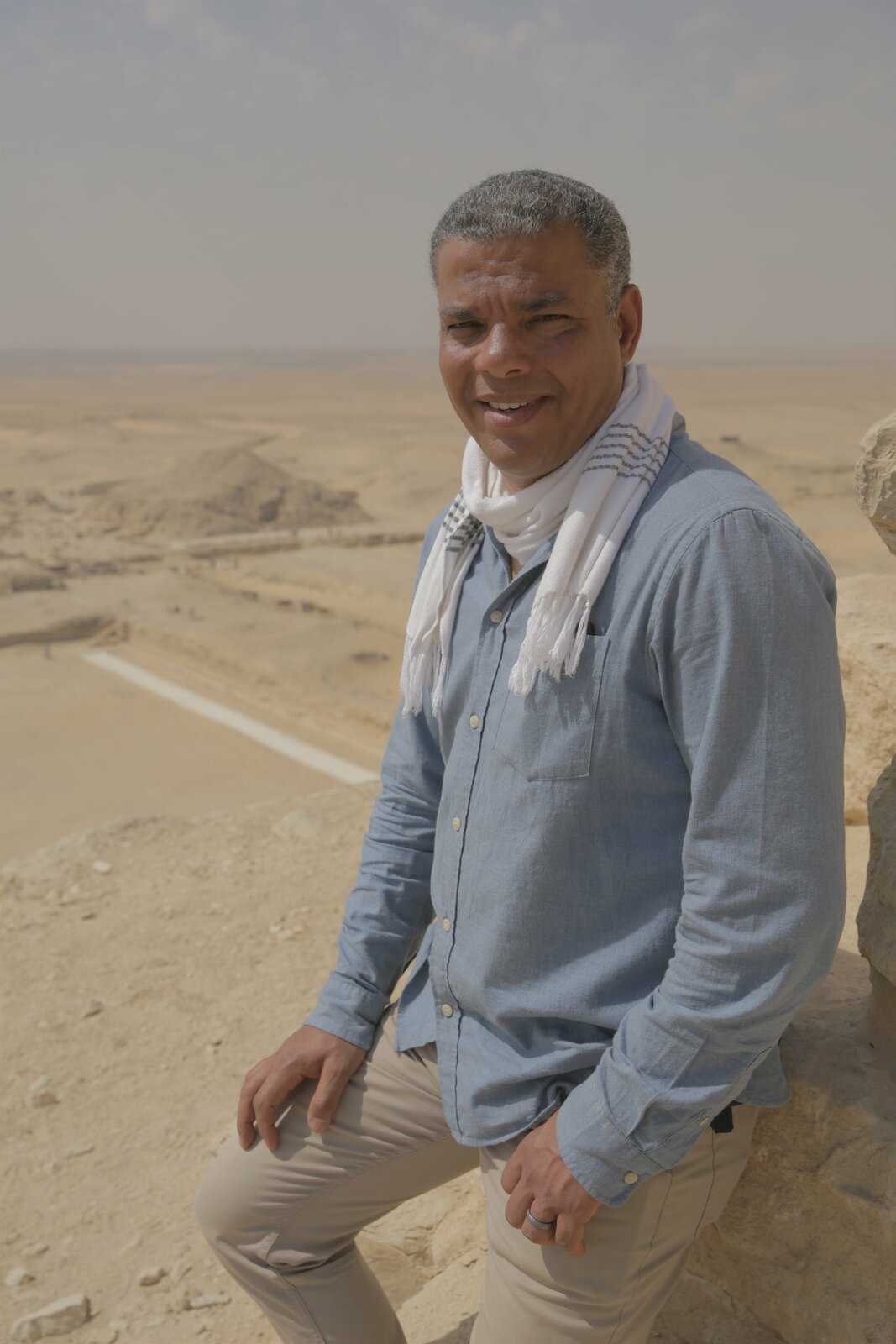
Dr. Ramadan Hussein looks out from the great Step Pyramid of Saqqara. Behind him lies the pyramid of Unas and the ancient funeral parlor that's become his life's work.
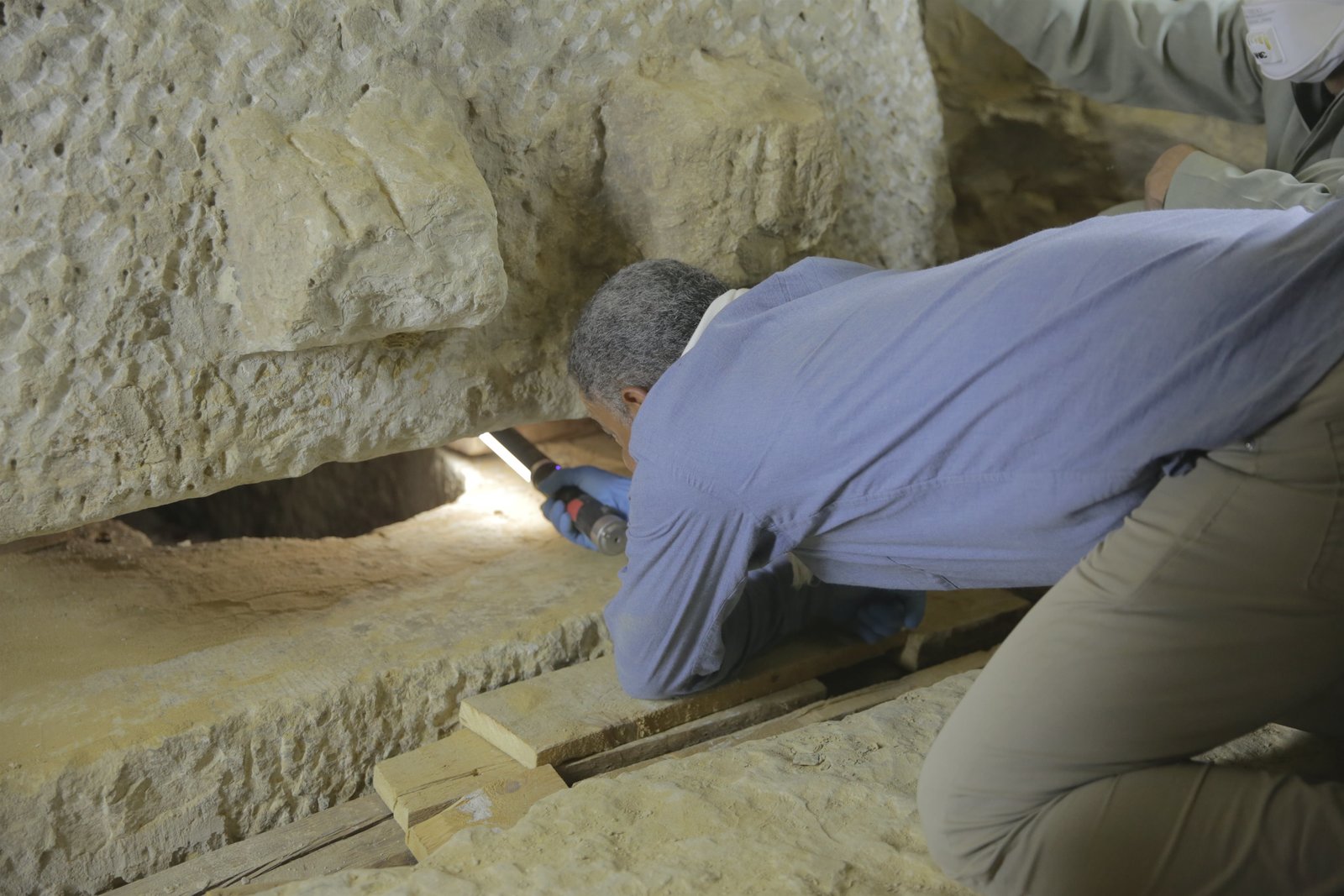
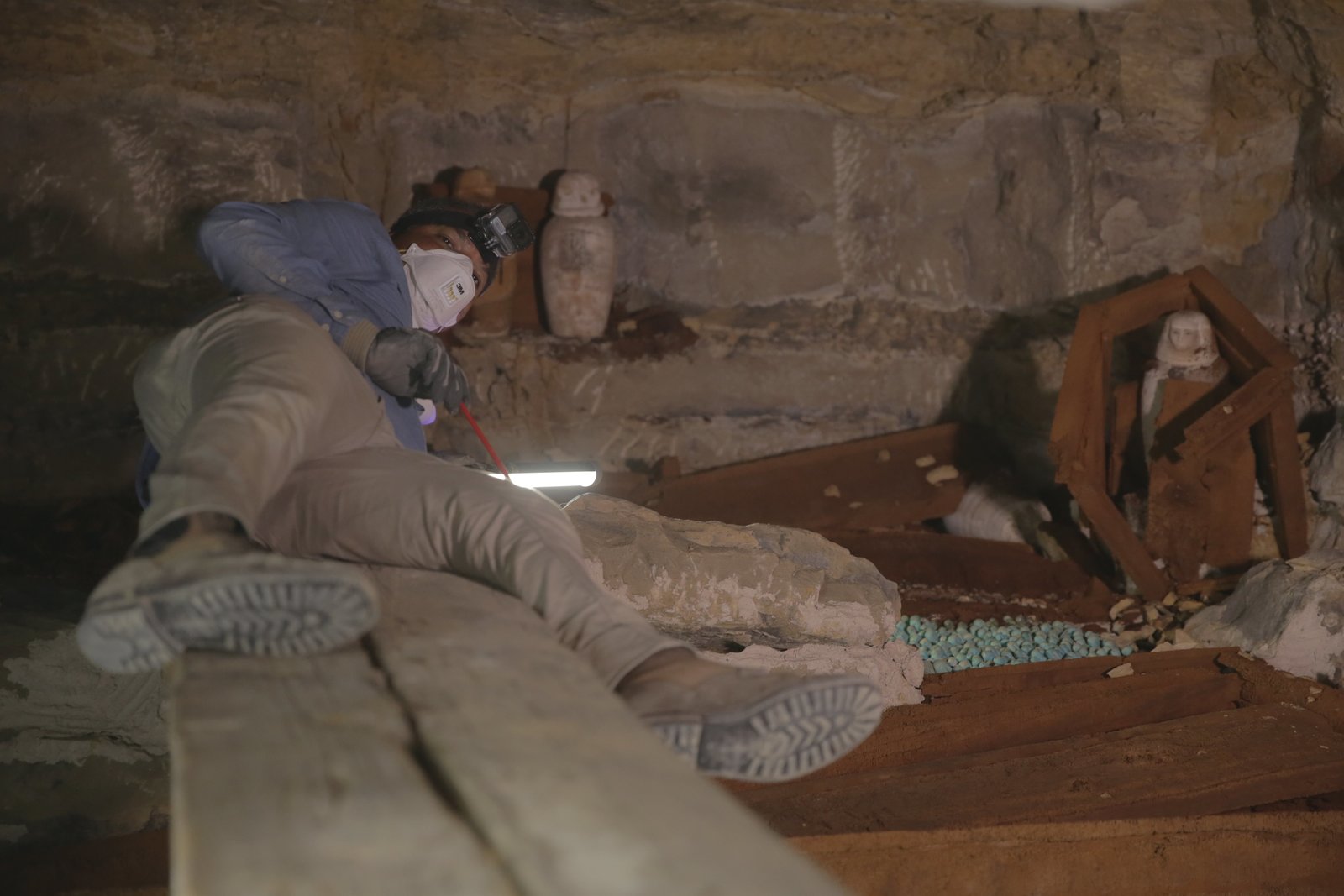
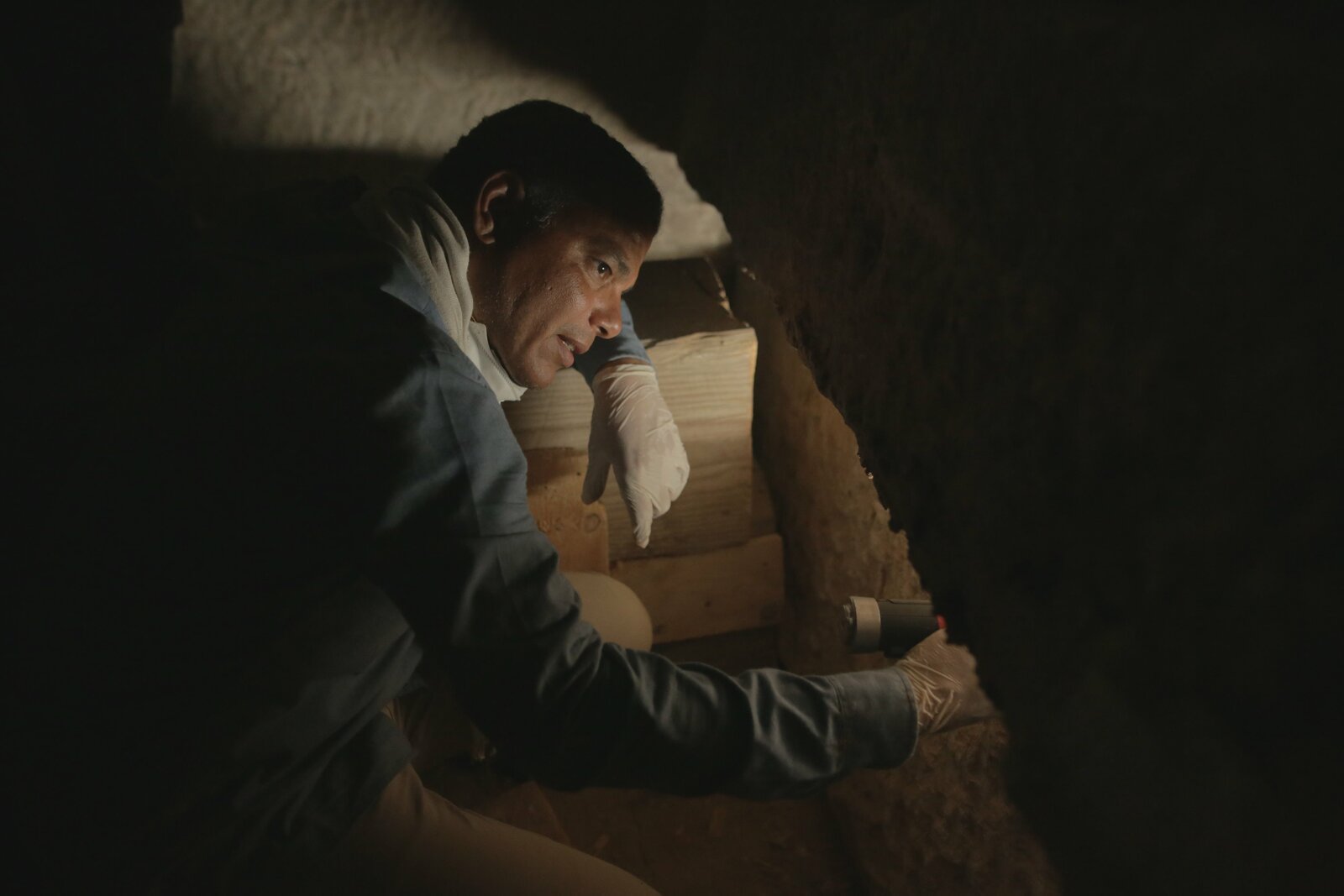
Saqqara, Egypt - Dr. Ramadan Hussein enters the newly discovered hidden chamber for the first time. He balances on wooden planks extended inside to protect the mummies and artifacts within. With mask, brush, and head-mounted camera, he works to painstakingly identify the treasures the chamber holds. (National Geographic/Piers Leigh)
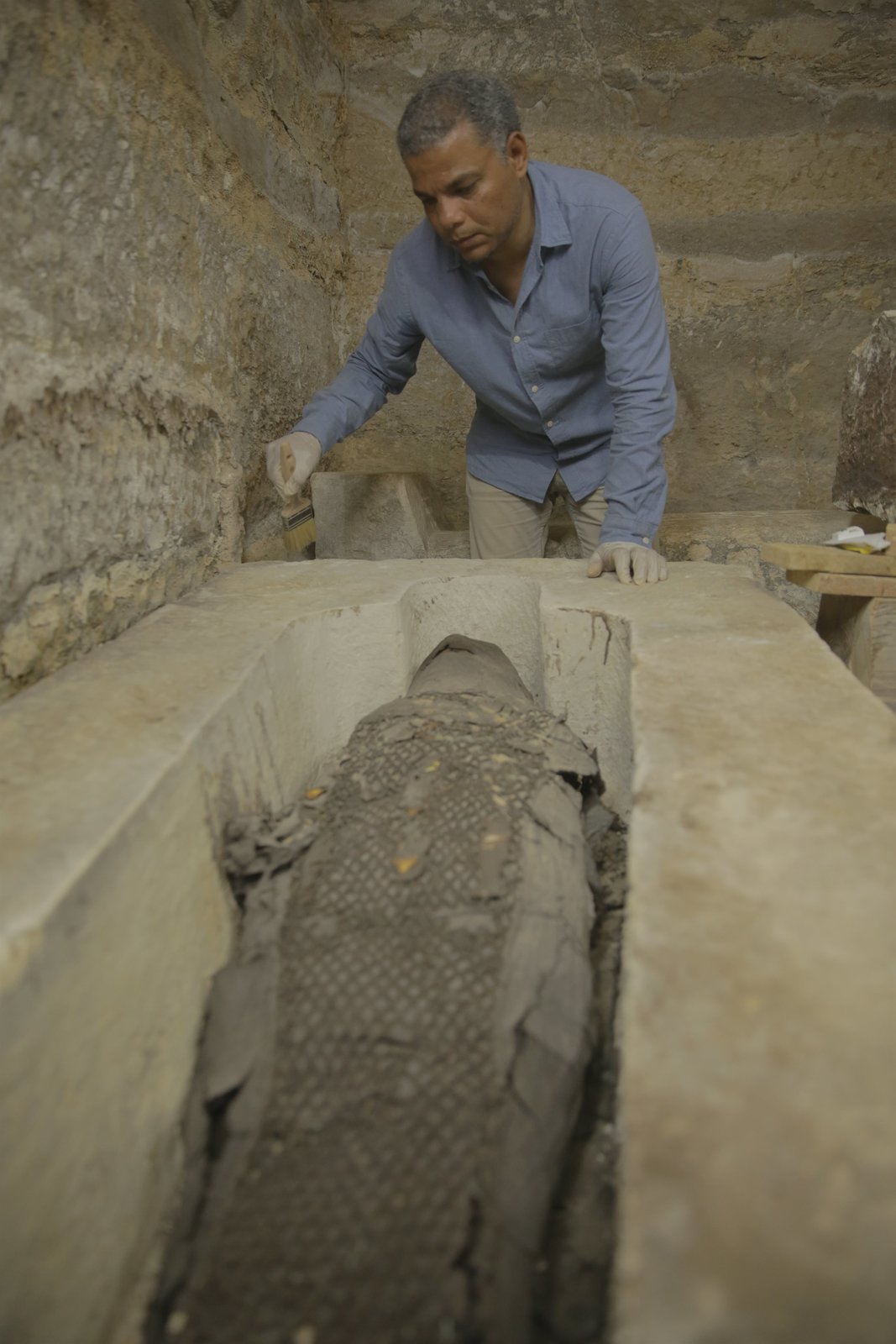
The lid of the priest Tjanimit's sarcophagus has been removed, allowing Ramadan to examine the beautiful mummy within. The mummy is adorned with an intricate beaded net, threaded with gold foil and images of gods. It must be handled with incredible care. (National Geographic/Piers Leigh)
Two archaeologists, Maysa Rabeeh (L) and Mohammed Refaat (R) examine the degraded wooden coffin of Ayawet with a light wand. They are inspecting the remains for evidence of a second burial.
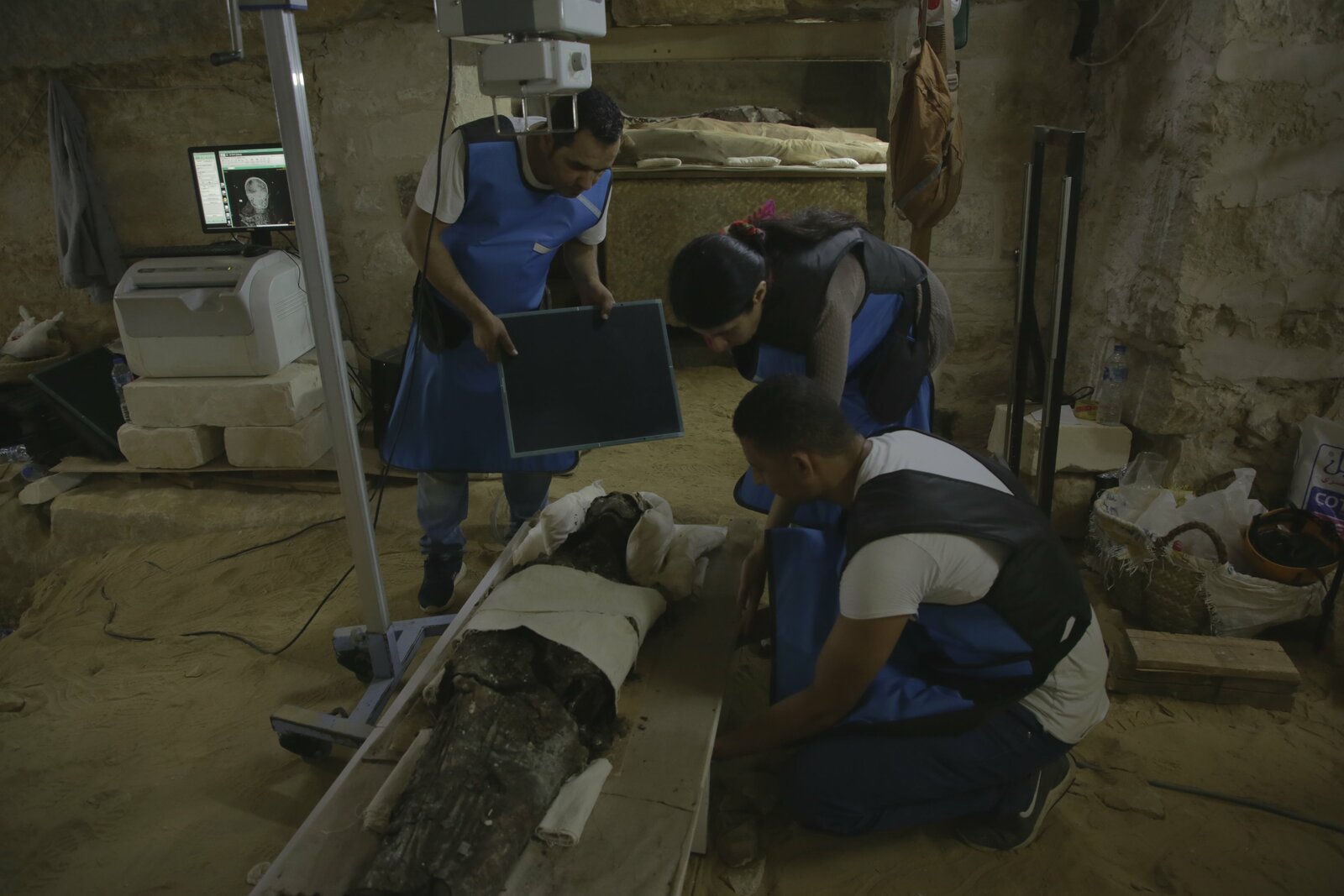
Beside two x-ray technicians, Prof Sahar Saleem directs the x-raying of the priest Ayput 100 feet deep in the tomb. The mummy is carefully removed from the burial chamber and laid on a board. The results of the skull x-ray can be seen on the monitor station behind.
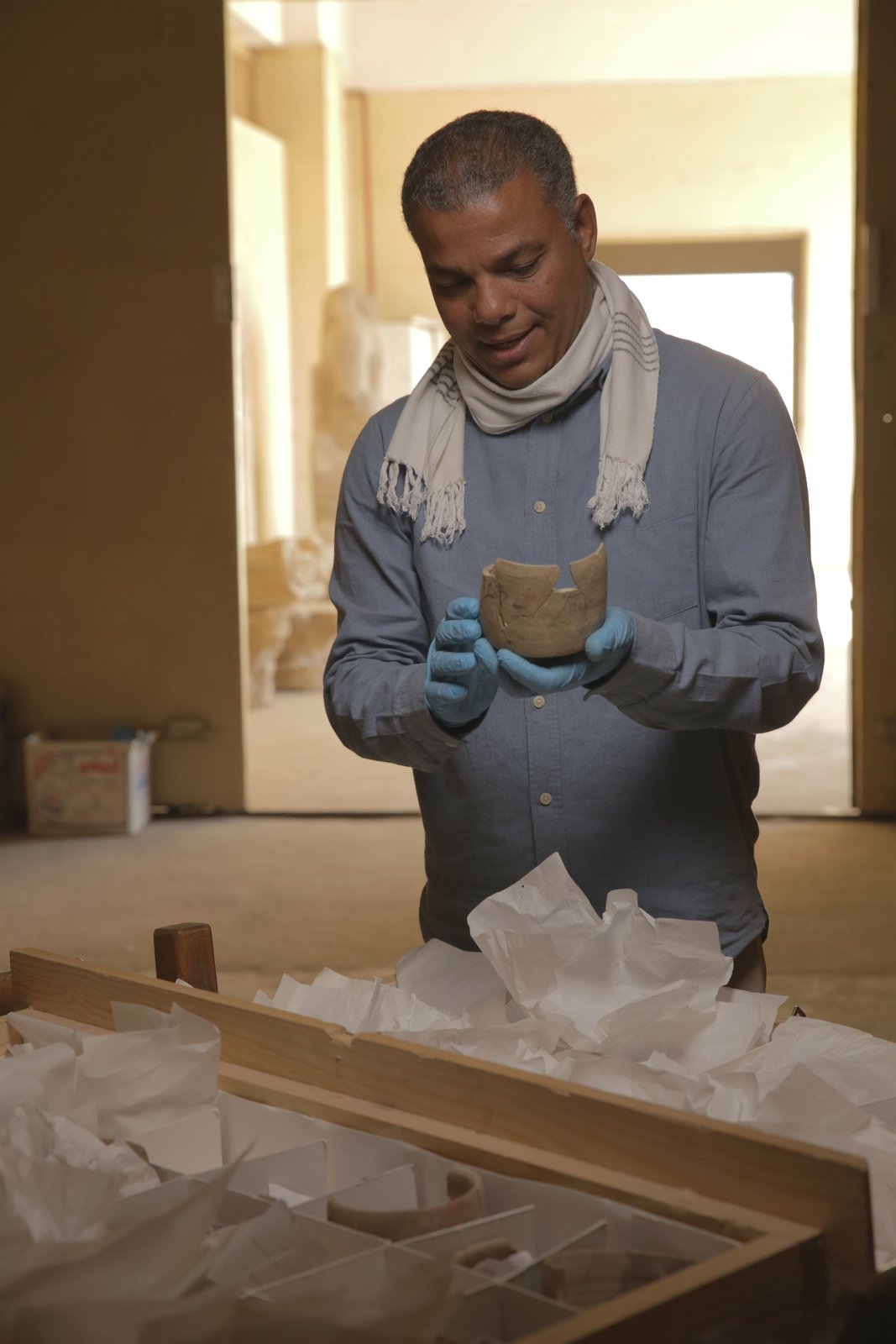
Saqqara, Egypt - Dr. Ramadan Hussein examines a pottery jar in the Saqqara storeroom. Cursive Egyptian script can be seen on the jar, giving the name of the embalming oil it once contained. The jar is just one of hundreds found at the site. (National Geographic/Piers Leigh)
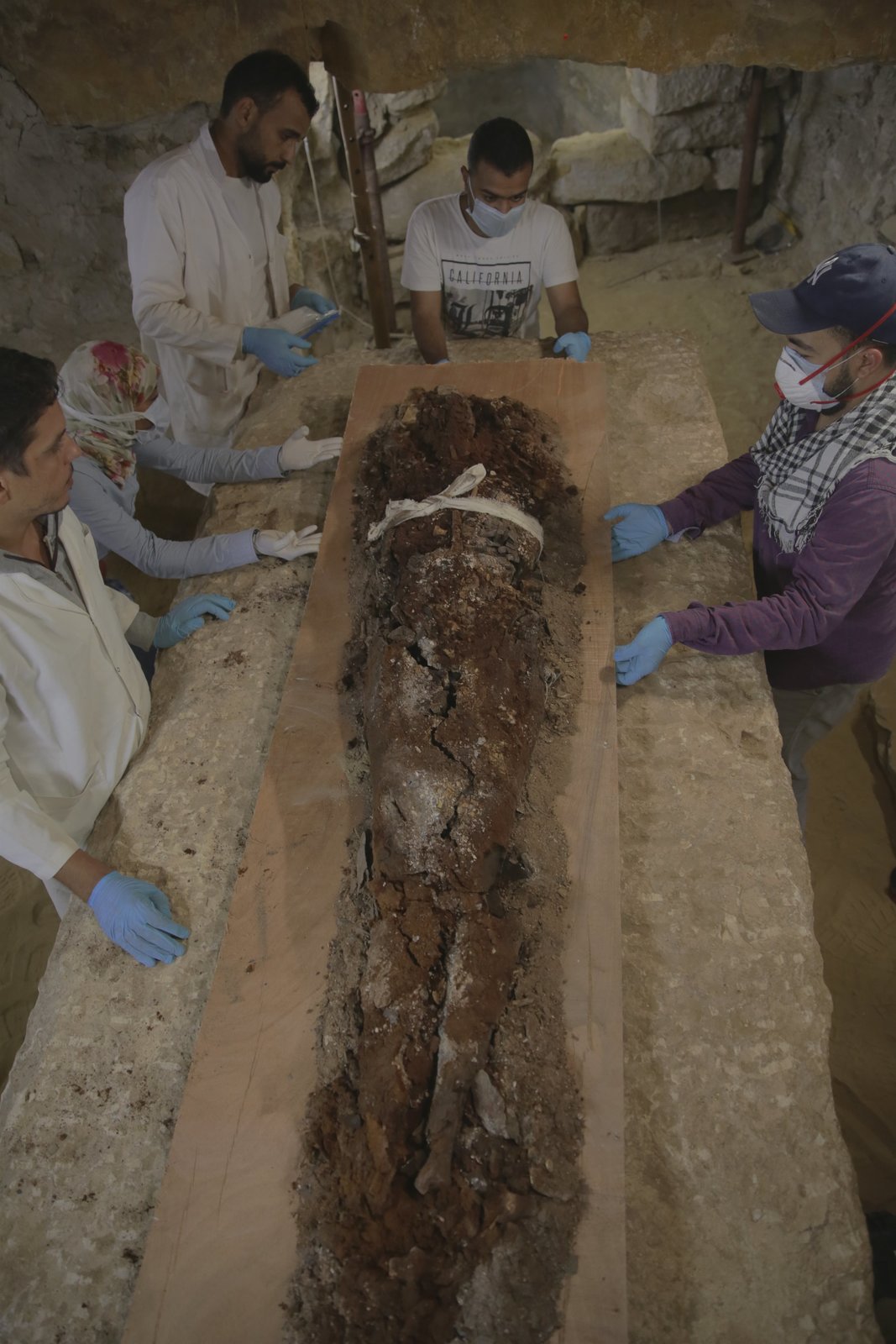
Saqqara, Egypt - A team of Egyptian archaeologists rest after removing the mummy of Didi-Bastet from her newly discovered burial chamber. The mummy is clearly degraded but bones can be seen through the debris. (National Geographic/Piers Leigh)
Dr Ramadan Hussein oversees the delicate task of opening the sarcophagus with the mysterious lifted lid. Leading the work is the site foreman Ammar (R). There's little room to maneuver in the claustrophobic chamber so the six tonne lid will need to be raised to the ceiling; a hugely dangerous task. (National Geographic/Piers Leigh)
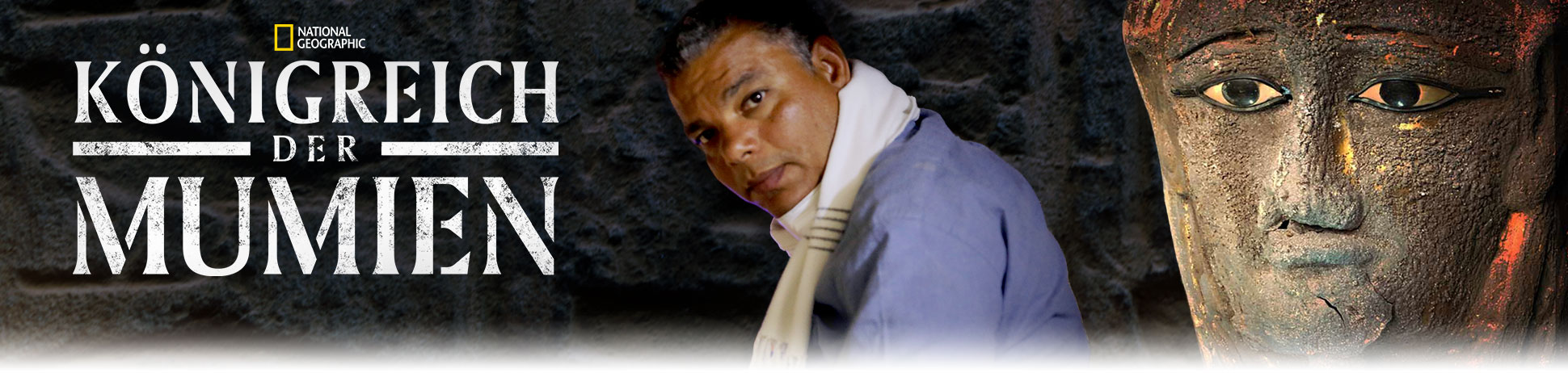
 Verborgene KammerProfessor Salima Ikram uses a light wand to illuminate a mummy in a 2,600 year old burial complex. Painted cartonnage and dozens of beads can be seen, indicating this was a high class burial.Bild: © Copyright © The National Geographic Channel.