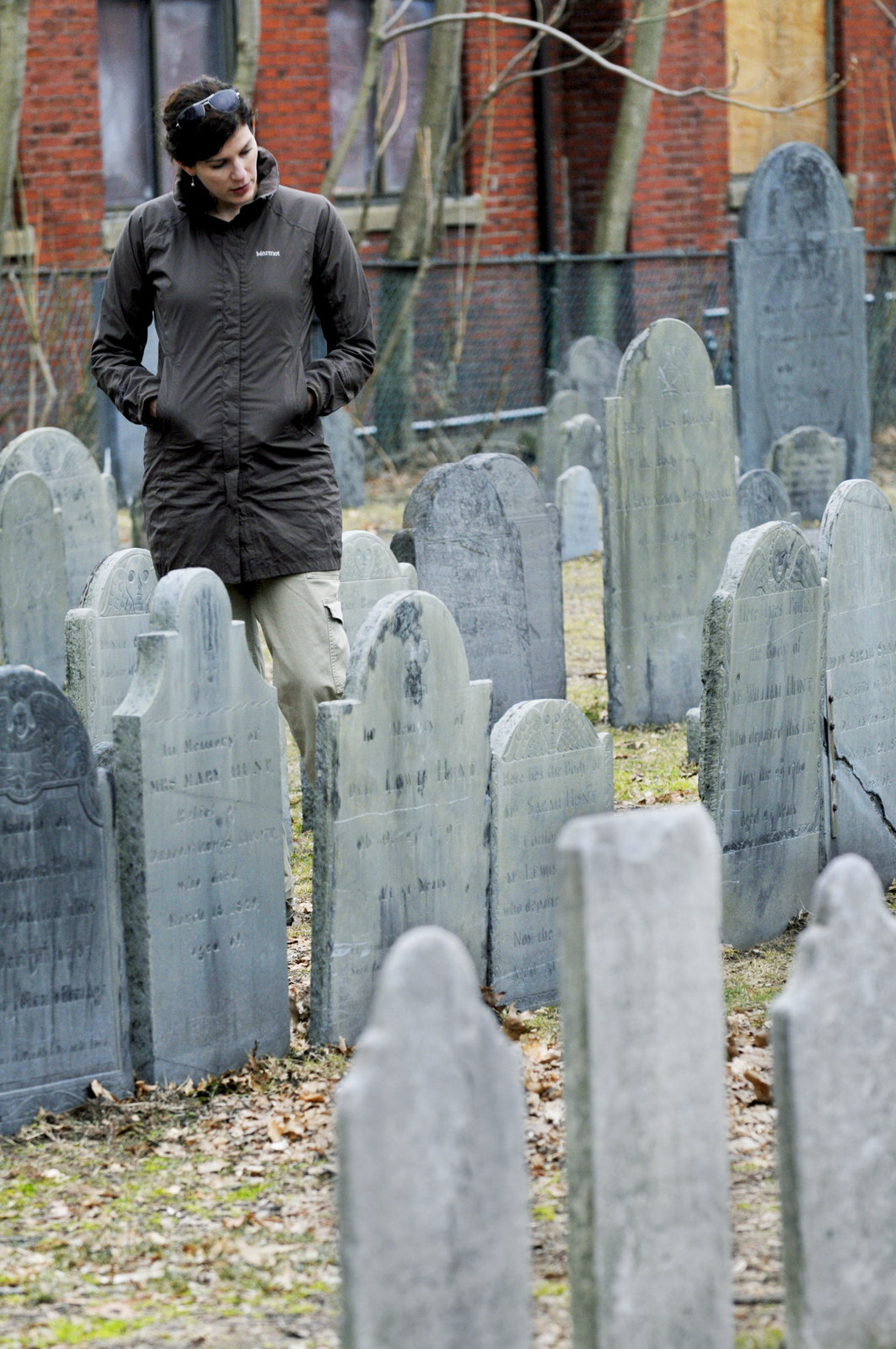
"Out of Egypt," in Salem, Mass. --- Host, Kara Cooney is in Salem Massachusetts talking with Alison D'Amario, Director of Education for the Salem Witch Museum. The first stop of the tour of Salem is at the Rebecca Nurse homestead. Kara and Alison talk about Nurse's life and her execution as a witch in 1692. Their conversation is inside the red colored house in Danvers. The original timbers, beams, floors and fireplace, which is lit are evident in the photographs. The second location is Gallows Hill in Salem, where several of the accused were hanged to death. There, Kara and Alison talk about the executions. Finally, the two walk to Burying Point Cemetery in Salem where some from the executions and trials are buried. Included in the photographs are director of photography Ken Willinger (man with camera and purple shirt). Director Neil Crawford, Kara's husband (long hair gray sweater and dark coat) Chaz Gray a co-executive producer (tall, big with light blue jacket, brown shirt).
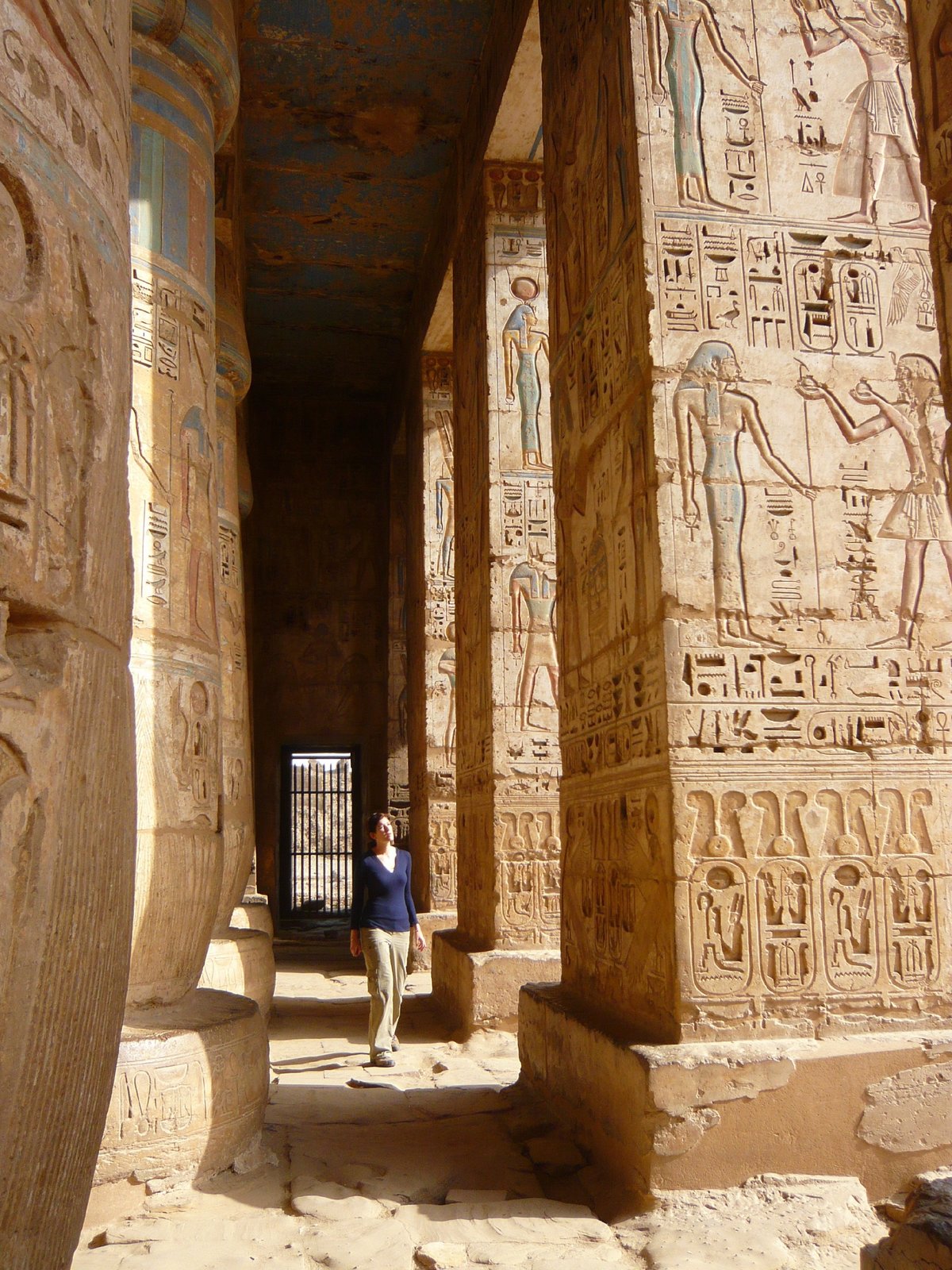
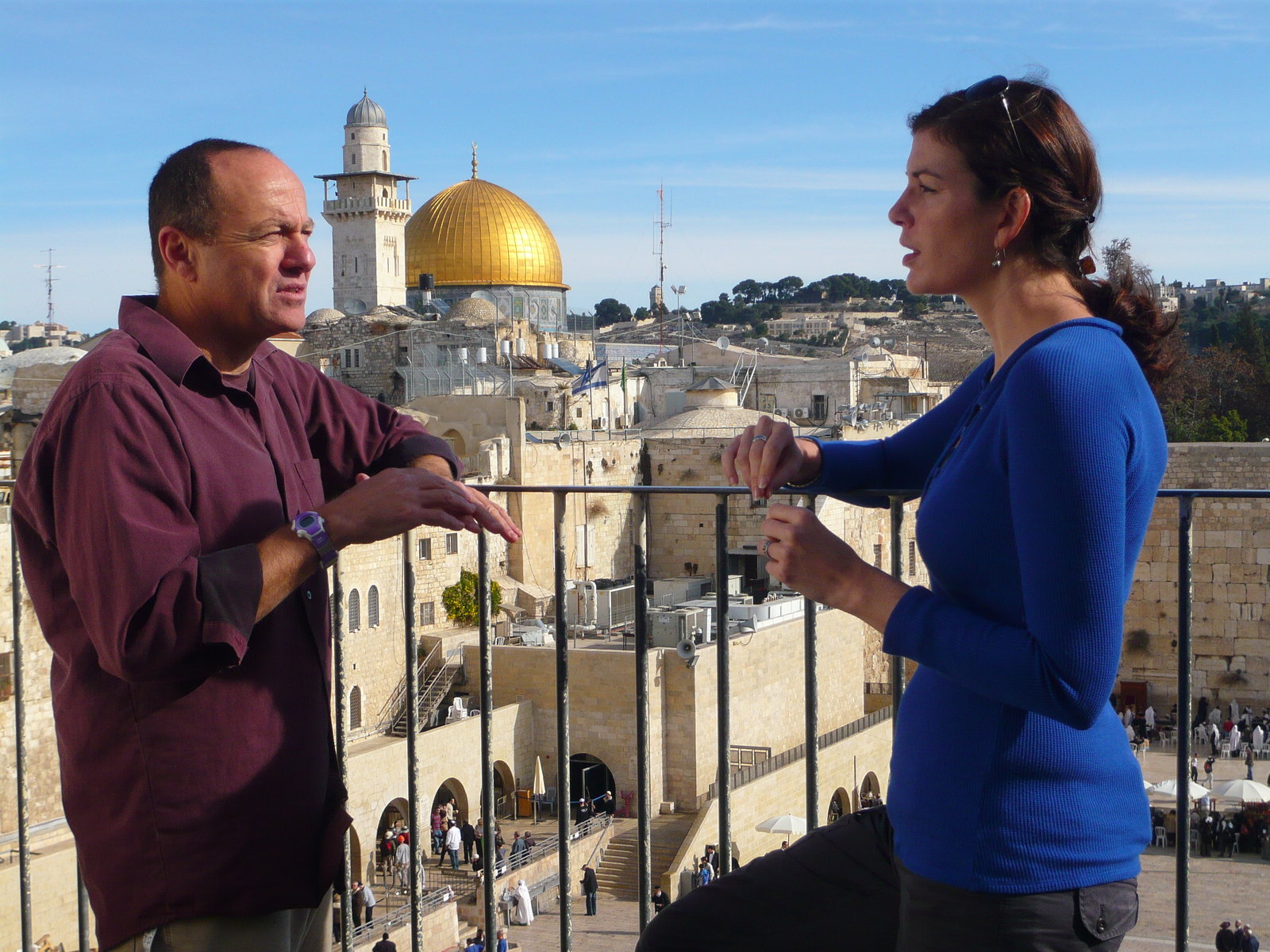
At the front of nearly every ancient Egyptian temple stands a stone wall, decorated with a massive depiction of the king crushing his enemies with a stone mace. This brutal imagery played a central role in the ancient Egyptian religion, believed to magically protect the temple from the forces of chaos. But Egyptologist Dr. Kara Cooney explains that this isnÕt unique. Be it human sacrifice at an Aztec pyramid, burning witches in Salem, or the torture chambers of the Spanish Inquisition, she demonstrates that acts of violence have continued to be a fundamental part of religious belief for millennia. Kara Cooney interviewing Nimrod Luz in Israel.
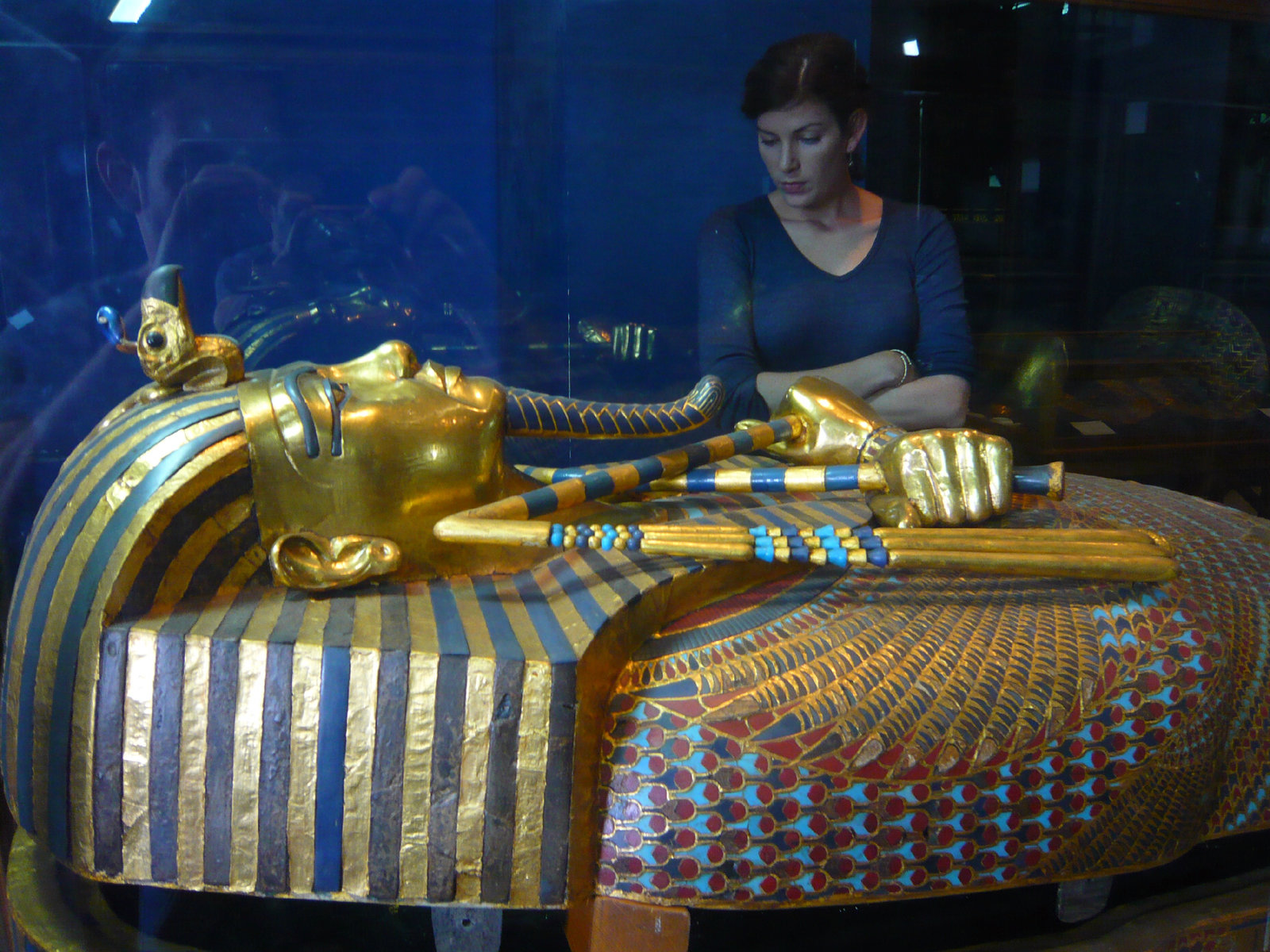
For ancient Egyptians, the dead body was a precious thing meant to be preserved. Egyptian mummies, as well as mummies from cultures as diverse as the Moche of Peru or the first city dwellers of the Middle East, all represent an intense and expensive preparation of the dead. Egyptologist Dr. Kara Cooney examines tombs, graves, and burials all over the world, explaining that many culturesÕ methods of treating the dead embody a coping mechanism for dealing with death itself, one unavoidable element that links people around the world and throughout history. From Disposal of the Dead episode: Kara Cooney and King Tut / Sarkofag Tutanchamona / Złota maska Tutanchamona
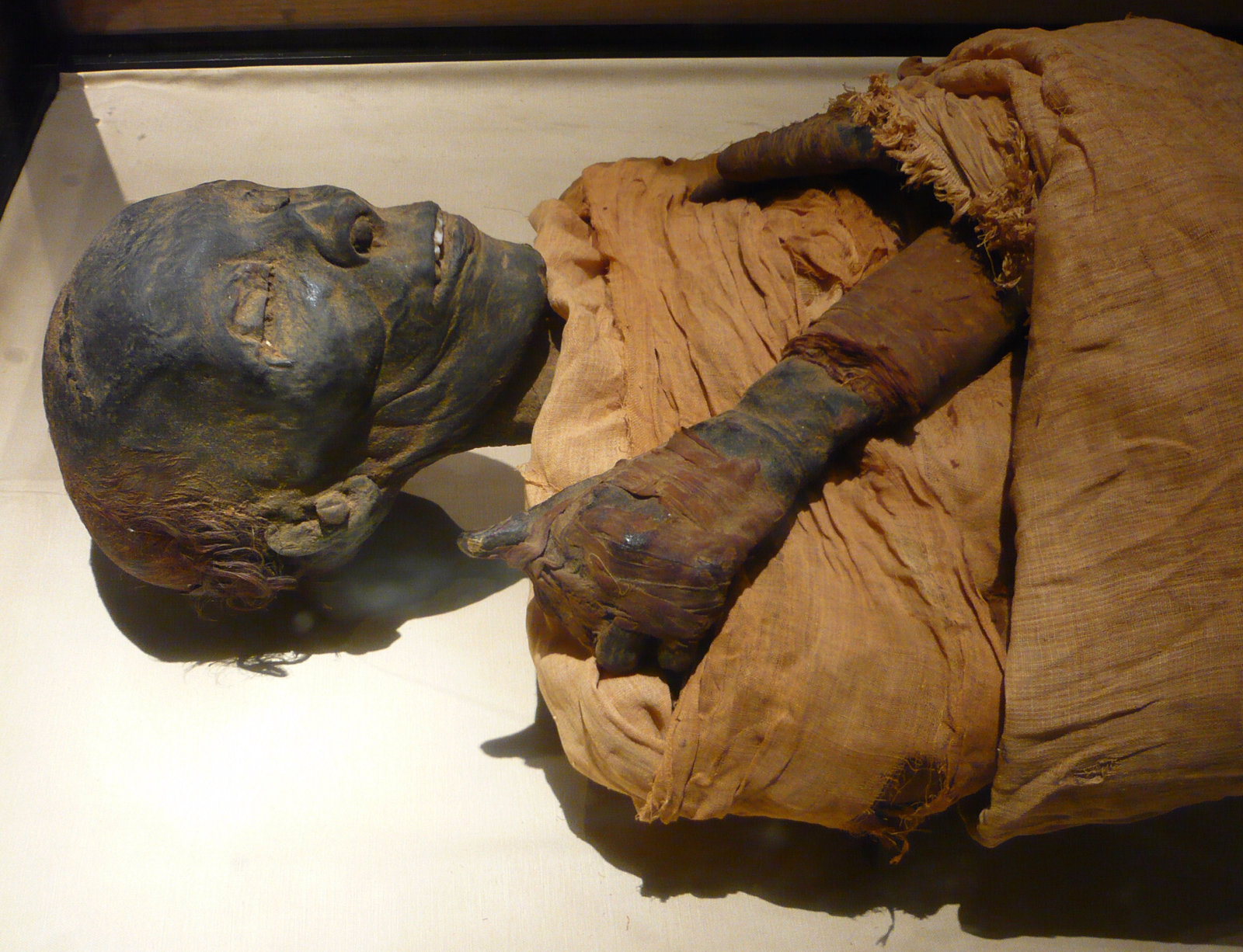
The bodies of our hallowed dead Ð preserved and worshiped for generations. These objects are often called ÔrelicsÕ, and their existence represents a near universal behavior in human culture. A relic could be the finger of a Catholic saint or a mummified ibis bird buried in an ancient Egyptian catacomb. For millennia people have ascribed meaning and power to the remnants of their hallowed dead. Egyptologist Dr. Kara Cooney visits sites of pilgrimage, both ancient and modern, to explain the reasons and motives behind the value we place on treasured flesh and bone. Royal mummy / Królewska mumia
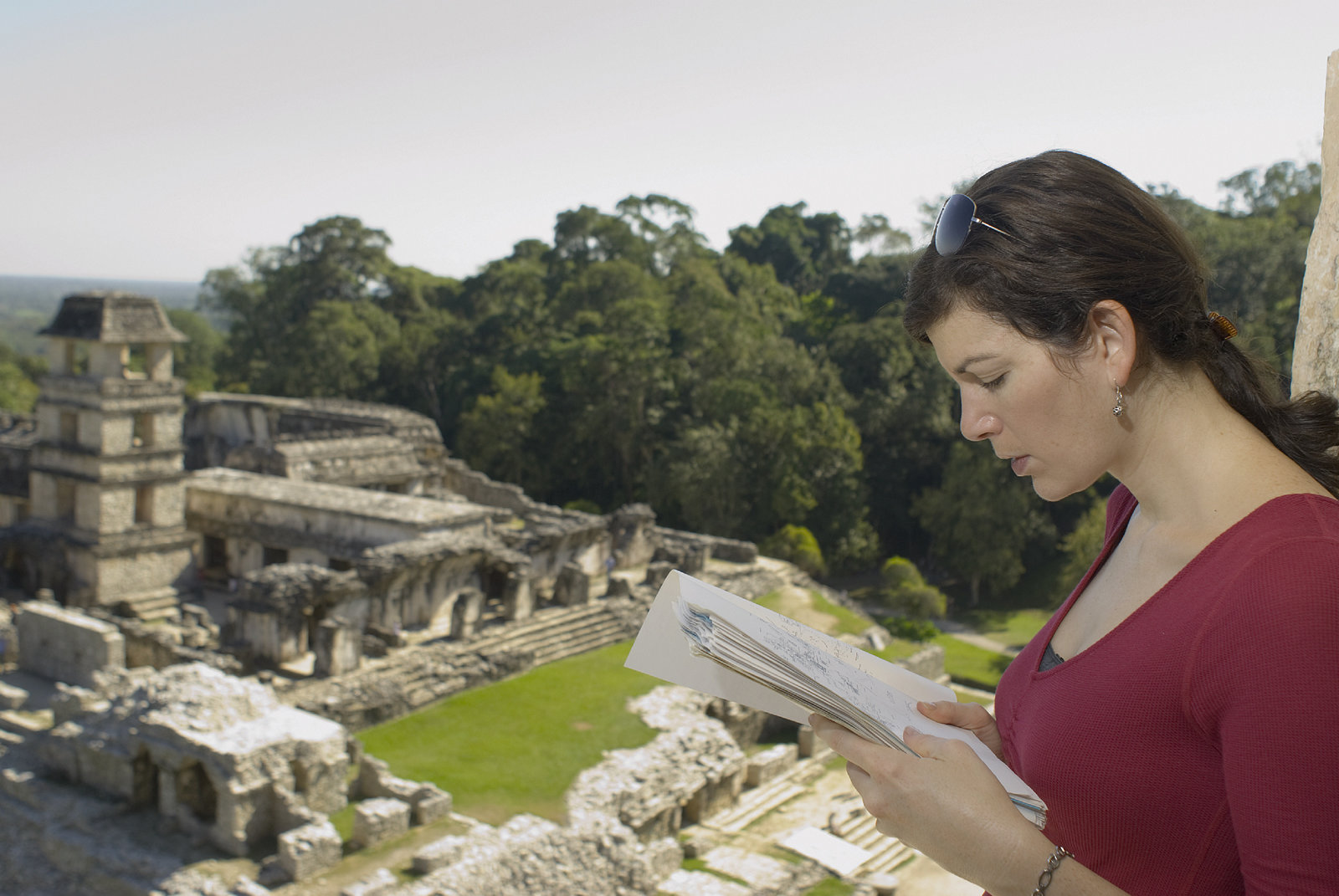
The Discovery series 'Out of Egypt' filmed a Pyramids episode at the Mayan civilization archeological site of Palenque in the Mexican state of Chiapas on February 21, 2009. Kara Cooney is the co-executive producer and host of the series. Kara looks at reproductions of glyphs while stand atop the Temple of the Inscriptions. The Palace is in the background below.
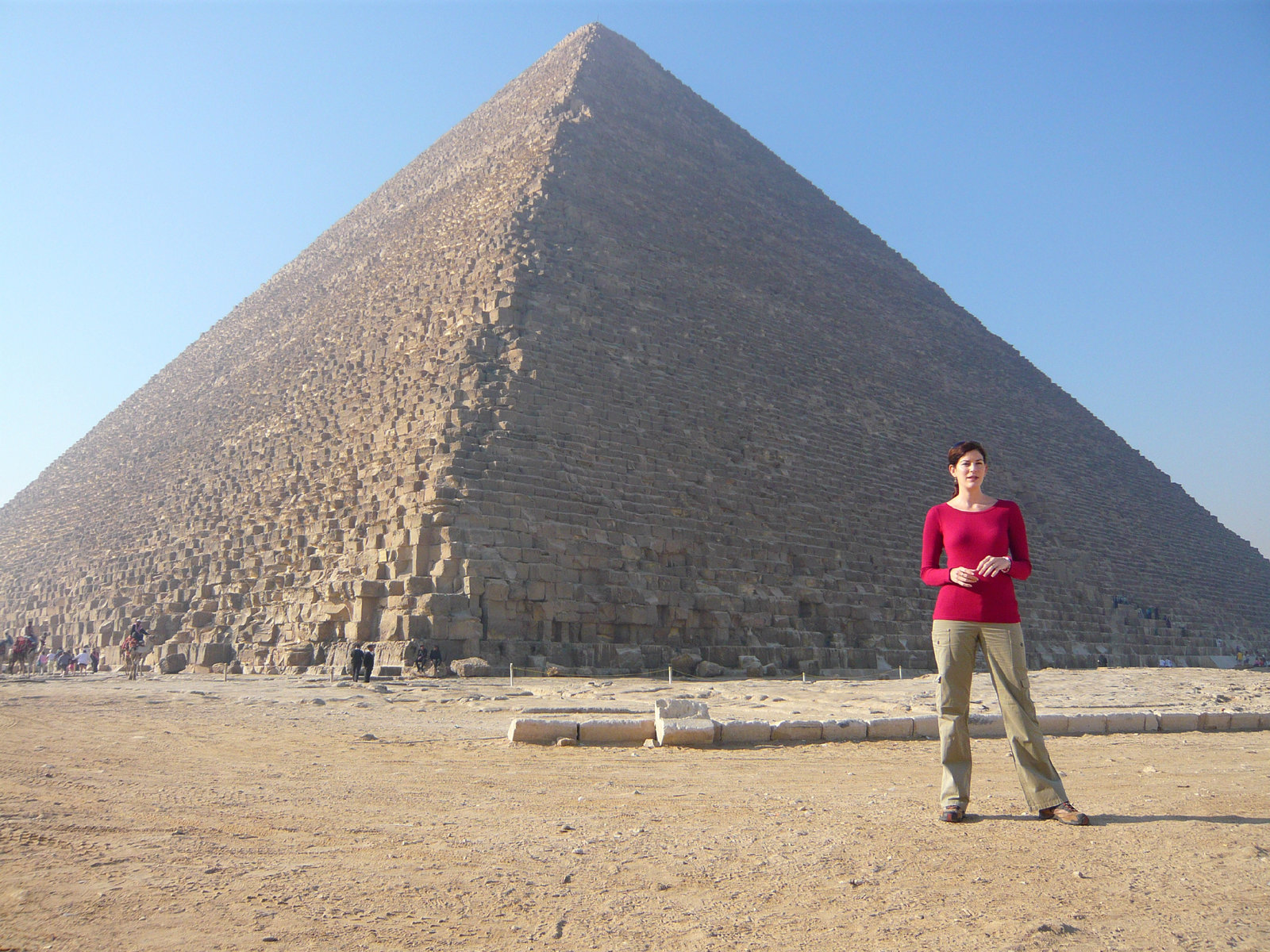
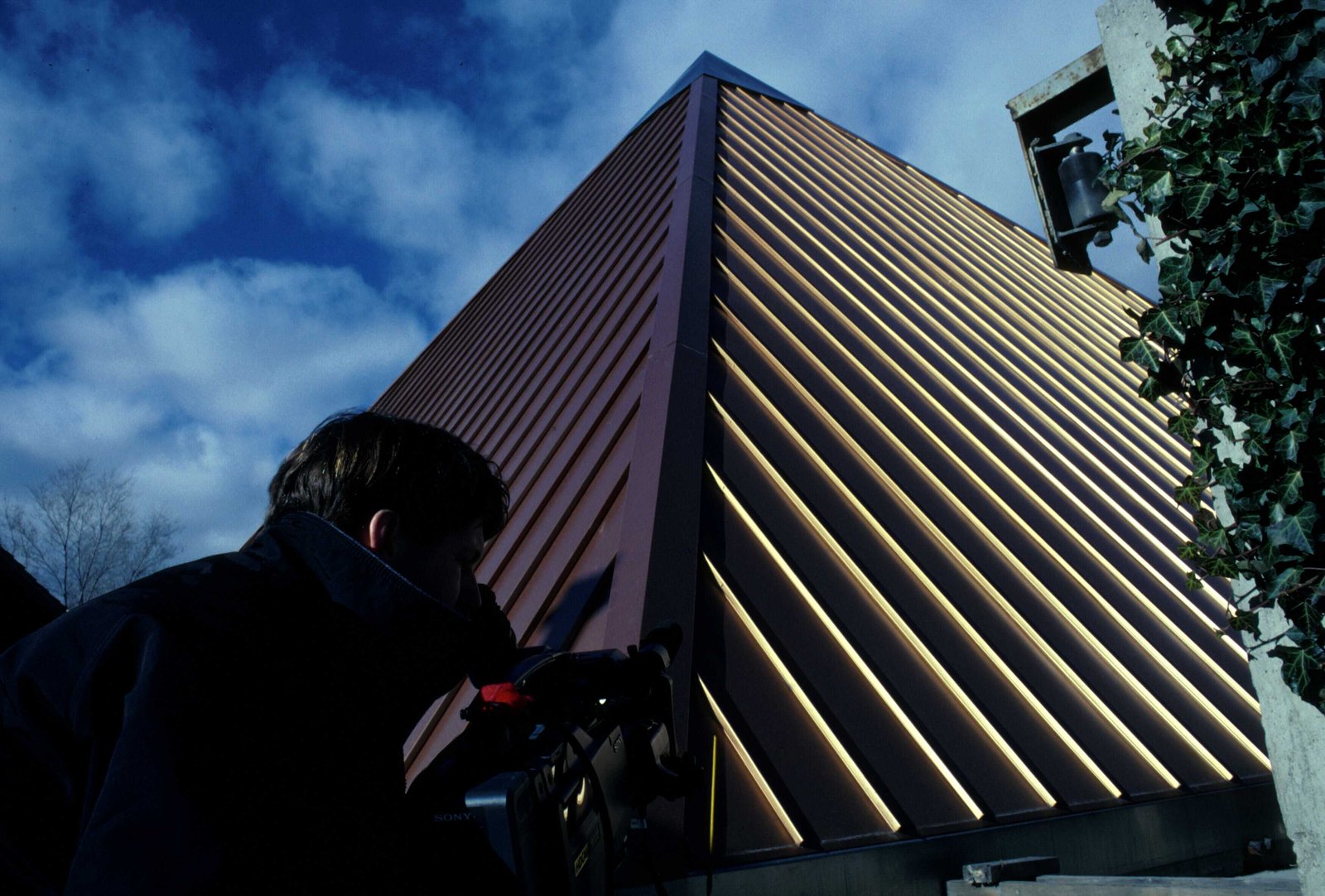
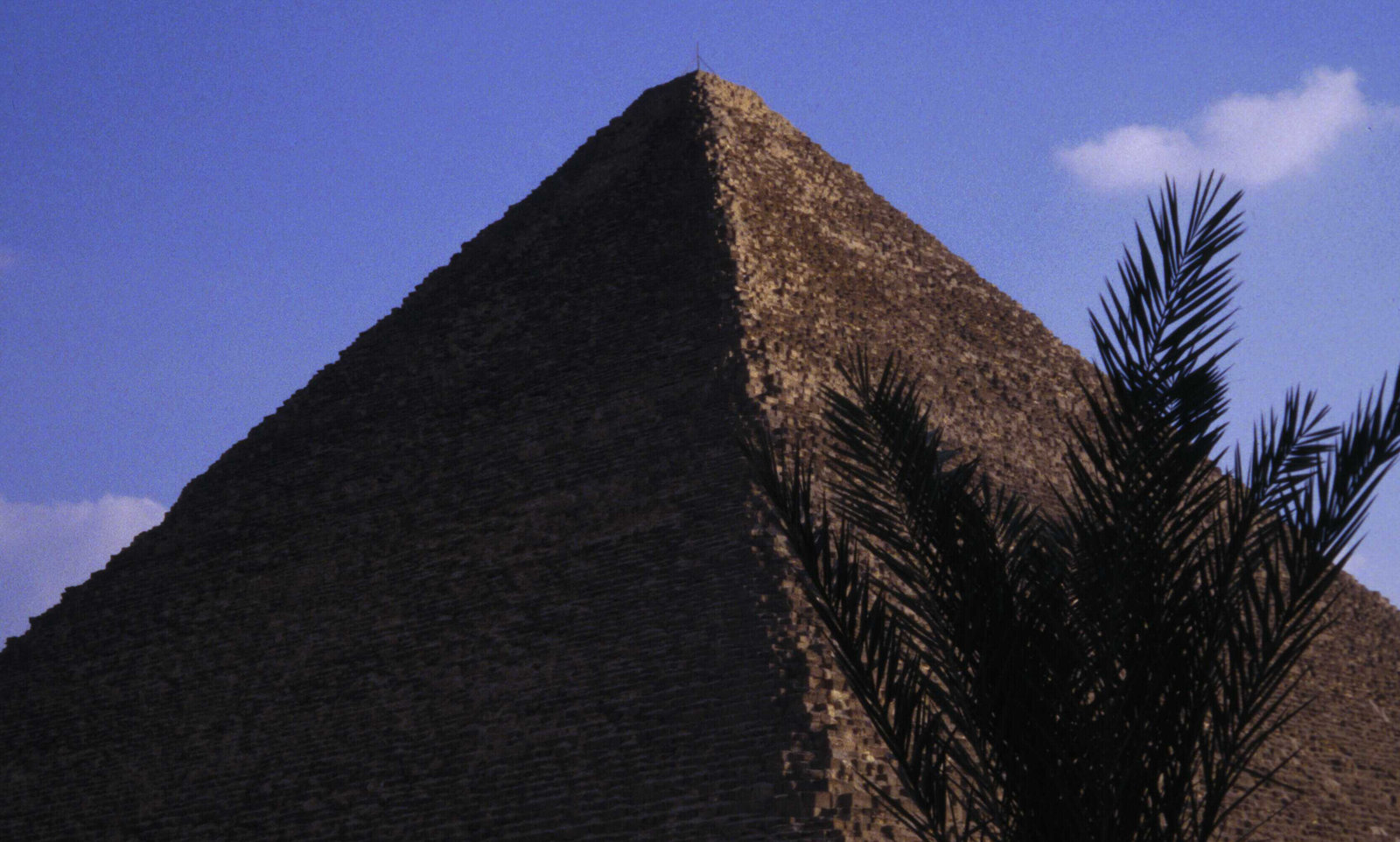
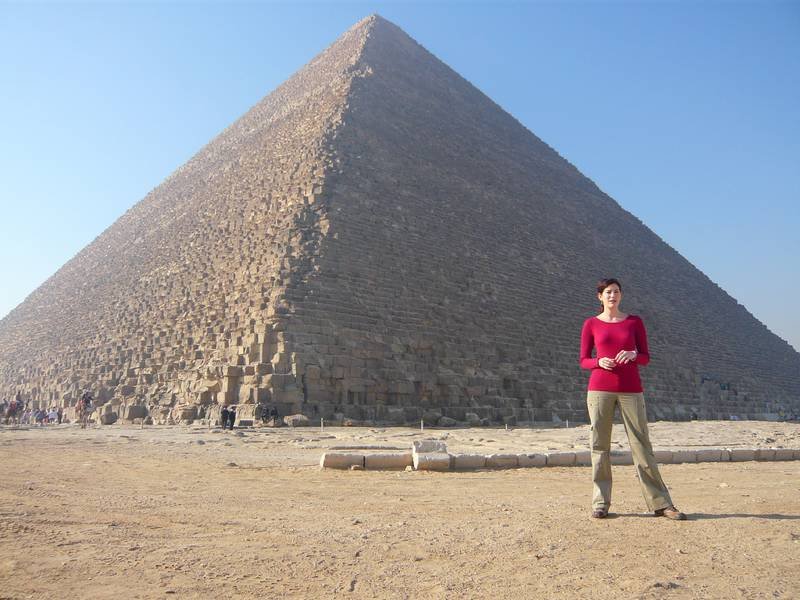
The great pyramids at Giza Ð awe-inspiring icons of Ancient Egypt. But these monuments are not unique. Thousands of pyramids have been built all across the globe. Dr. Kara Cooney travels from the very first pyramids in Egypt to the temples of Mexico, and even to round pyramids in Sri Lanka, demonstrating that the history of these buildings hides a long and twisted evolution of architecture and form. Ancient pyramid builders everywhere attempted to master an ideal sacred shape, but what did the pyramid really mean to the ancient people? And why did they work so hard to perfect it? The Shape of Gods/Pyramids episode. Wide-shot of Kara in front of pyramid.
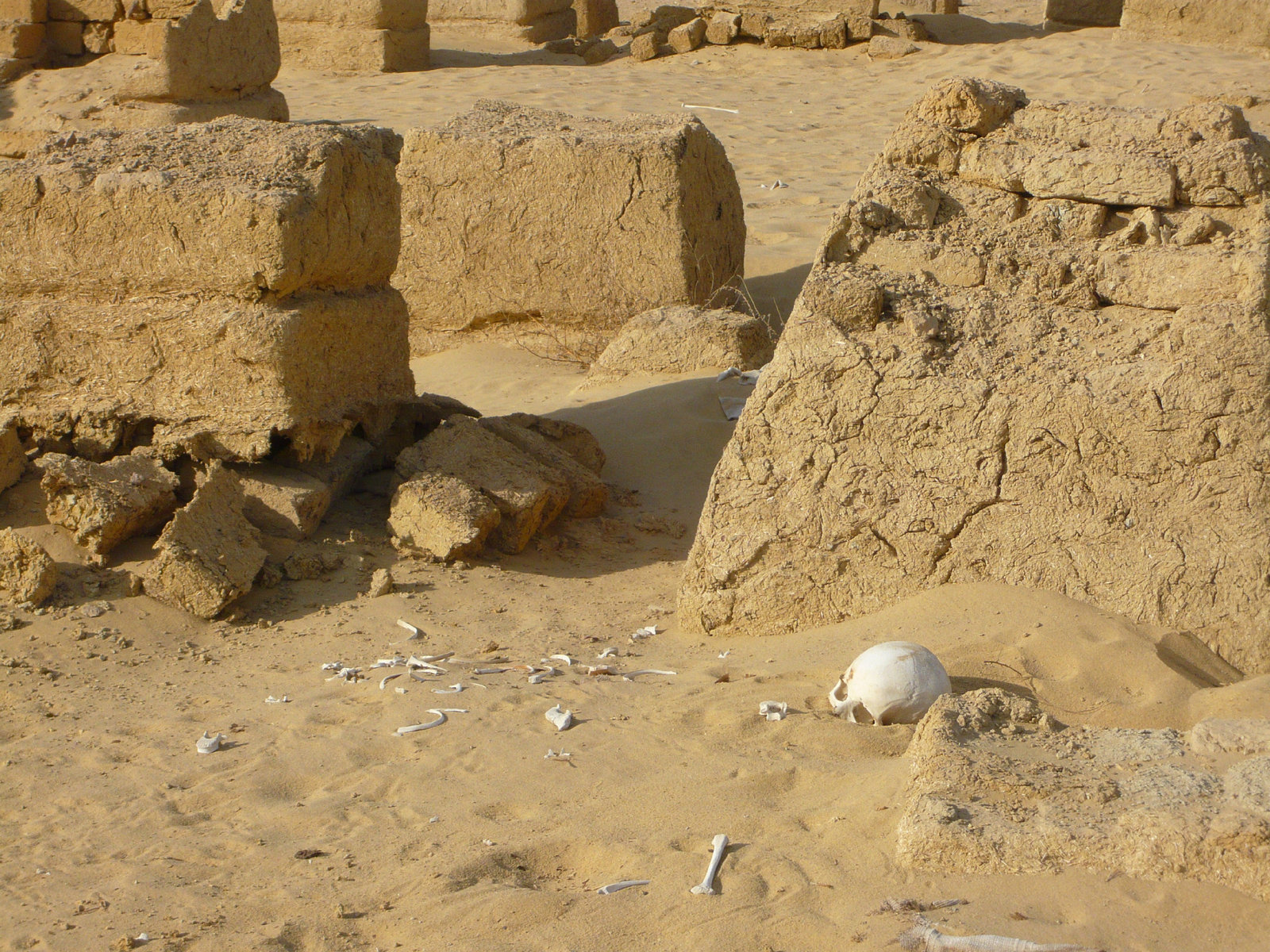
For ancient Egyptians, the dead body was a precious thing meant to be preserved. Egyptian mummies, as well as mummies from cultures as diverse as the Moche of Peru or the first city dwellers of the Middle East, all represent an intense and expensive preparation of the dead. Egyptologist Dr. Kara Cooney examines tombs, graves, and burials all over the world, explaining that many culturesÕ methods of treating the dead embody a coping mechanism for dealing with death itself, one unavoidable element that links people around the world and throughout history. From Disposal of the Dead episode: bones found at Keranis Graveyard.
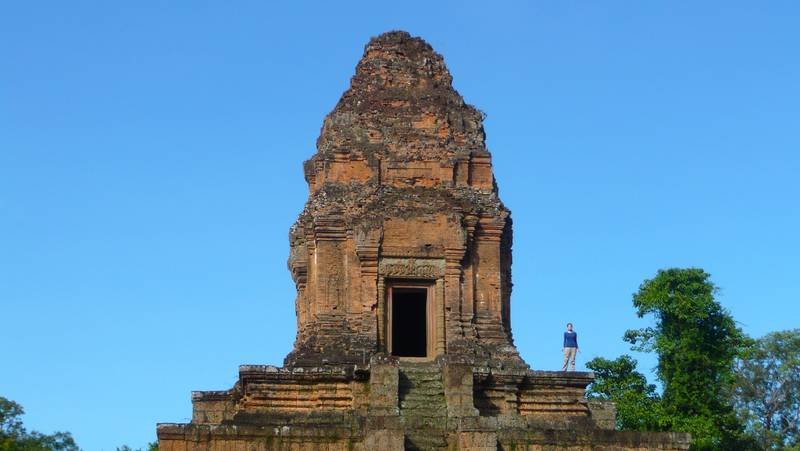
The great pyramids at Giza Ð awe-inspiring icons of Ancient Egypt. But these monuments are not unique. Thousands of pyramids have been built all across the globe. Dr. Kara Cooney travels from the very first pyramids in Egypt to the temples of Mexico, and even to round pyramids in Sri Lanka, demonstrating that the history of these buildings hides a long and twisted evolution of architecture and form. Ancient pyramid builders everywhere attempted to master an ideal sacred shape, but what did the pyramid really mean to the ancient people? And why did they work so hard to perfect it? The Shape of Gods/Pyramids episode. Kara Cooney at Angkor Wat.
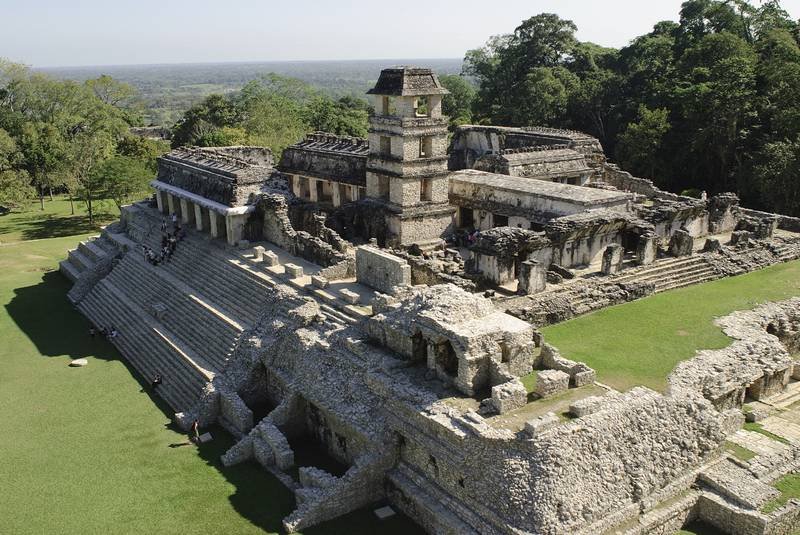
The Discovery series 'Out of Egypt' filmed a Pyramids episode at the Mayan civilization archeological site of Palenque in the Mexican state of Chiapas on February 21, 2009. Kara Cooney is the co-executive producer and host of the series. A view of the Palace building site from the Temple of the Inscriptions.
The great pyramids at Giza Ð awe-inspiring icons of Ancient Egypt. But these monuments are not unique. Thousands of pyramids have been built all across the globe. Dr. Kara Cooney travels from the very first pyramids in Egypt to the temples of Mexico, and even to round pyramids in Sri Lanka, demonstrating that the history of these buildings hides a long and twisted evolution of architecture and form. Ancient pyramid builders everywhere attempted to master an ideal sacred shape, but what did the pyramid really mean to the ancient people? And why did they work so hard to perfect it? The Shape of Gods/Pyramids episode. Wide-shot of Kara in front of pyramid.
 Bild: © Discovery Channel
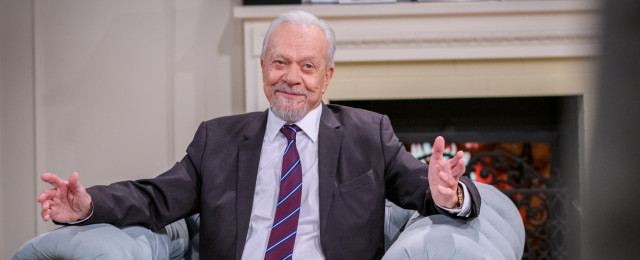
 "Sturm der Liebe": Urgestein Dirk Galuba verlässt ARD-Telenovela nach 21 Jahren