Bild: © National Geographic Channel
Haifischflossenjäger
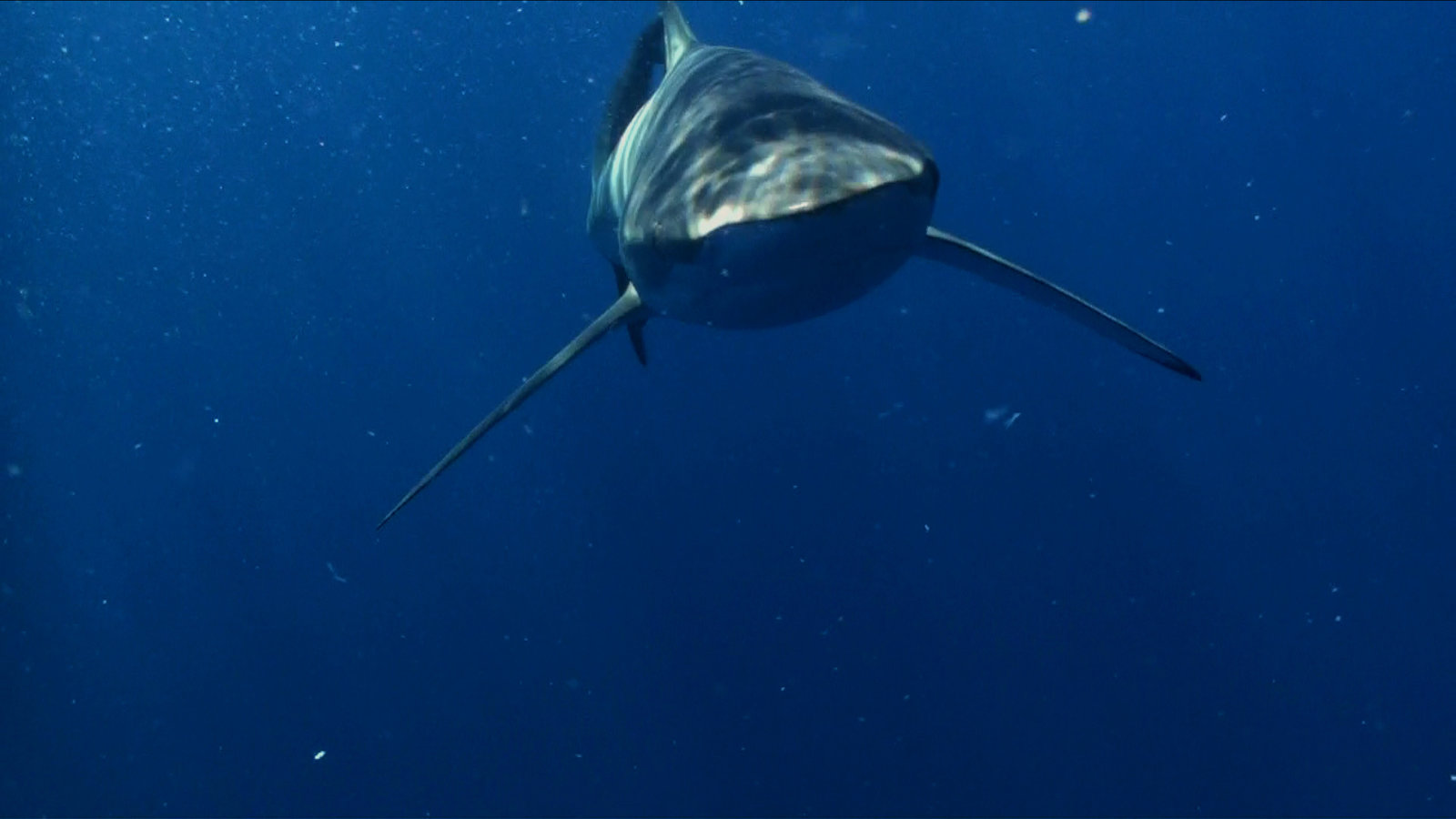
Socorro Island: An unidentified shark swimming around Socorro Island. (Photo Credit: National Geographic Channels/ Fischer Productions)
Bild: © National Geographic Channels/ Fischer Productions
Die Todeszone
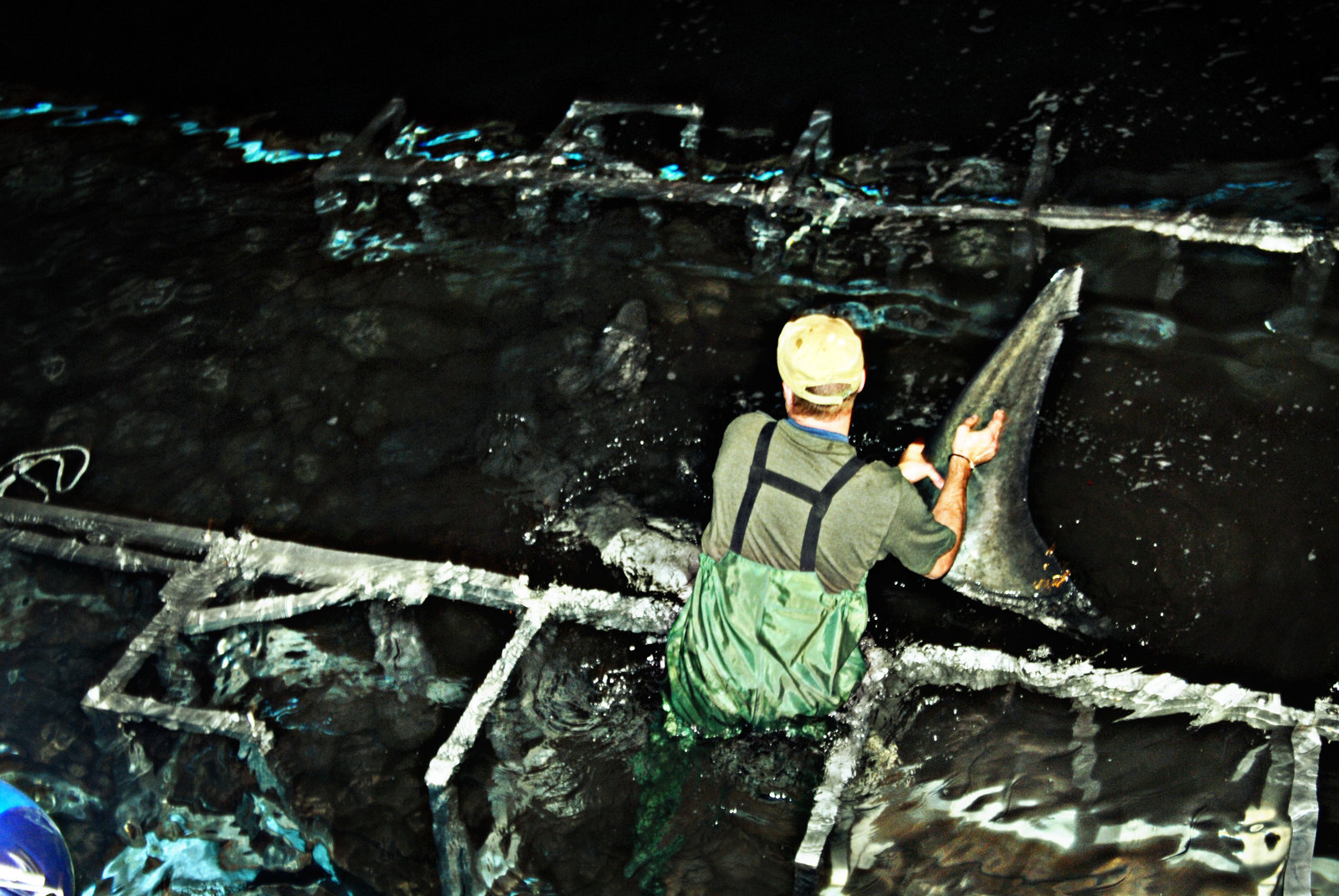
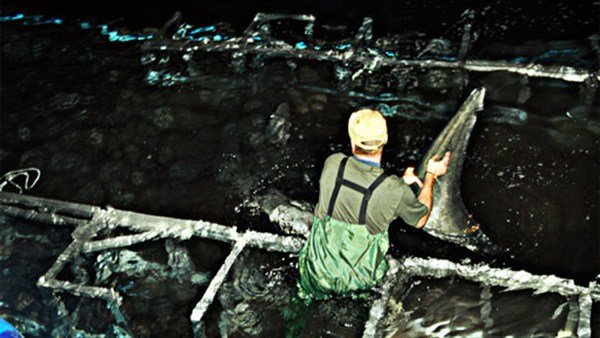
Guadalupe Island, Mexico: Dorsal fin tagging at night.
(photo credit: © Chris Ross/Chris Fischer). Night SharkonDeck DorsalFin Tagging
Bild: © Chris Ross/Chris Fischer
Auf rauer See
Bild: © 4+
Amys Baby
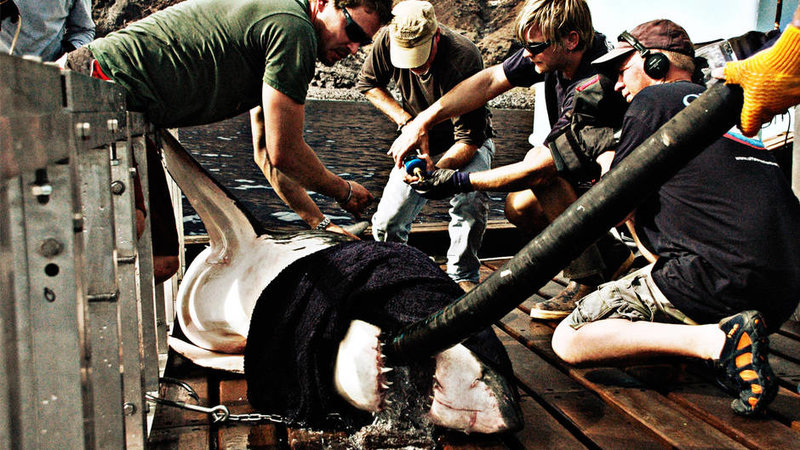
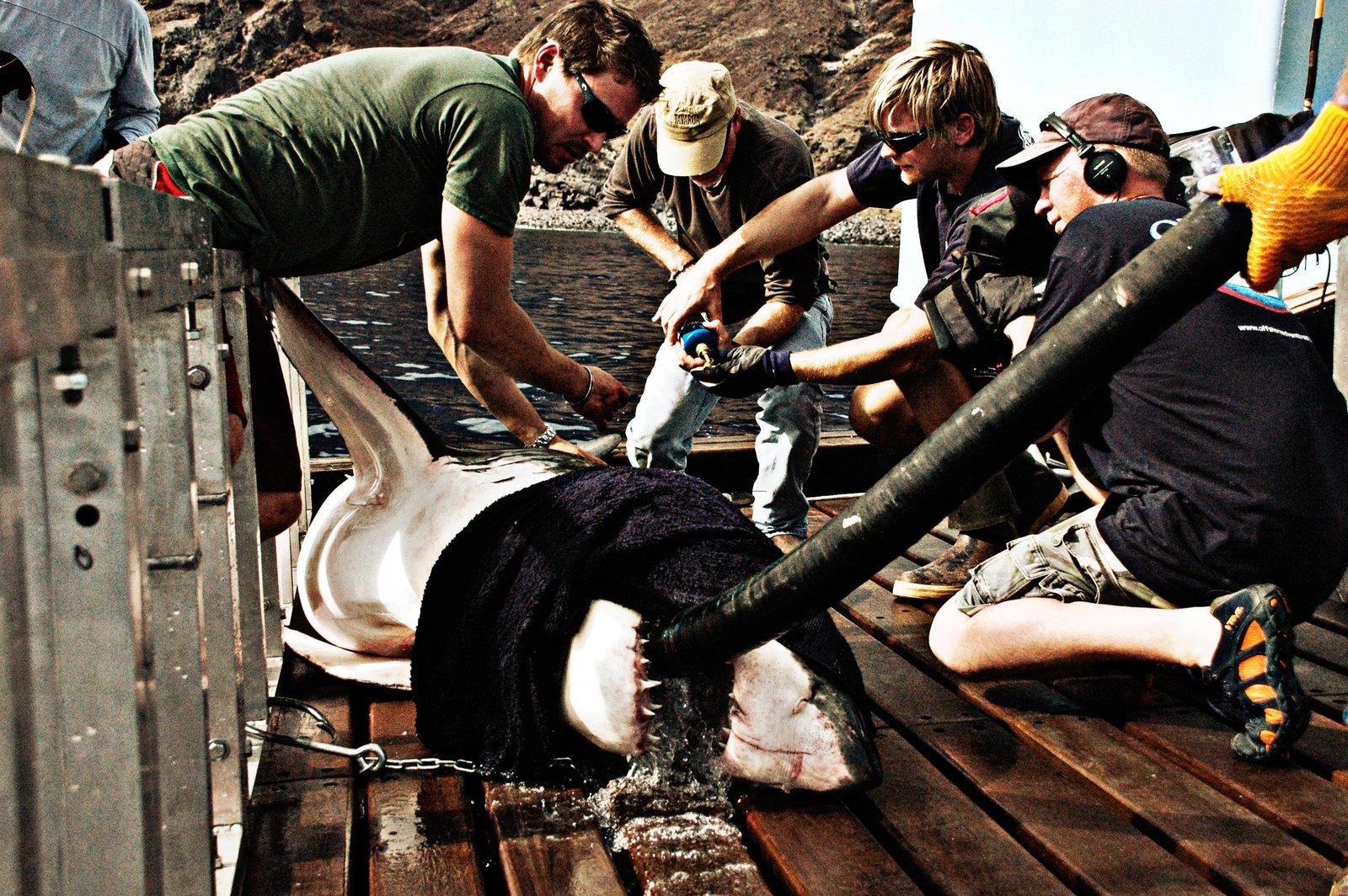
Guadalupe Island, Mexico: (Left to right) Crew member, Chad Kiesel and expert angler, Chris Fischer tag a 14 ft female great white shark to track her to breeding grounds. The hydration hose in the shark's mouth keeps the it alive while the team measures, tags, and takes blood samples.
Bild: © Chris Ross/Chris Fischer
Vor der Küste Mexikos
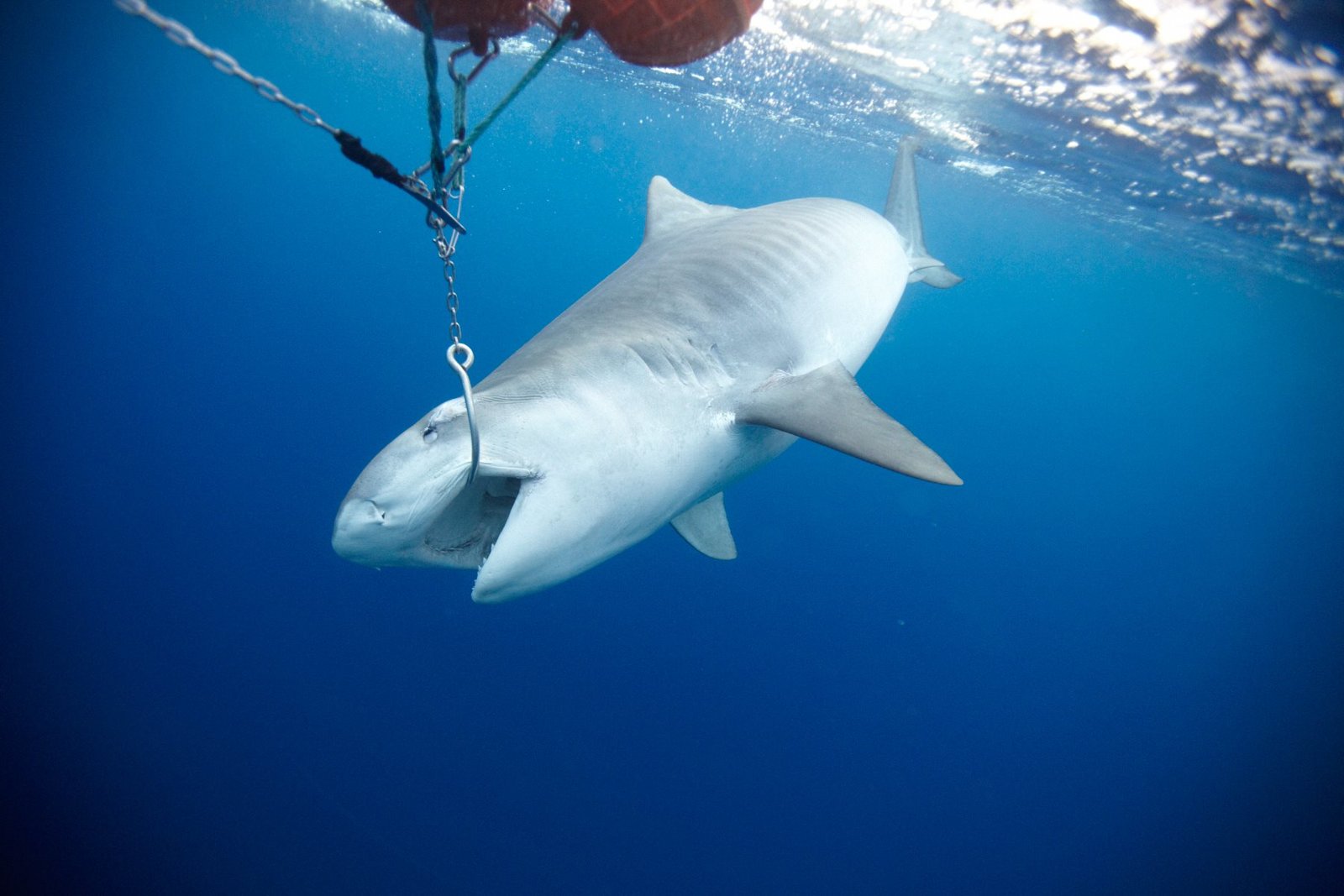
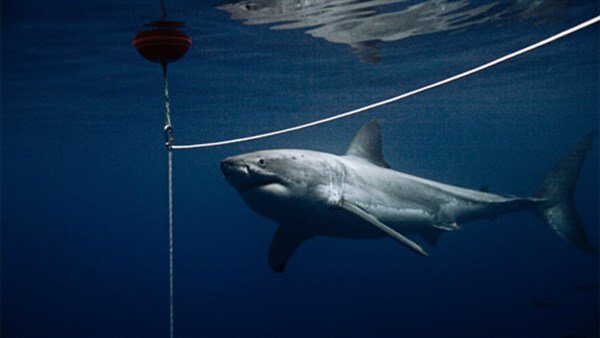
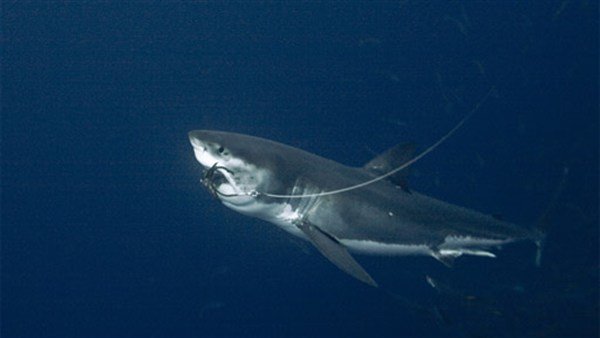
Revillagigedos Islands: Close-up underwater shot of a hooked shark. Orange buoys with short lines keep the shark and hook nearer to the surface so that the crew can bring the shark within reach and onboard the boat for further inspection.
(Photo Credit: Fischer Productions / Mark Frapwell)
Bild: © Fischer Productions
Tigerhaie auf der Flucht
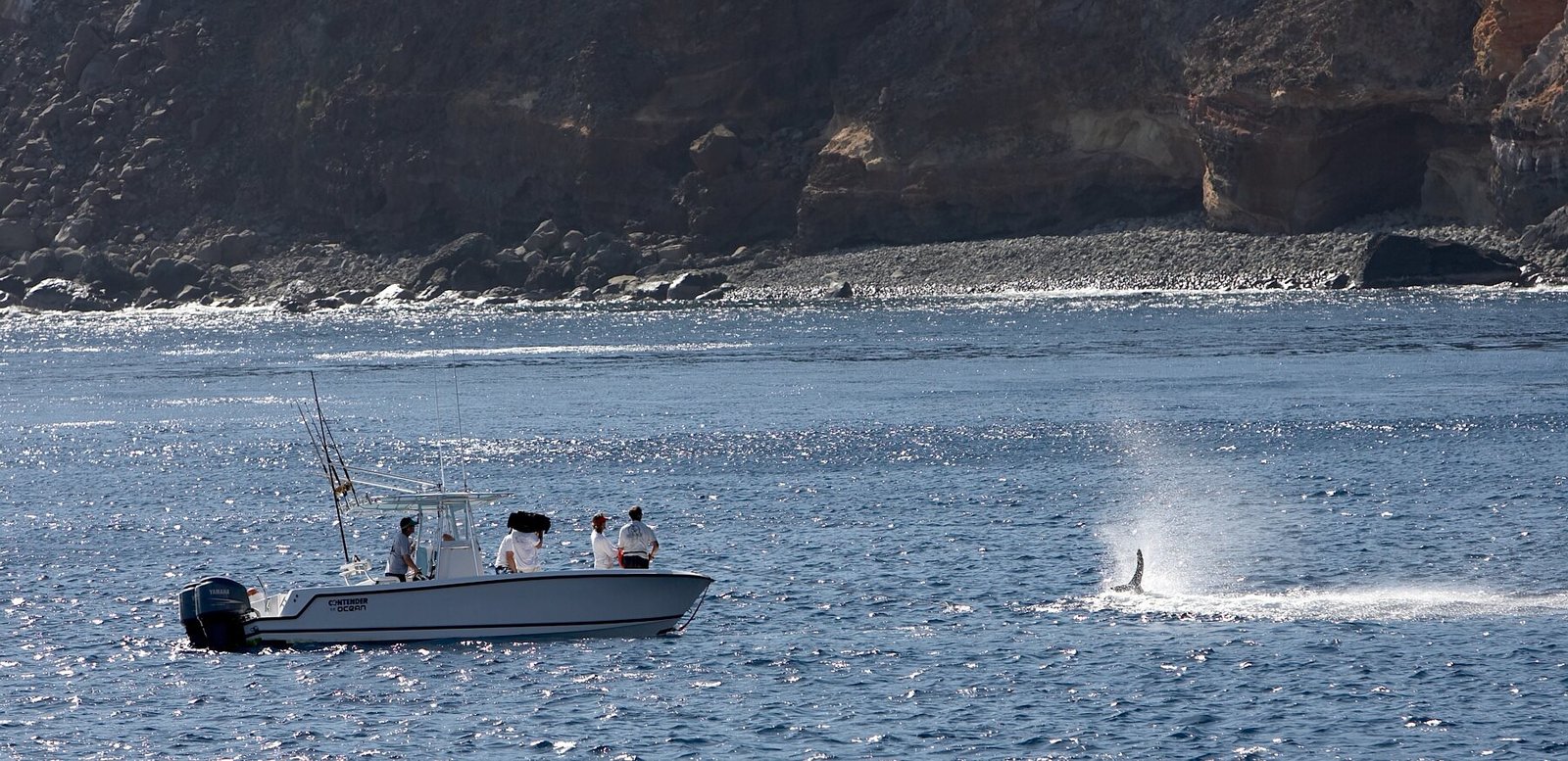
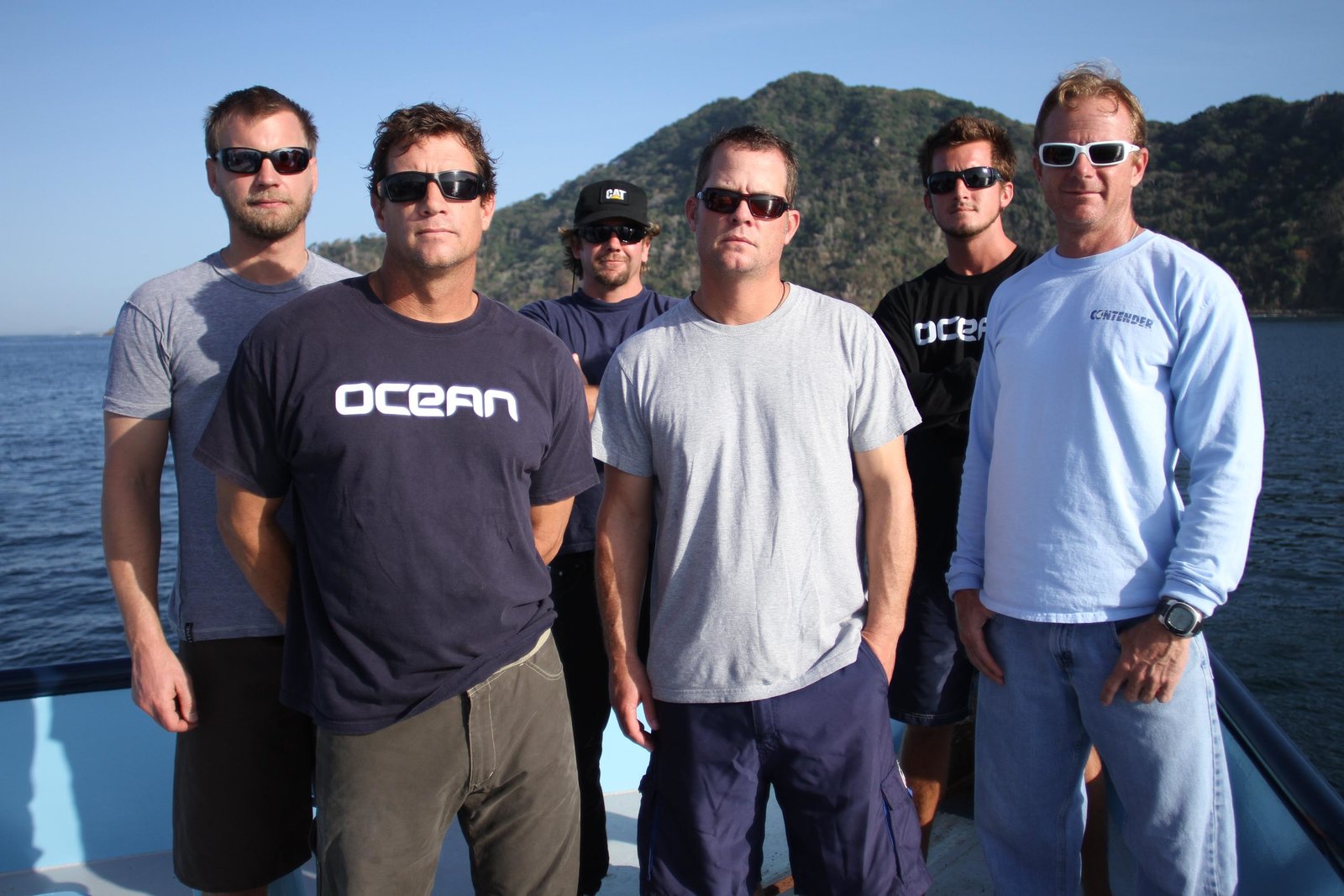
Revillagigedos Islands: Some of the Shark Men on The Contender preparing to bring in a hooked shark.
(Photo Credit: Fischer Productions / Mark Frapwell)
Bild: © Fischer Productions
Der erste Biss
A great white shark being released by crew member David Olson.
Bild: © National Geographic Channel
Tigerhaie auf der Flucht
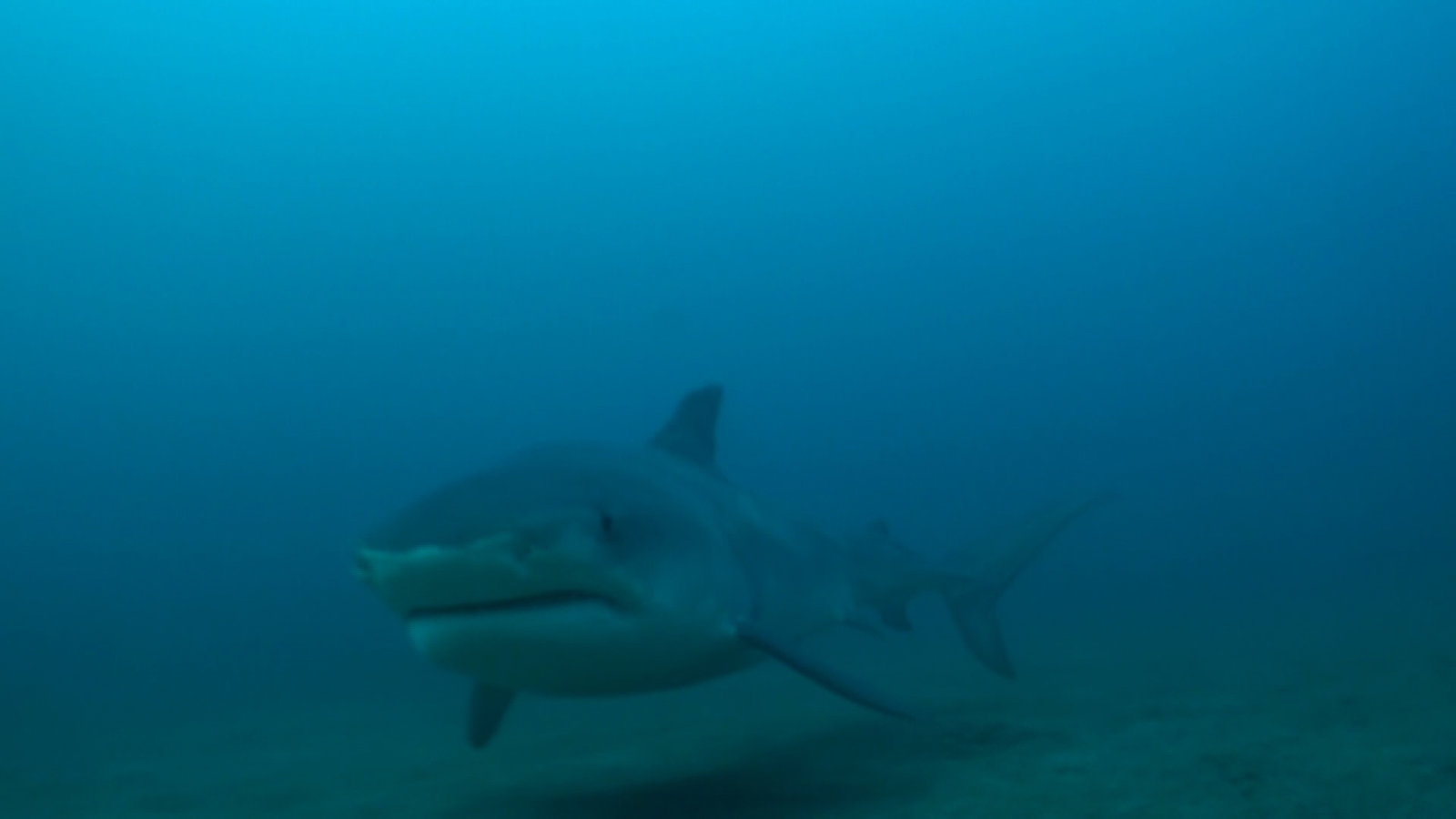
Socorro Island: An unidentified shark swimming under the boat. (Photo Credit: National Geographic Channels/ Fischer Productions)
Bild: © Fischer Productions
Die Todeszone
Bild: © Chris Ross/Chris Fischer
Vor der Küste Mexikos
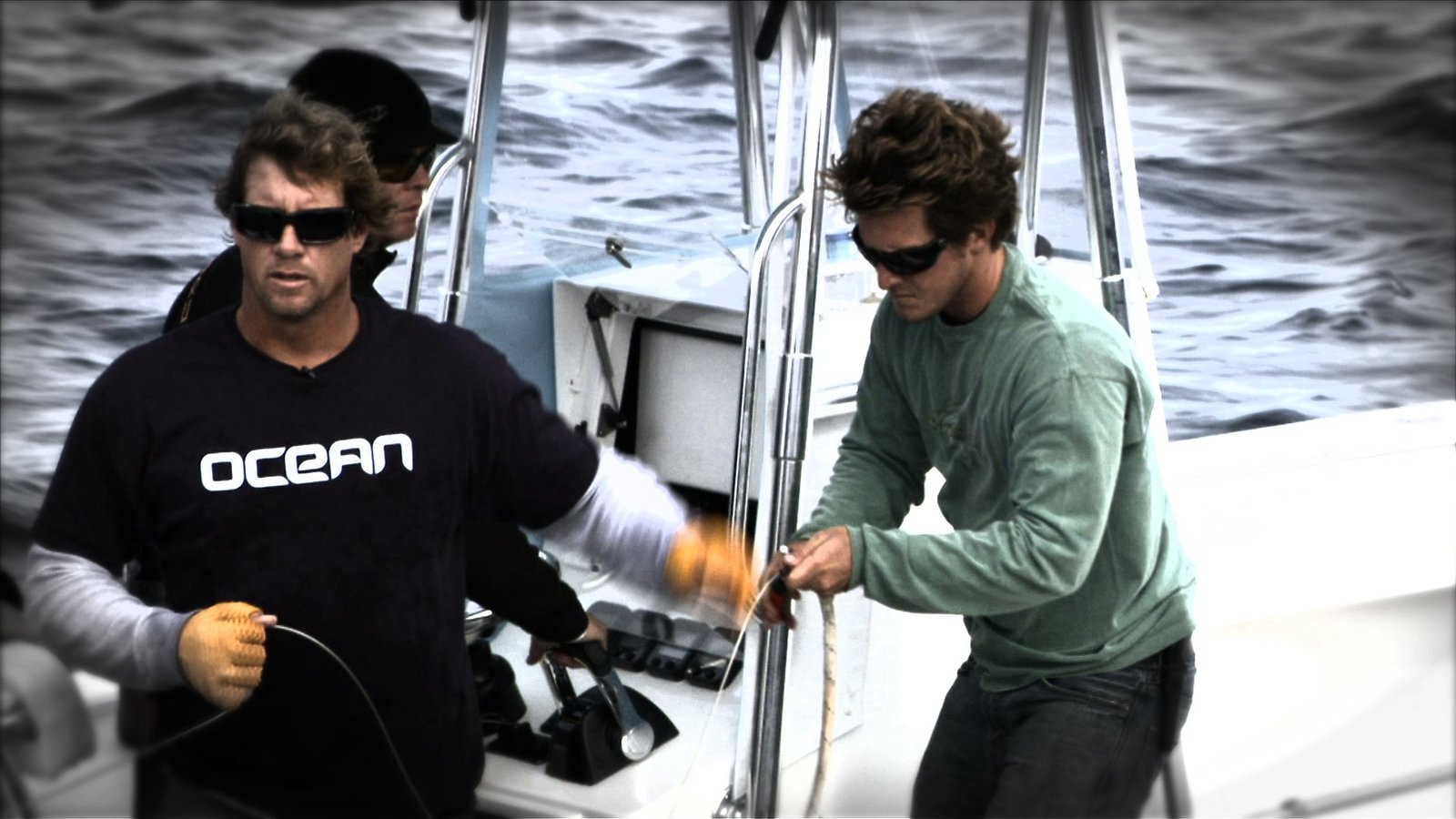
Isla San Benedicto: Chris, Brett, and Todd during fight time with the shark. (Photo Credit: National Geographic Channels/ Fischer Productions)
Bild: © Fischer Productions
Tigerhaie auf der Flucht
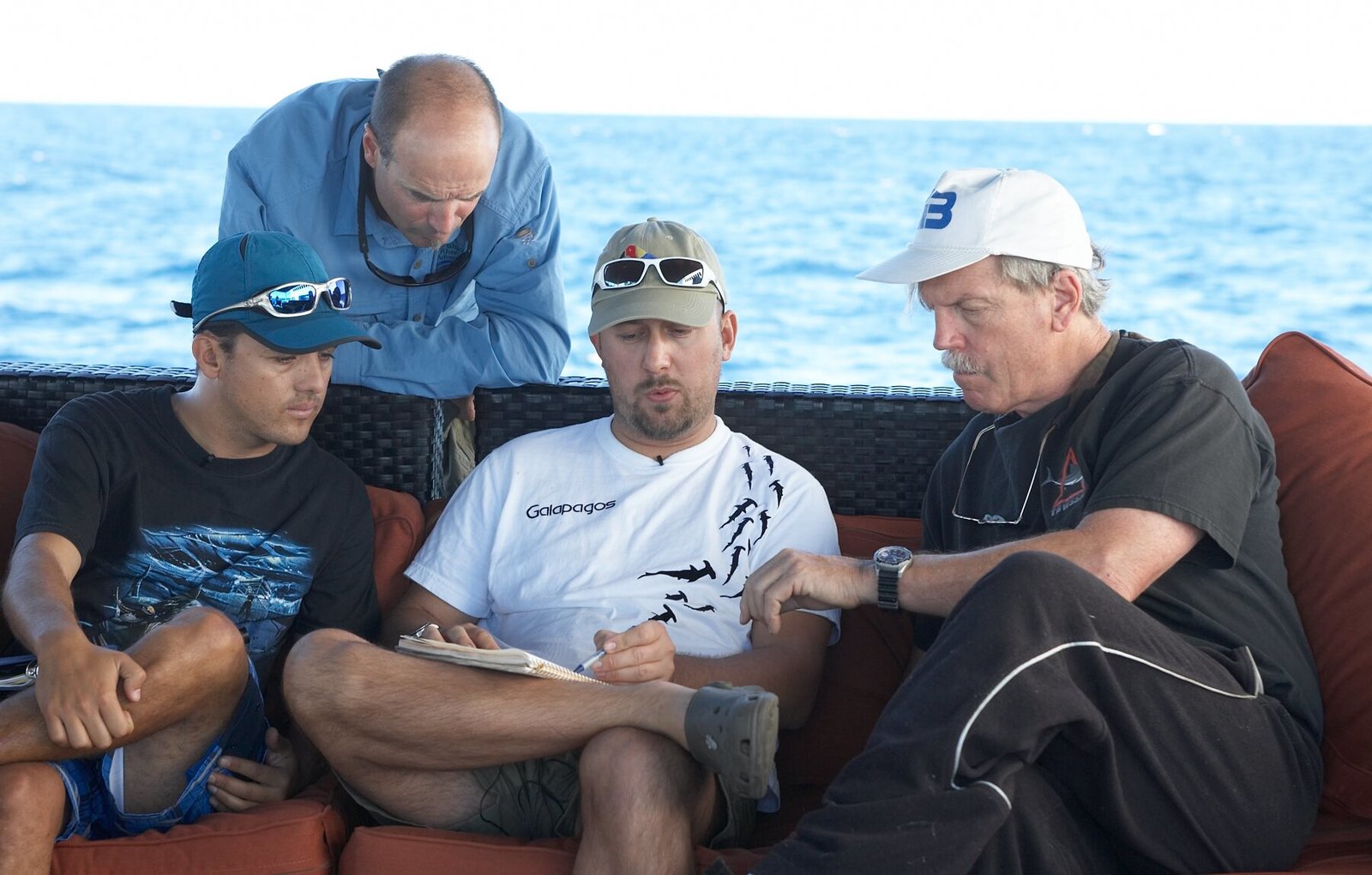
Revillagigedos Islands: Whitey, Mauricio, Alex, and Dr. Klimley sitting on the Mother ship looking at research.
(Photo Credit: Fischer Productions / Mark Frapwell)
Bild: © Fischer Productions
Die Suche nach dem Riesenkalmar
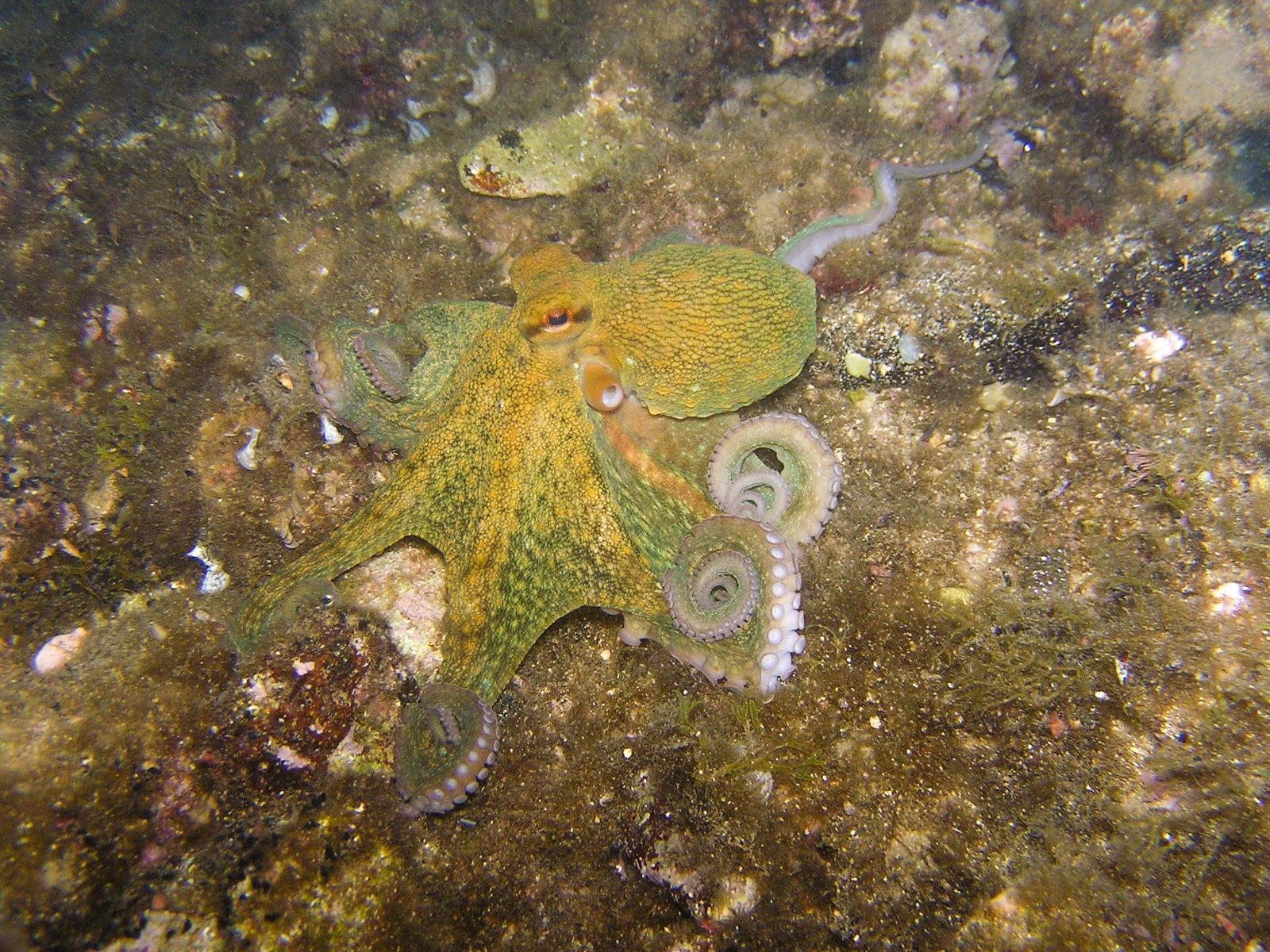
Squid.
Bild: © Creative Commons
Free for commercial use
No attribution required
Unterwegs im Naturschutzgebiet
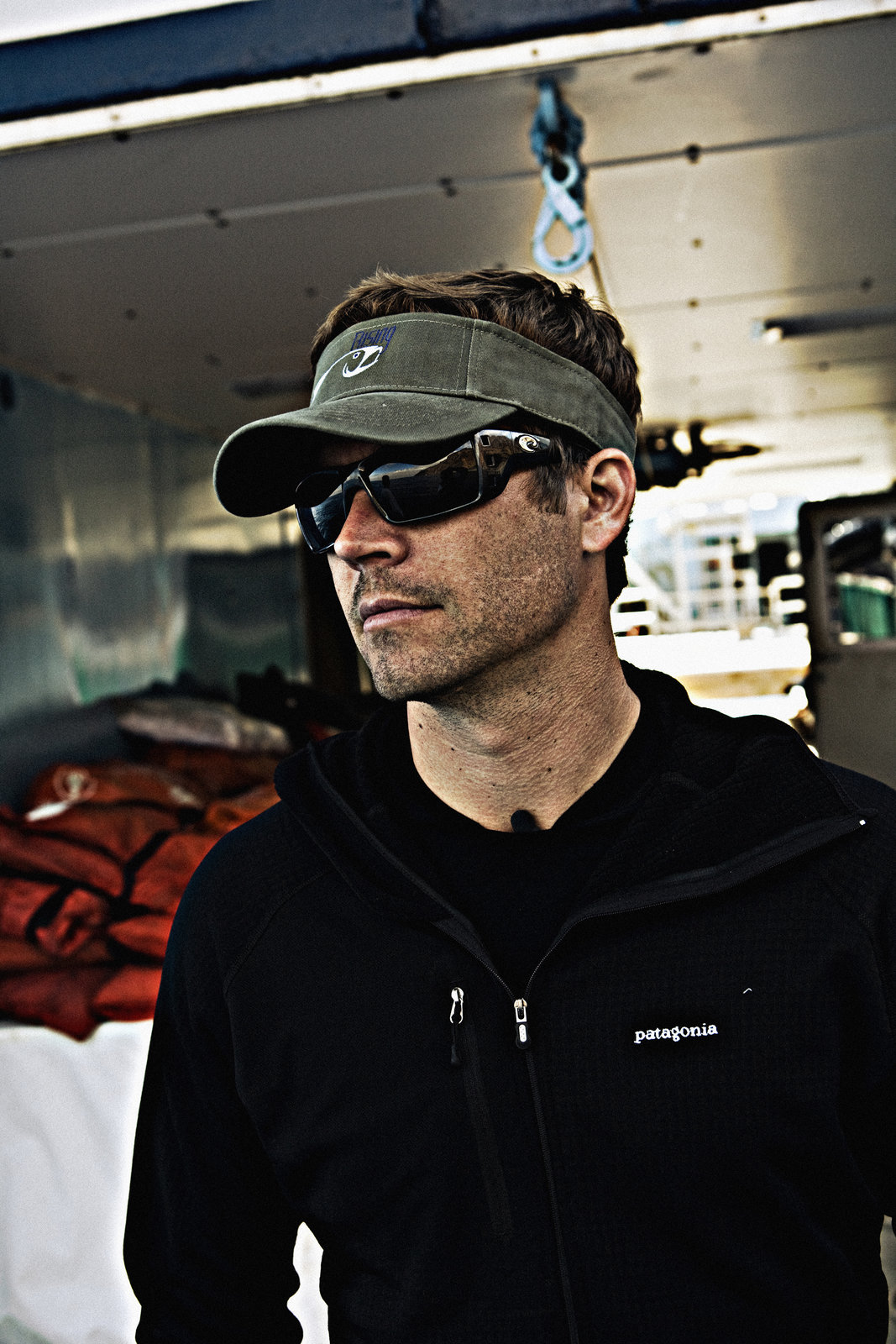
Guadalupe Island, Mexico: Actor Paul Walker took the position as deck hand onboard a great white research vessel.
(photo credit: © Chris Ross/Chris Fischer). Headshot Paul Walker BackDeck Aboard OceanMothership
Bild: © Chris Ross/Chris Fischer
Haie auf Brautschau
Shark Men- Expedition Week Panama Shoot.
Bild: © Fischer Productions
Vor der Küste Mexikos
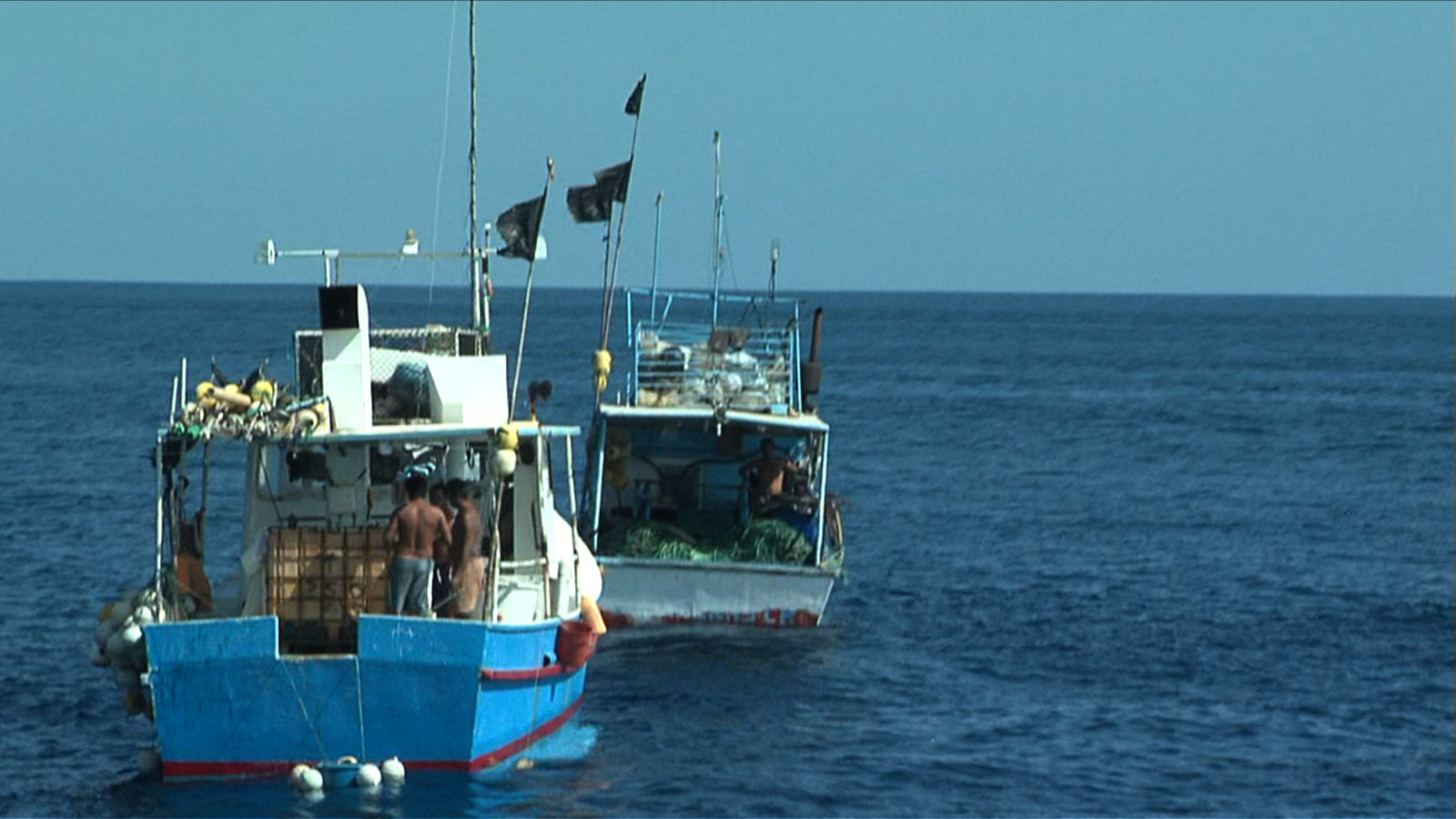
Cocos Island: Shark poacher boats. (Photo Credit: National Geographic Channels/ Fischer Productions)
Bild: © Fischer Productions
Haie auf Brautschau
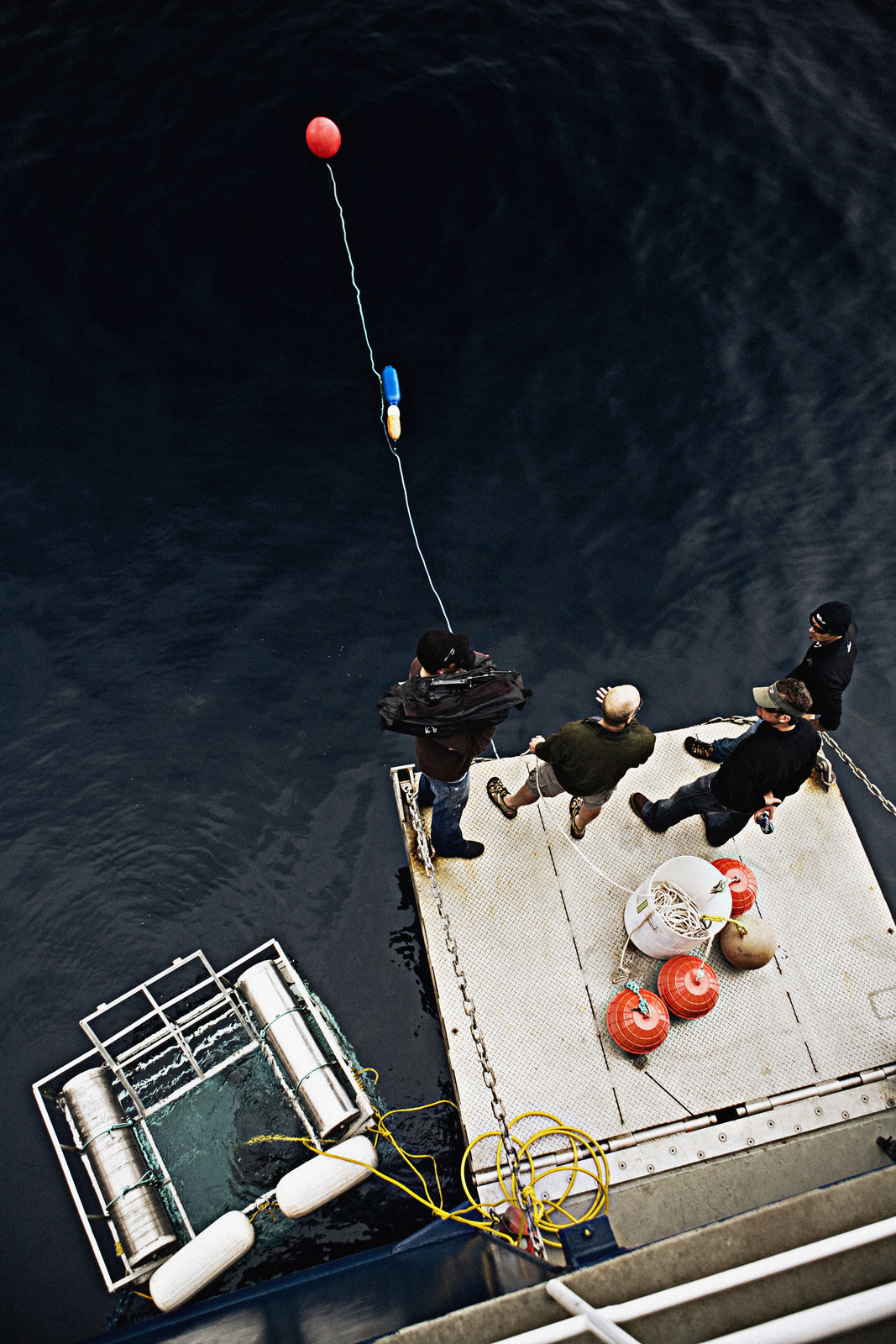
A team of expert anglers and a renowned shark scientist join forces to unmask the mysteries of the world’s largest predatory fish. Their bold expedition unites a unique vessel, the world’s largest hooks, and an unprecedented plan to lift Great Whites out of the water for examination, blood sampling and the attachment of advanced tracking devices. Pictured here, standing on the rear of the the catching shark platform of the Mothership, Dr. Domeier, ChrisFischer and Whitey Evans, cast bait into the water. (photo credit: © Chris Ross/Chris Fischer). Catching Shark RearPlatformMothershipNexttosharkcageCastingbaitC
Bild: © Chris Ross/Chris Fischer
Warten auf "Good News"
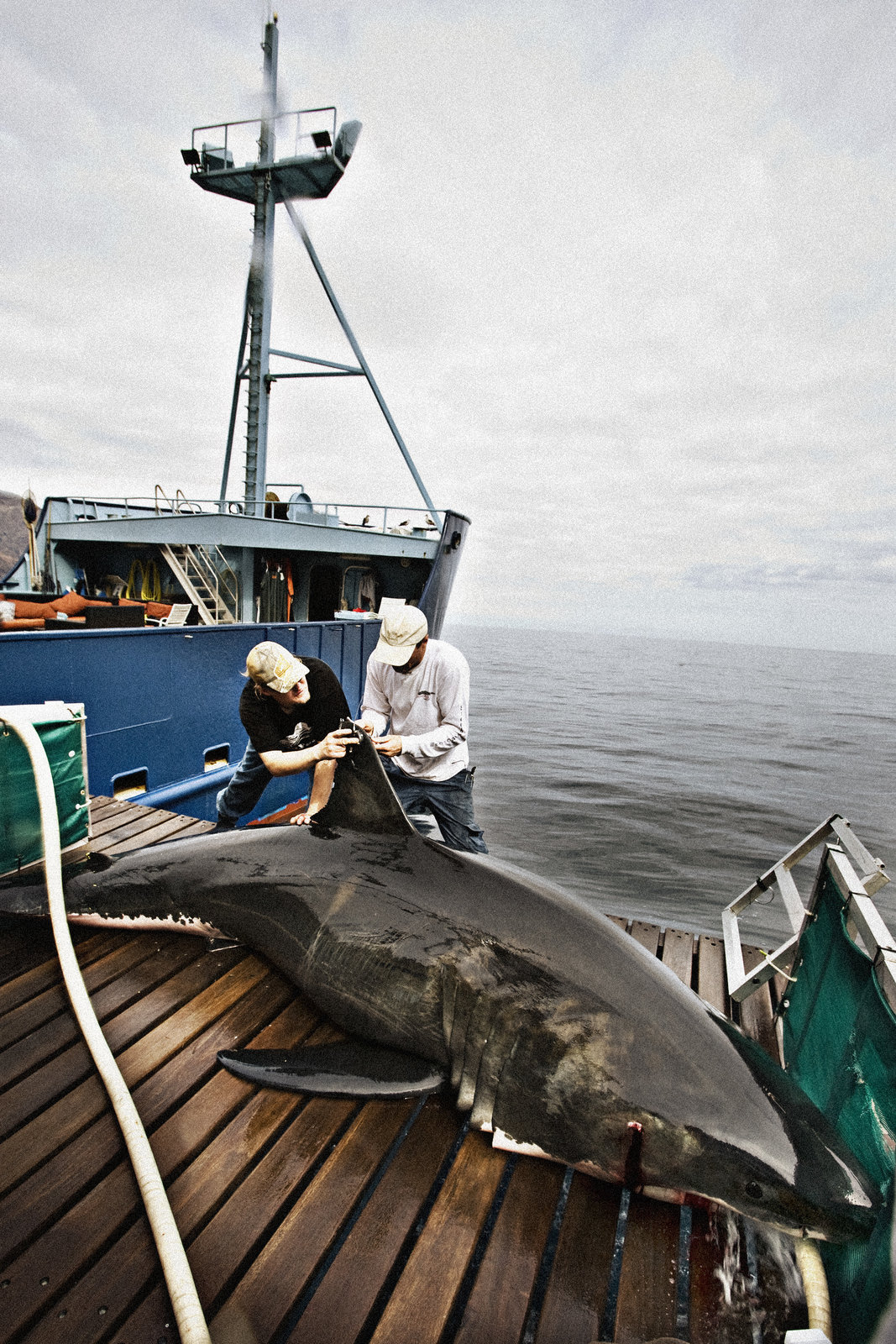
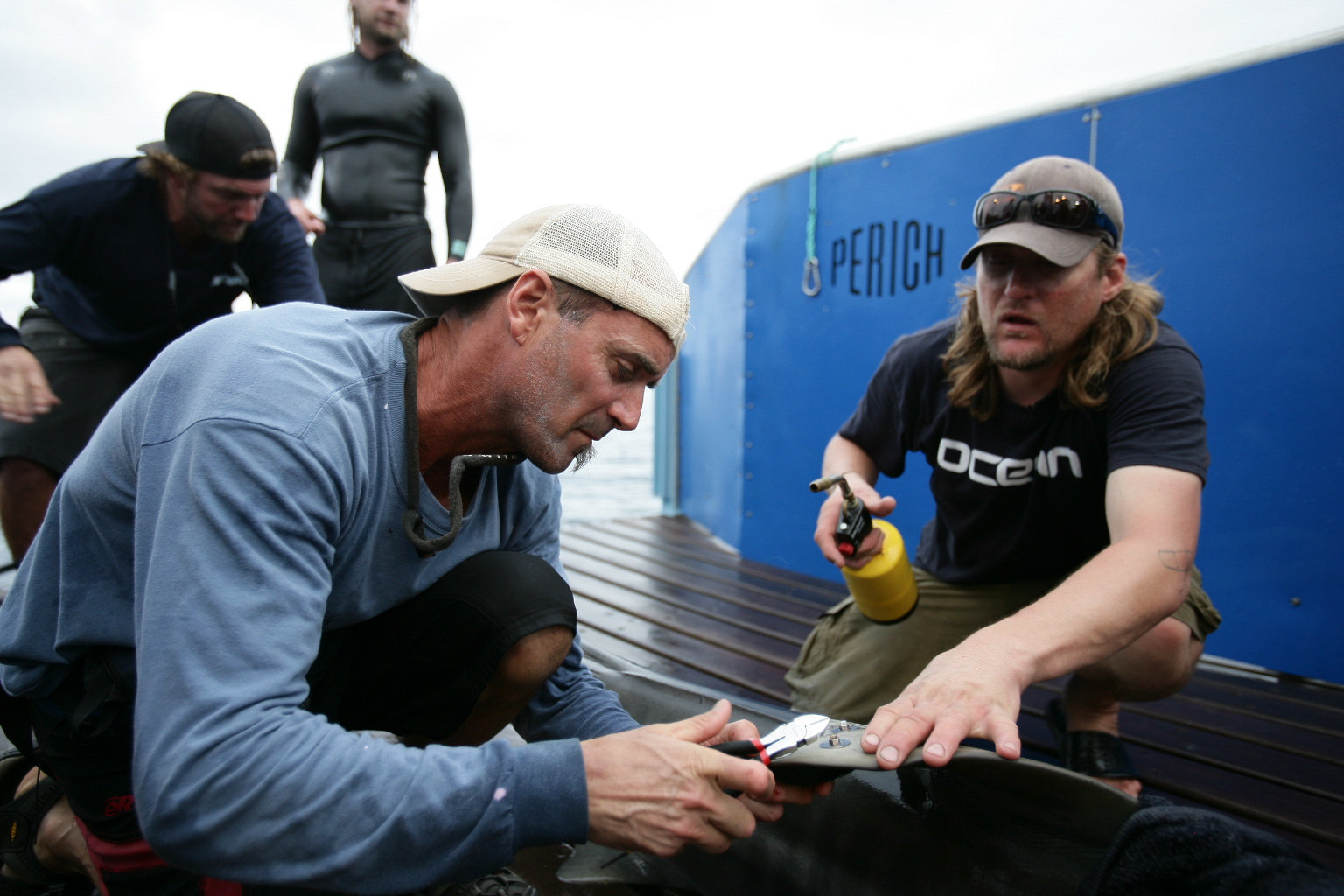
Guadalupe Island, Mexico: The best place to attach the tracking tag is to the dorsal fin. It has less blood flow and fewer nerves, so less sensitivity. It is also the highest point on the shark, and each time it breaks the waters surface, it will relay the shark's location. Pictured here, Brandon Eyre and Whitney Evans work on sharks fin. (photo credit: © Chris Ross/Chris Fischer). SharkonDeckBrandonEyreWhiteyEvans.tif
Bild: © Chris Ross/Chris Fischer
Haie auf Brautschau
. . Dr. Domeier (pictured here) is renowned for his work with pelagic fishes, white sharks, California coastal fishes and coral reef fishes. His ongoing work at the Marine Conservation Science Institute (MCSI) is the most comprehensive Great White study in the world. He was the first to develop and apply a means of identifying individuals based upon color pattern and to monitor their behavior around Guadalupe Island—their popular gathering site. Pictured here, Dr. Domeier holds the fin of a shark as it is being released from the cradle back into the water. (photo credit: © Chris Ross/Chris Fischer). Shark Release in cradleRelease Shark number 2 DrDomeier.tif
Bild: © Chris Ross/Chris Fischer
Haifischflossenjäger
The Cocos: Whitey Evans and Brandon Eyre securing the transmitter on a shark's fin. (National Geographic Channels/ Fischer Productions/ Mark Frapwell)
Bild: © National Geographic Channels/ Fischer Productions
Warten auf "Good News"
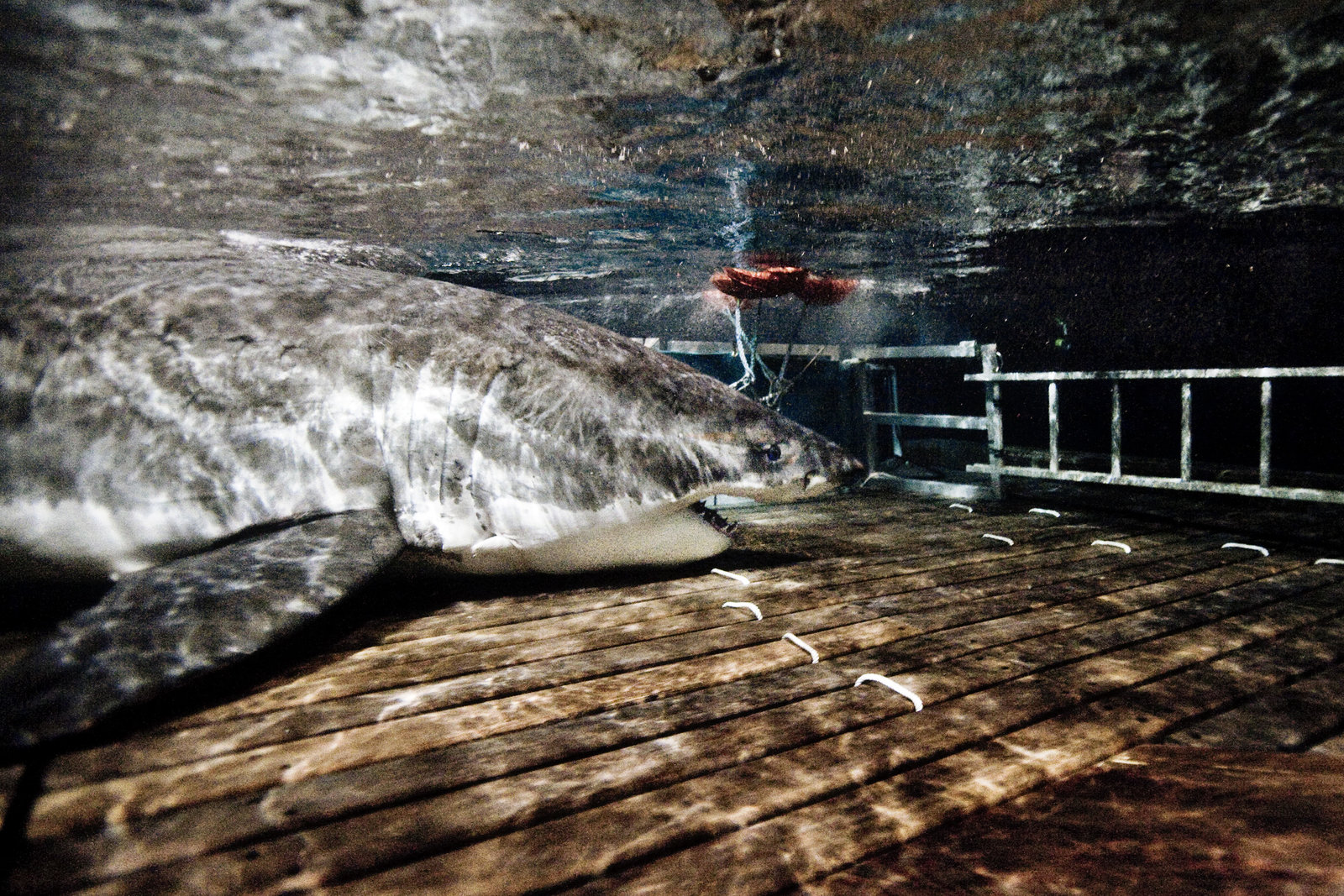
Guadalupe Island, Mexico: A Great White names Kimmel has taken the buoyed bait and rests on shark deck as it is slowly lifted.
(photo credit: © Chris Ross/Chris Fischer). Underwater GreatWhite named Kimmel sharkondeck lifting.tif
Bild: © Chris Ross/Chris Fischer
Unterwegs im Naturschutzgebiet
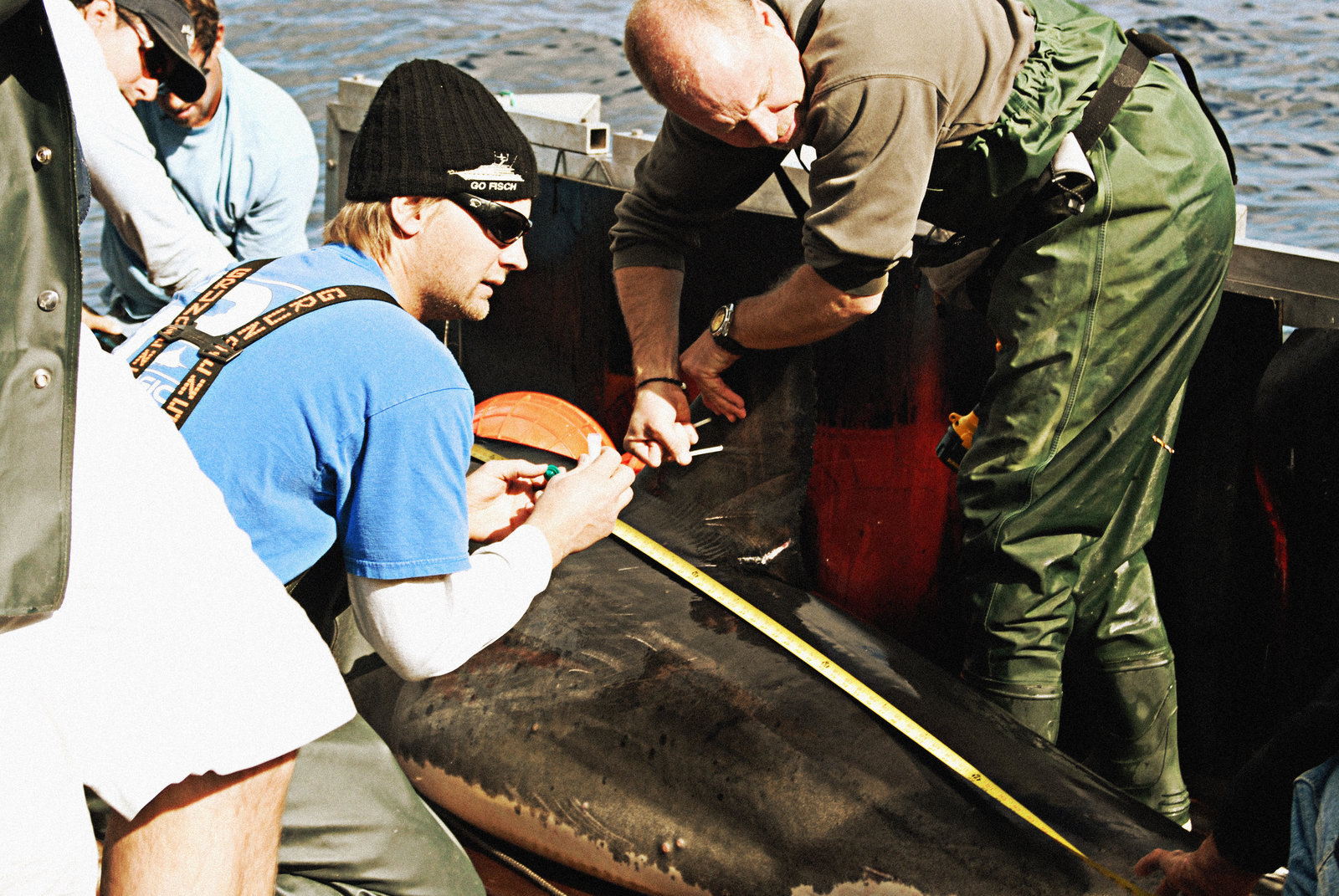
. . Guadalupe Island, Mexico: David Olson and Michael Domeier measure the length of a shark that has just been brought on deck.
Their quest is to unlock the secrets of the sharks’ migration patterns, breeding and birthing sites and fill in the unknown chapters of the Great White’s life cycle. (photo credit: © Chris Ross/Chris Fischer). SharkonDeck SharkMeasuring DavidOlsonMichaelDomeier.tif
Bild: © Chris Ross/Chris Fischer
Warten auf "Good News"
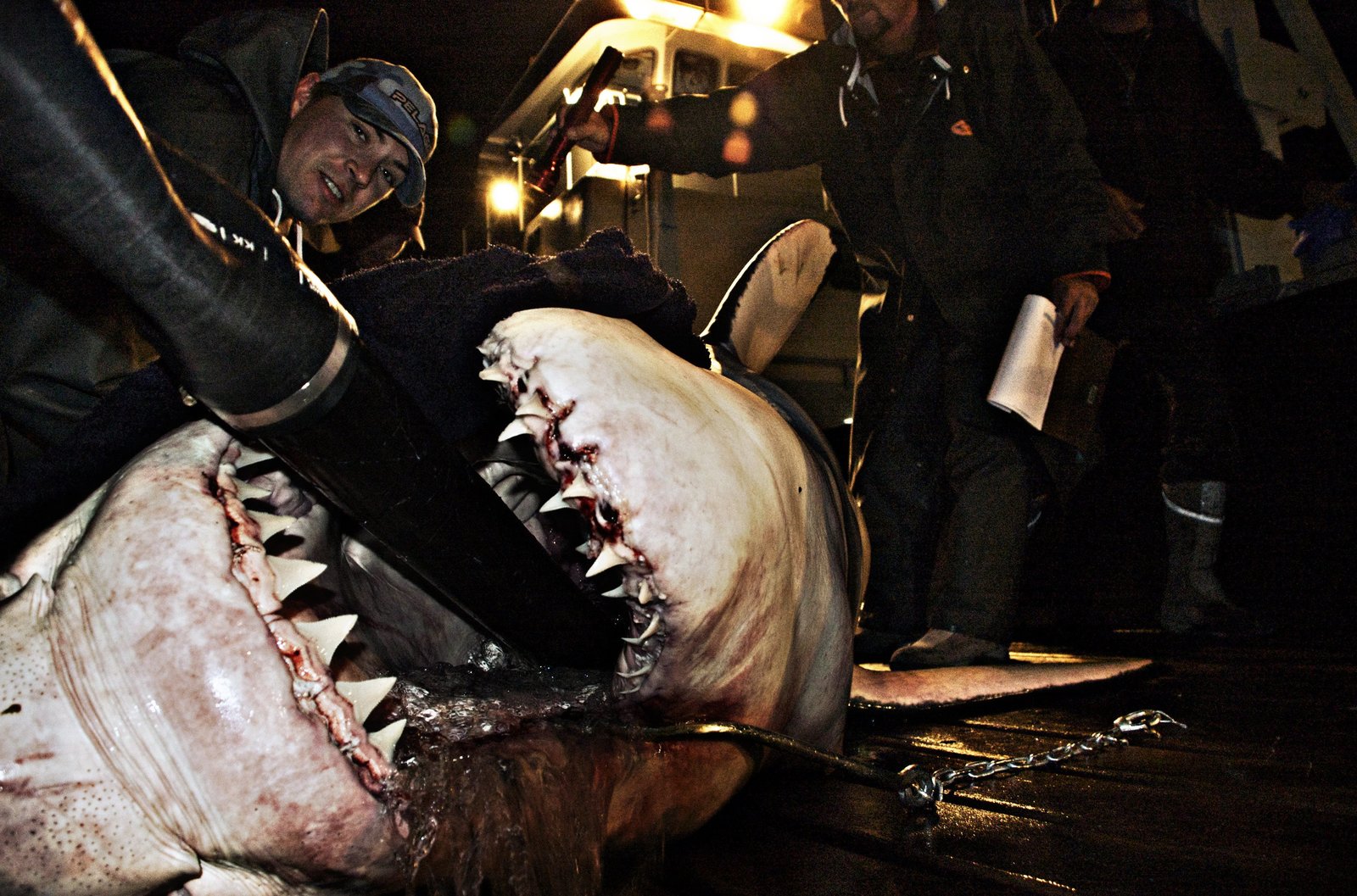
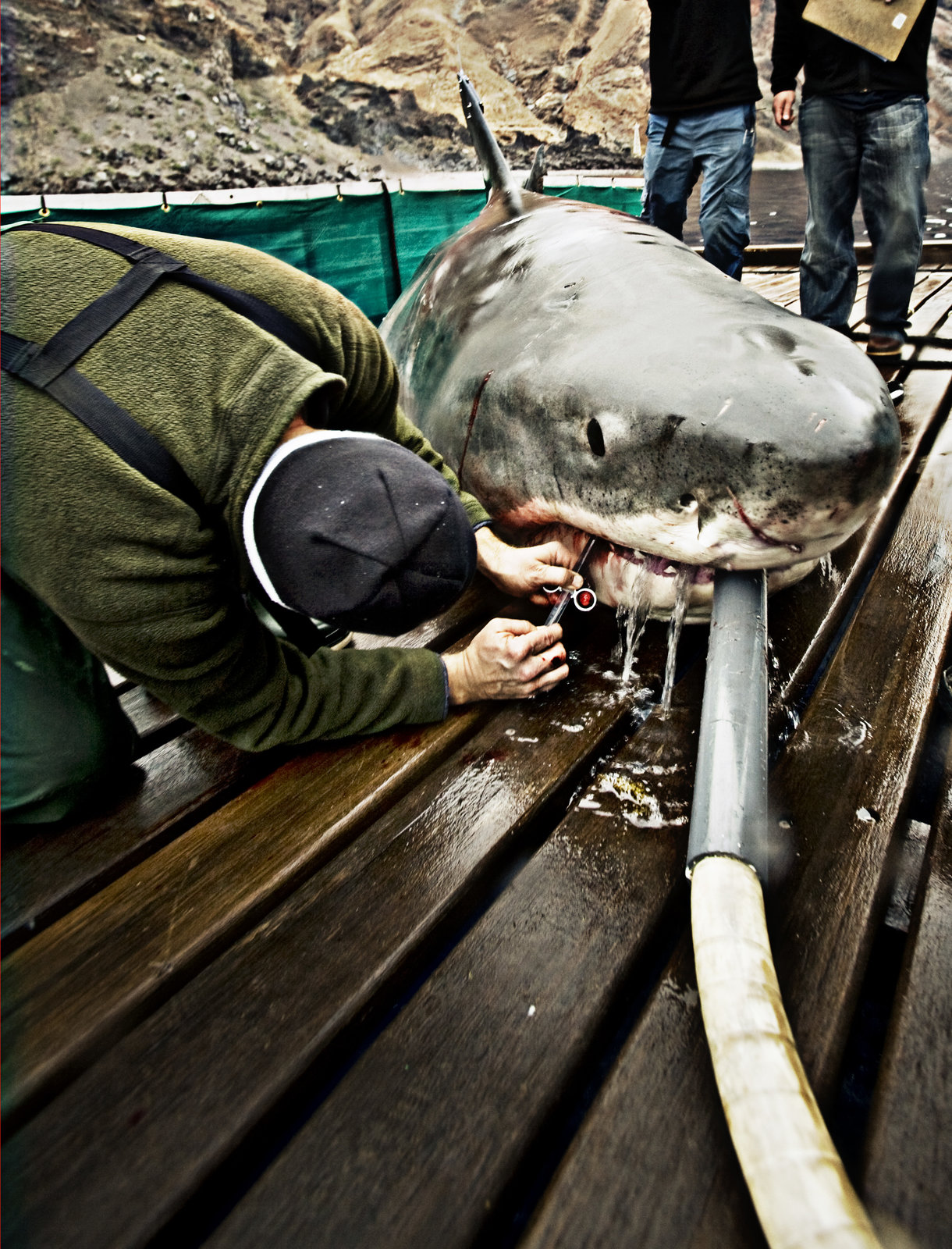
Guadalupe Island, Mexico: Testing hormonal levels could answer many questions surrounding the Great Whites birthing process. Pictured here, Dr. Domeier attempts to draw blood from a shark on deck. (photo credit: © Chris Ross/Chris Fischer). SharkonDeck Blooddraw sharkface DrDomeier2.tif
Bild: © Chris Ross/Chris Fischer
Killer am Haken
Bild: © National Geographic Wild
Bürokratie auf Hoher See
Bild: © National Geographic Wild
Big Mama
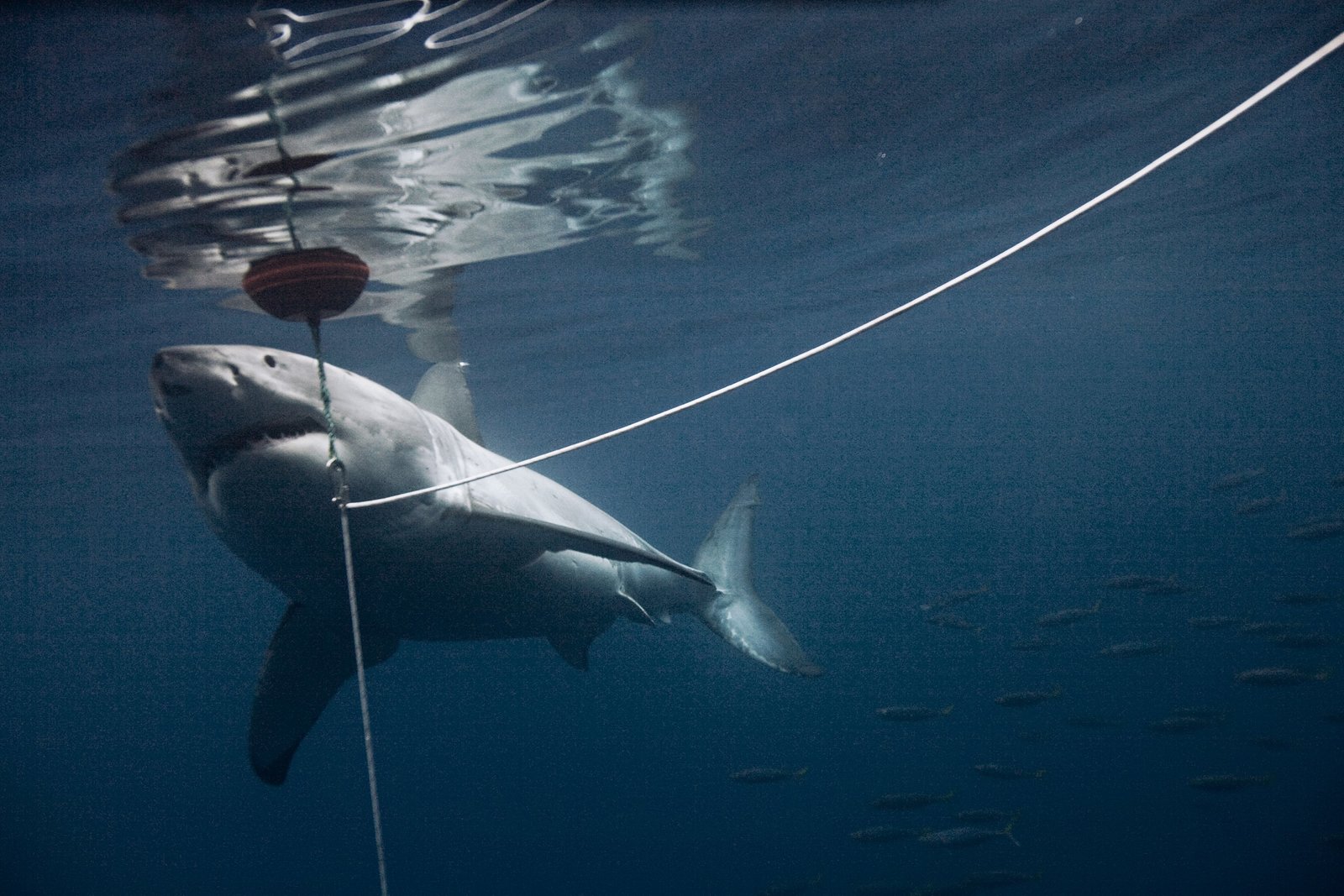
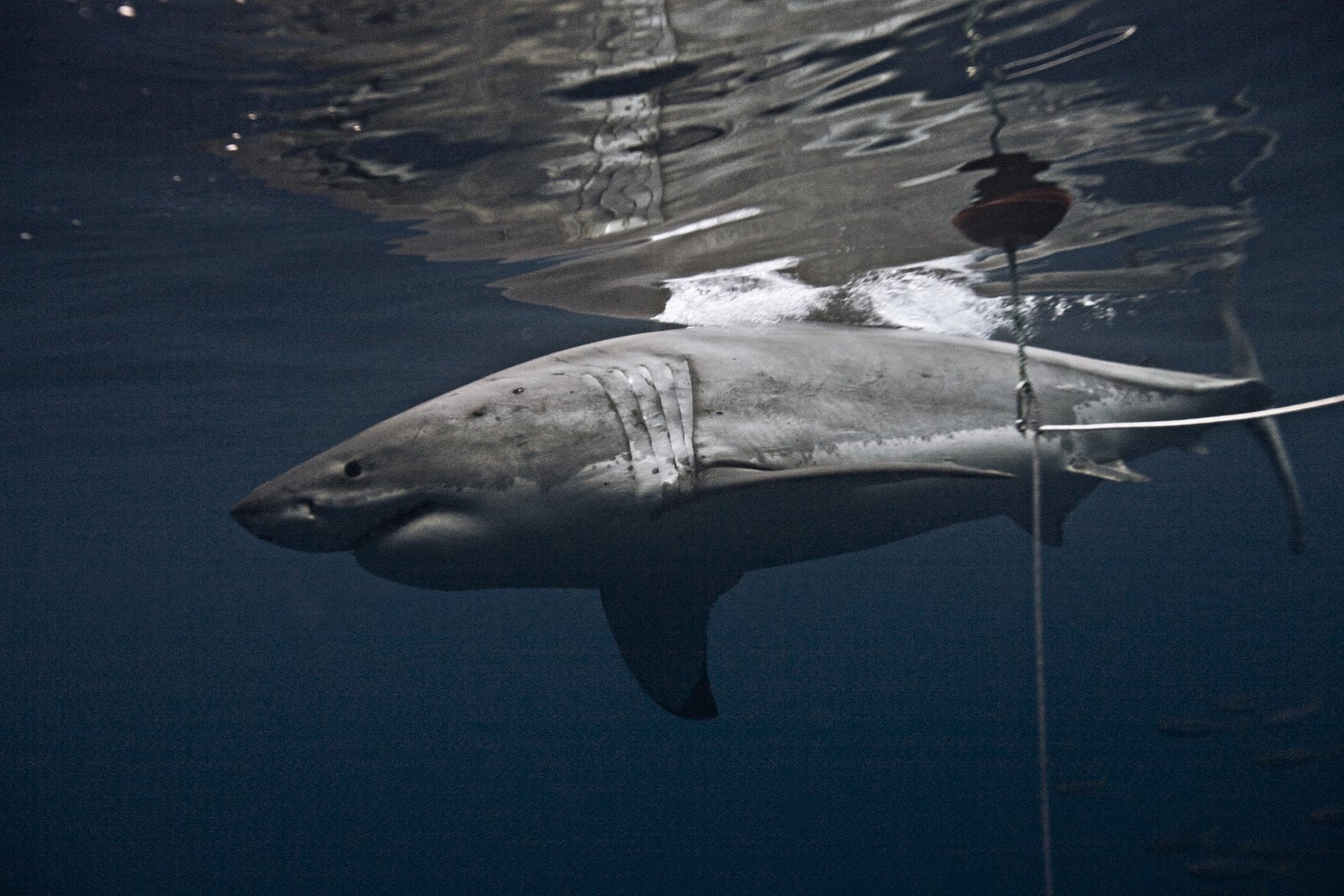
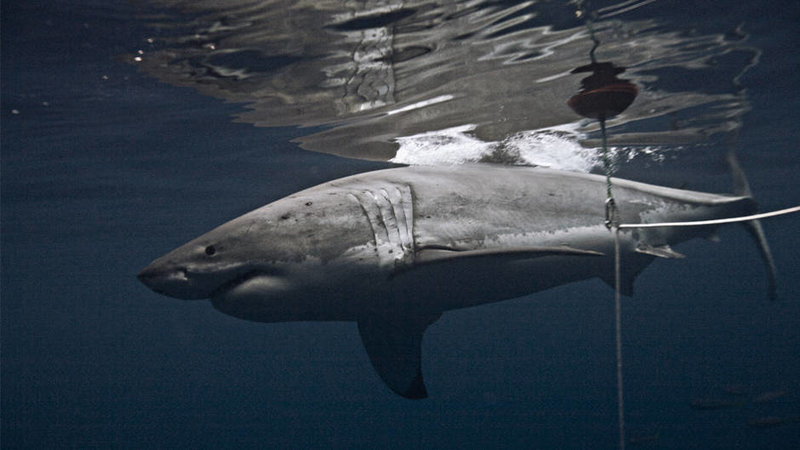
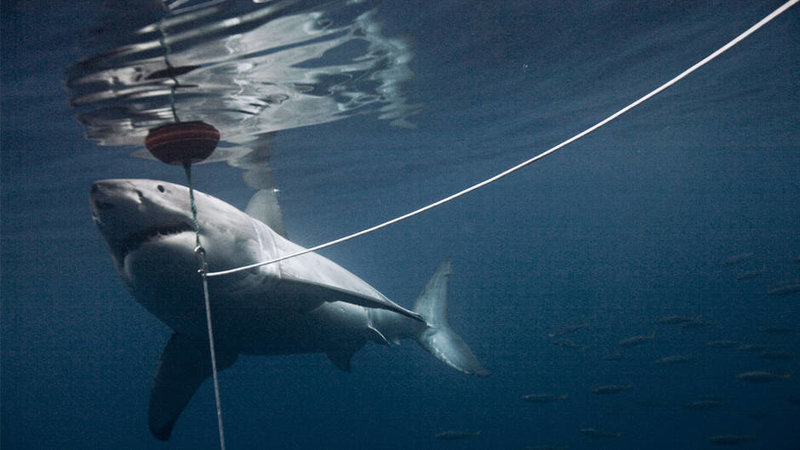
Guadalupe Island, Mexico: A Great White approaches the baited buoy.
(photo credit: © Chris Ross/Chris Fischer)
Bild: © Chris Ross/Chris Fischer
Killer am Haken
Guadalupe Island, Mexico: A great white shark approaches a baited buoy.
Bild: © National Geographic Channel/Chris Ross
Auf rauer See
Bild: © National Geographic Channel
Auf rauer See
Bild: © National Geographic Channel
Die Suche nach dem Riesenkalmar
Squid.
Bild: © Creative Commons
Free for commercial use
No attribution required
Auf der Suche nach Amy
Bild: © Chris Ross/Chris Fischer
Big Mama
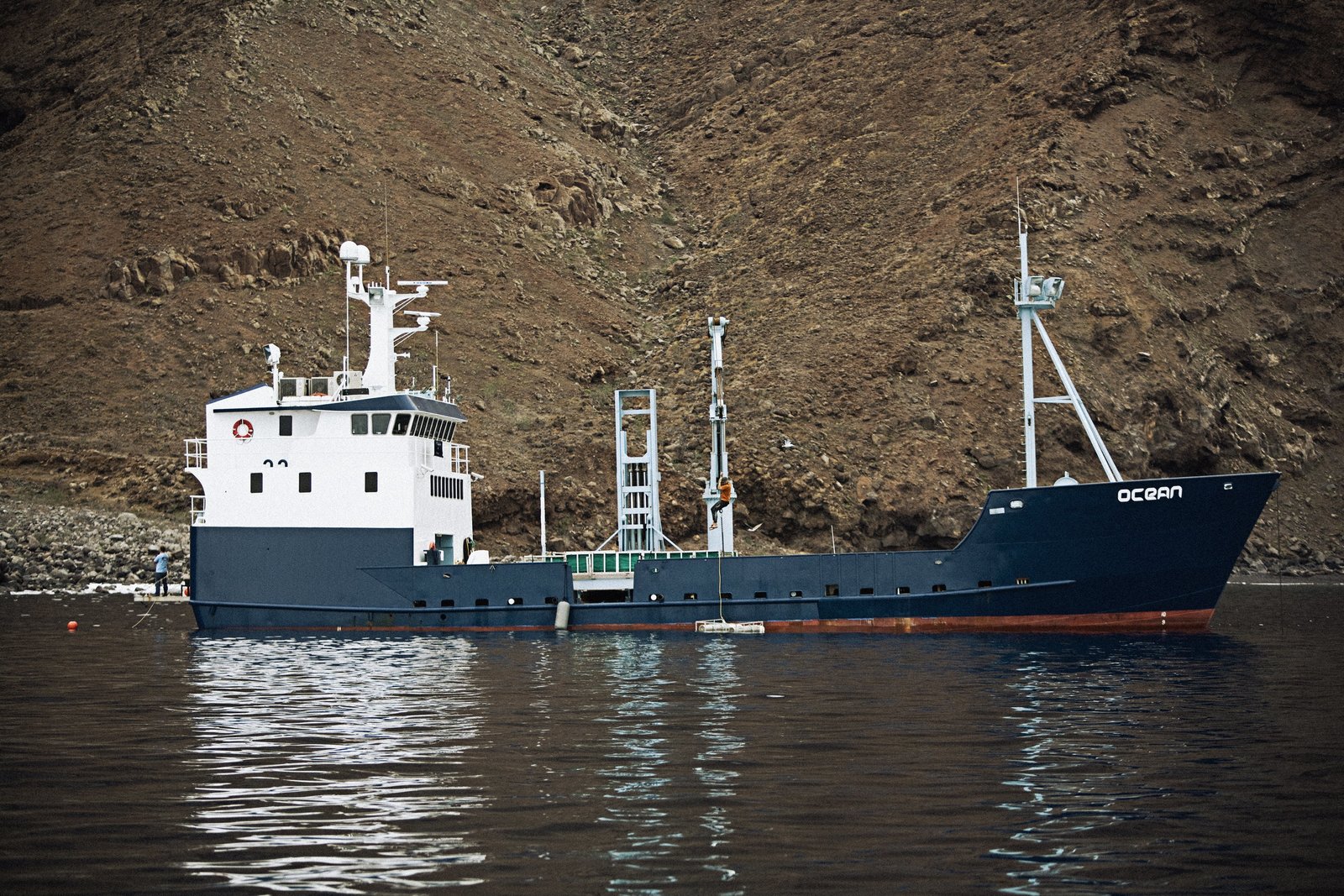
A team of expert anglers and a renowned shark scientist join forces to unmask the mysteries of the world’s largest predatory fish. Their bold expedition unites a unique vessel, the world’s largest hooks, and an unprecedented plan to lift Great Whites out of the water for examination, blood sampling and the attachment of advanced tracking devices. Pictured here is the mothership 'Ocean' anchored at the Guadalupe Island.
(photo credit: © Chris Ross/Chris Fischer). Ocean Mothership Anchored Guadalupe Island.tif
Bild: © Chris Ross/Chris Fischer
Auf der Suche nach Amy
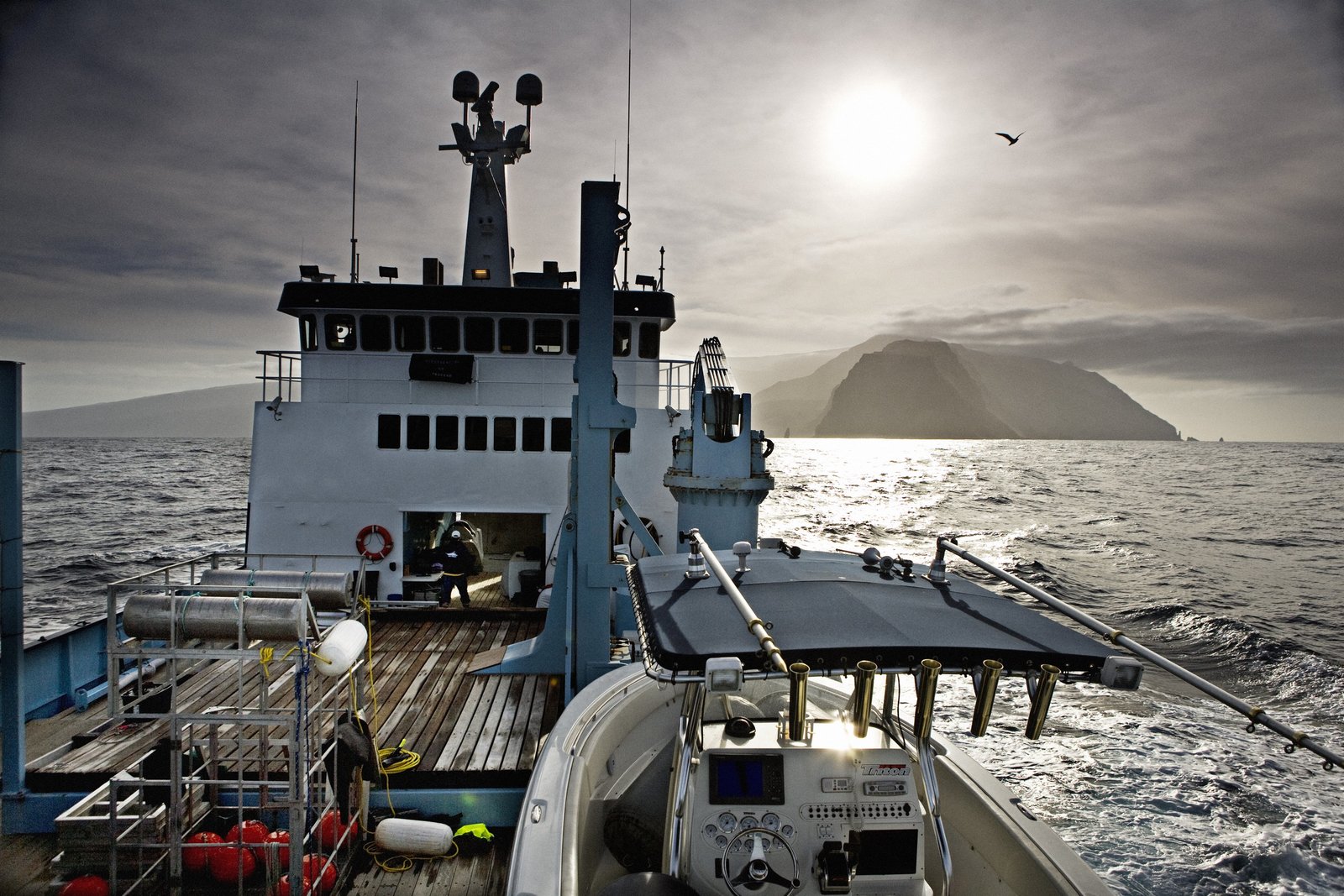
Guadalupe Island, Mexico: A team of expert anglers and a renowned shark scientist join forces to unmask the mysteries of the world?s largest predatory fish. Their bold expedition unites a unique vessel, the world?s largest hooks, and an unprecedented plan to lift Great Whites out of the water for examination, blood sampling and the attachment of advanced tracking devices. Their quest is to unlock the secrets of the sharks? migration patterns, breeding and birthing sites and fill in the unknown chapters of the Great White?s life cycle. Pictured here, the Ocean Mothership is departing Guadalupe Island.
Bild: © Chris Ross/Chris Fischer
Haie im Surfer-Paradies
Bild: © National Geographic Wild
Killer am Haken
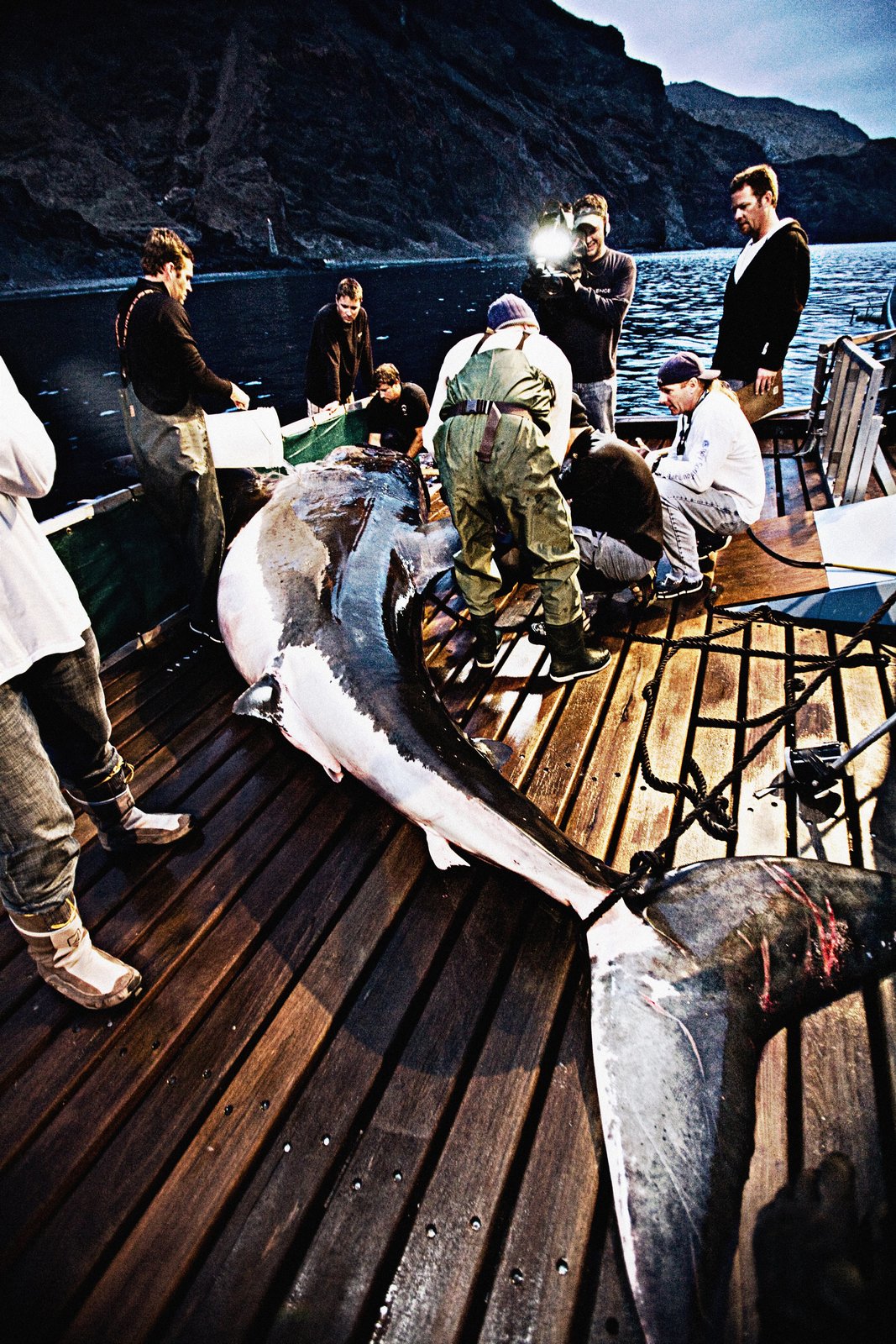
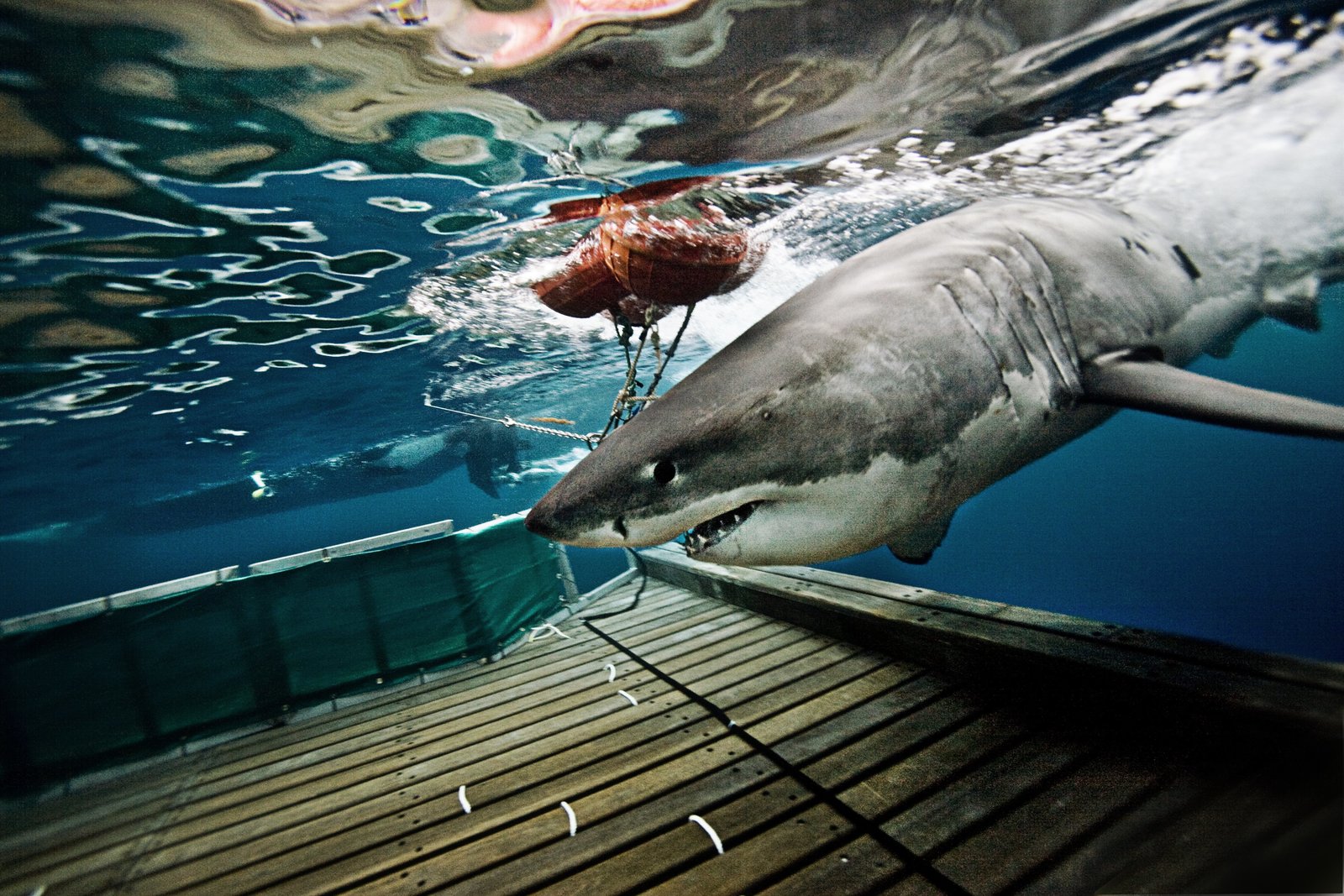
Guadalupe Island, Mexico: A great white shark underwater on the deck after taking the bait. The deck lifts the two ton shark out of the water allowing the crew to conduct research.
Bild: © National Geographic Channel/Chris Ross
Big Mama
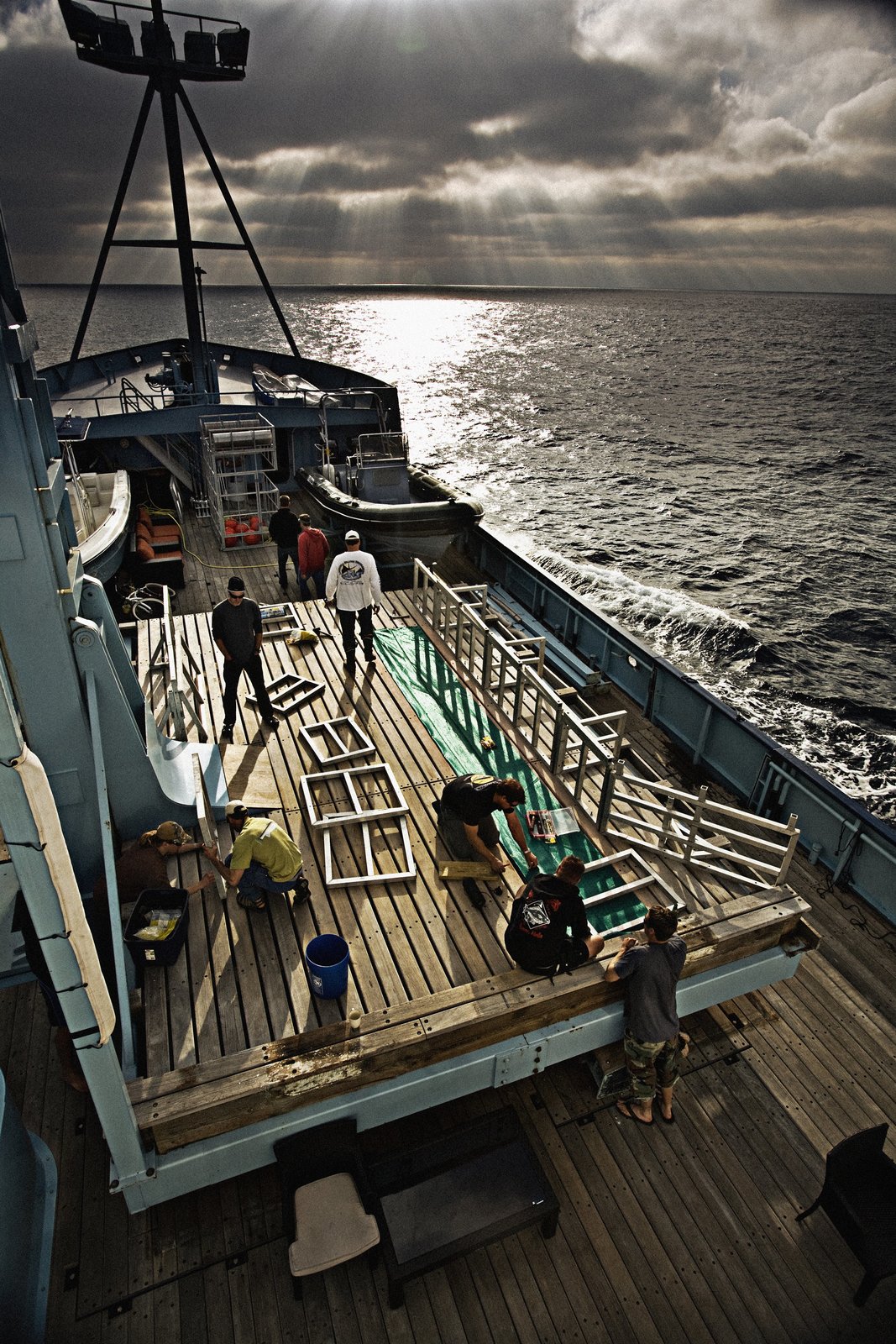
Guadalupe Island, Mexico: The crew makes modifications to the shark cradle on the deck of their ship "Ocean" to allow them to lift even larger sharks out of the water.
Bild: © Chris Ross/Chris Fischer
 Bild: © National Geographic Channel