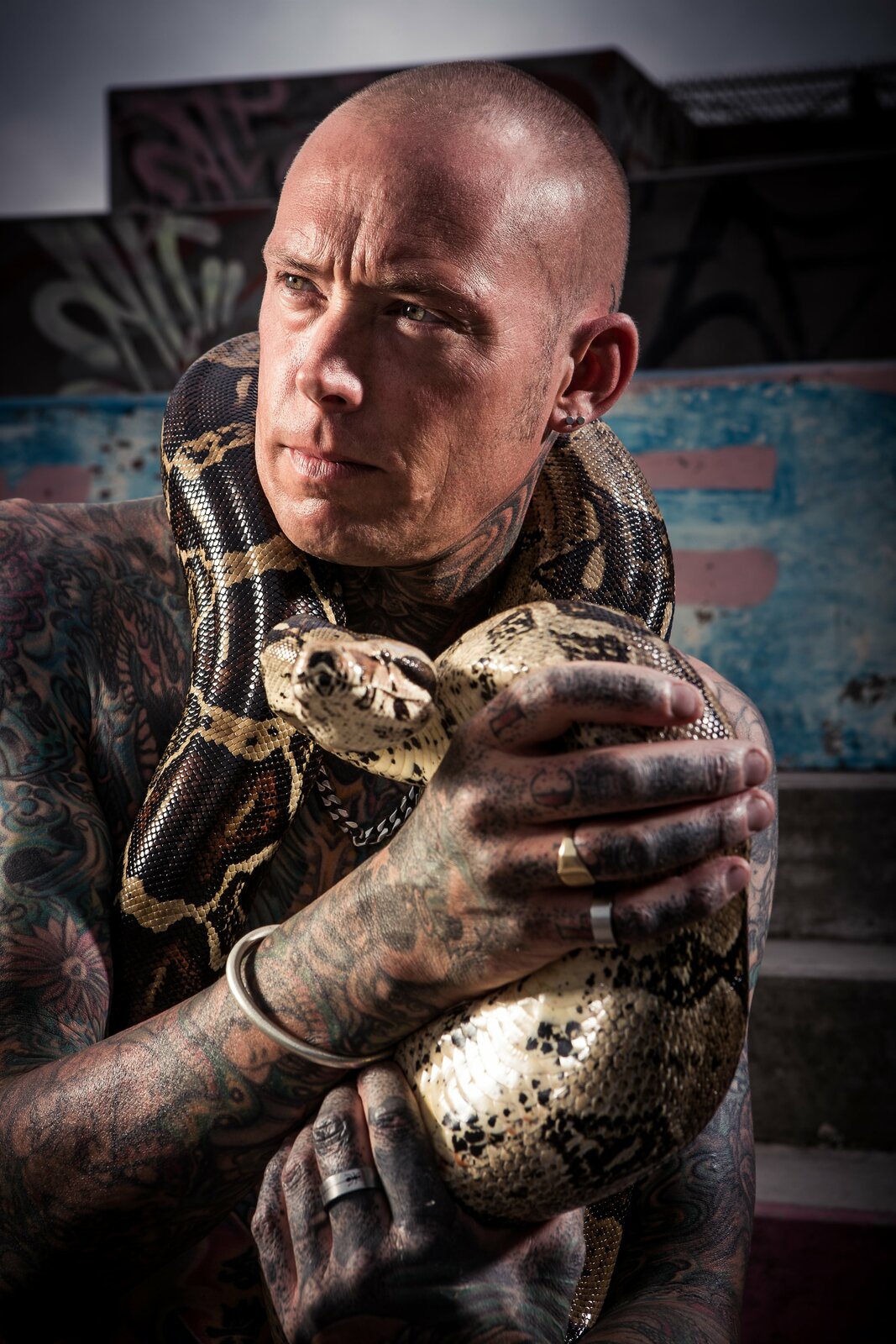
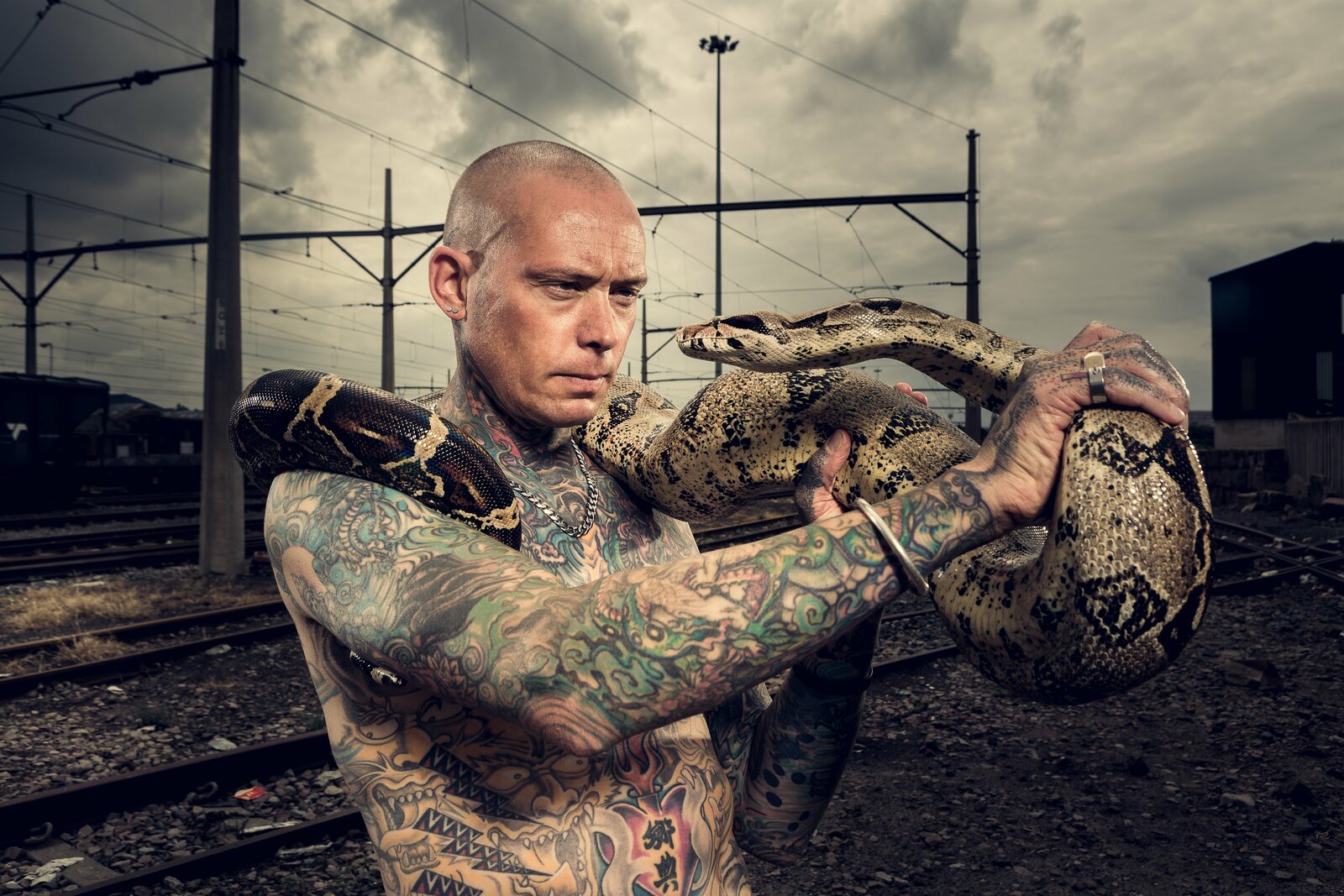
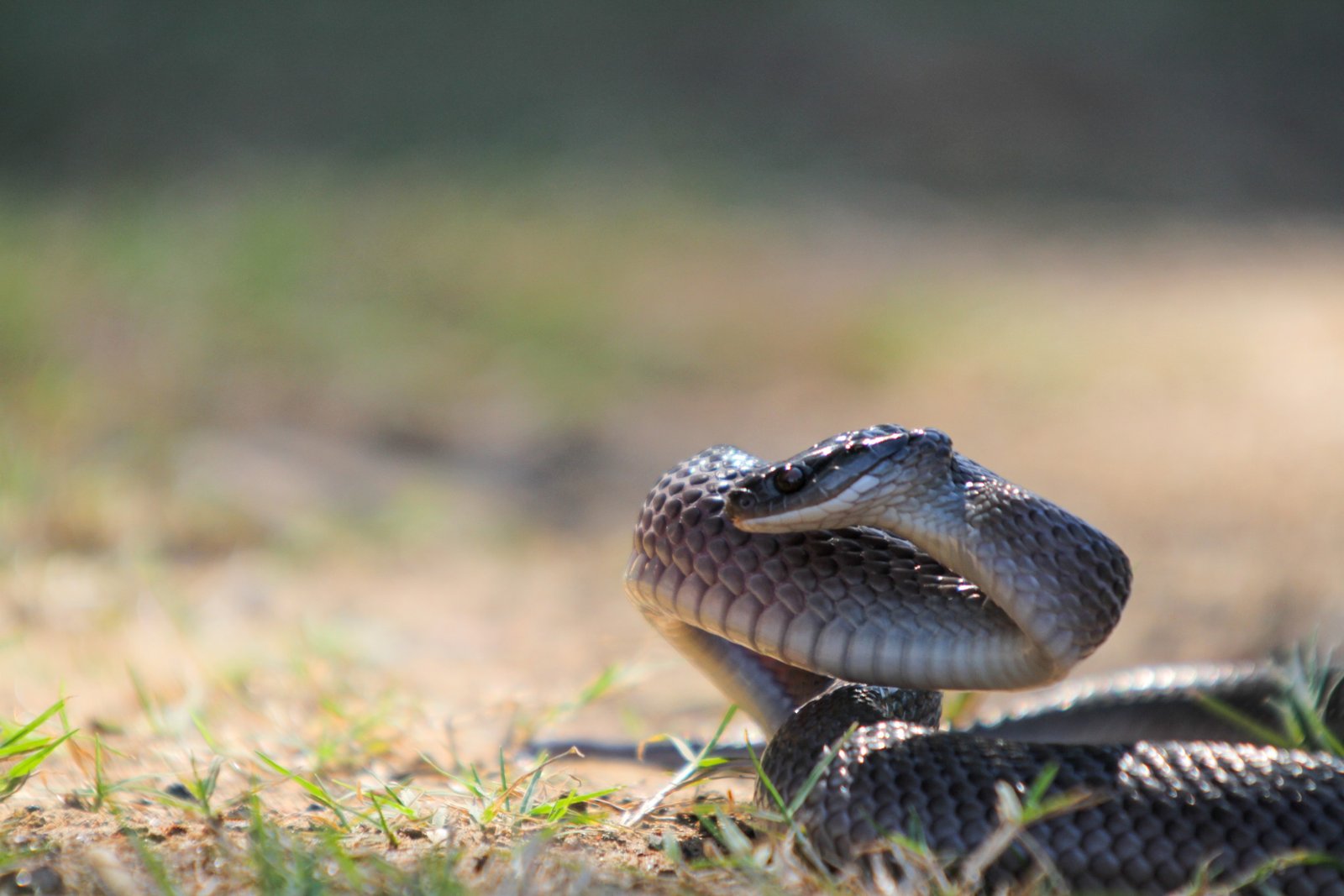
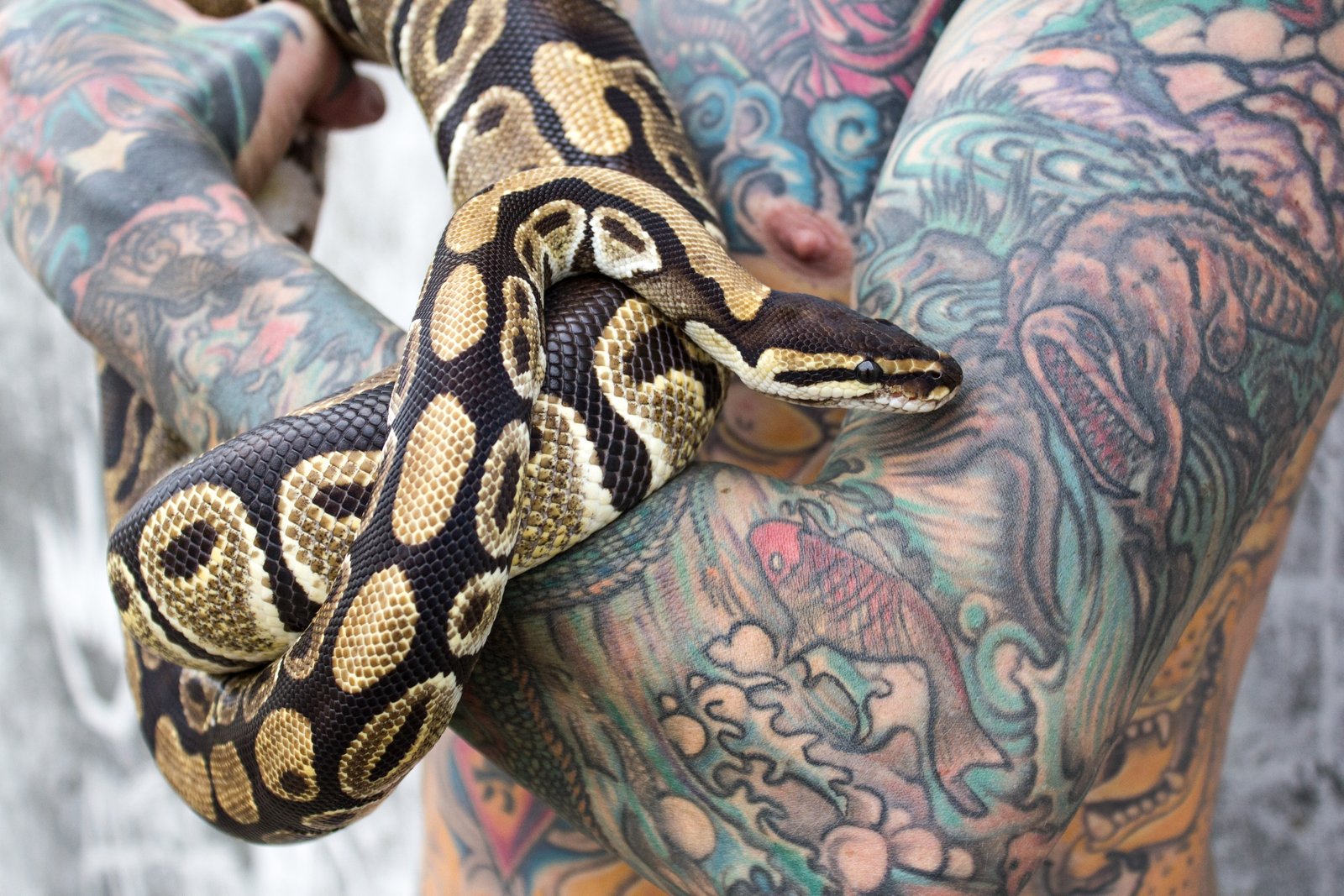
Durban, South Africa: Medium, close-up shot of Simon Keys handling an African rock python (Python sebae), graffitied steps in Durban in background. Known as Africa's largest snake, rock pythons are non-venomous predators, which kill their prey using constriction. (Photo Credit: Earth-Touch USA/ Anthony Purnell)Durban, South Africa: Medium, close-up shot of Simon Keys handling an African rock python (Python sebae), graffitied steps in Durban in background. Known as Africa's largest snake, rock pythons are non-venomous predators, which kill their prey using constriction. (Photo Credit: Earth-Touch USA/ Anthony Purnell)
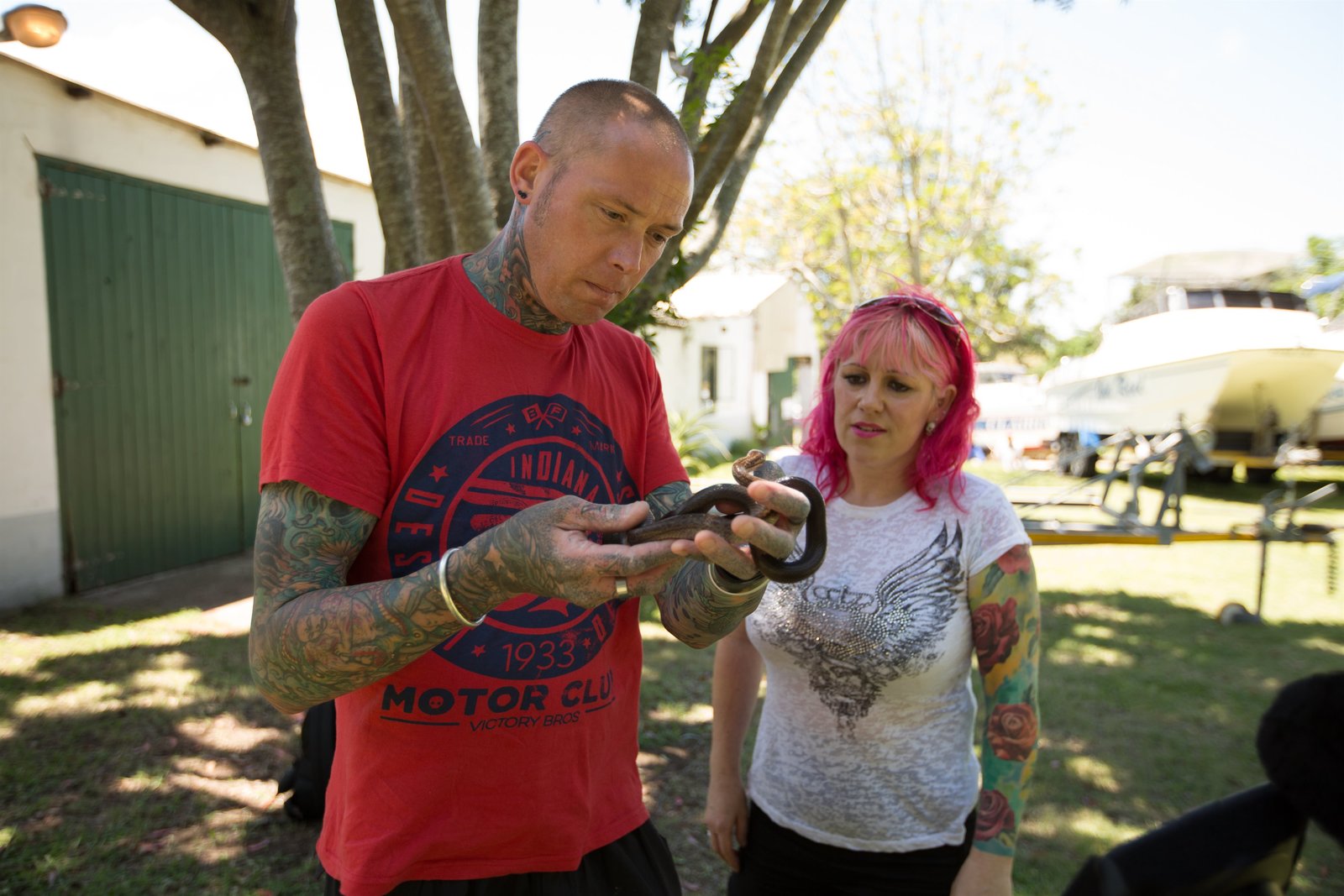
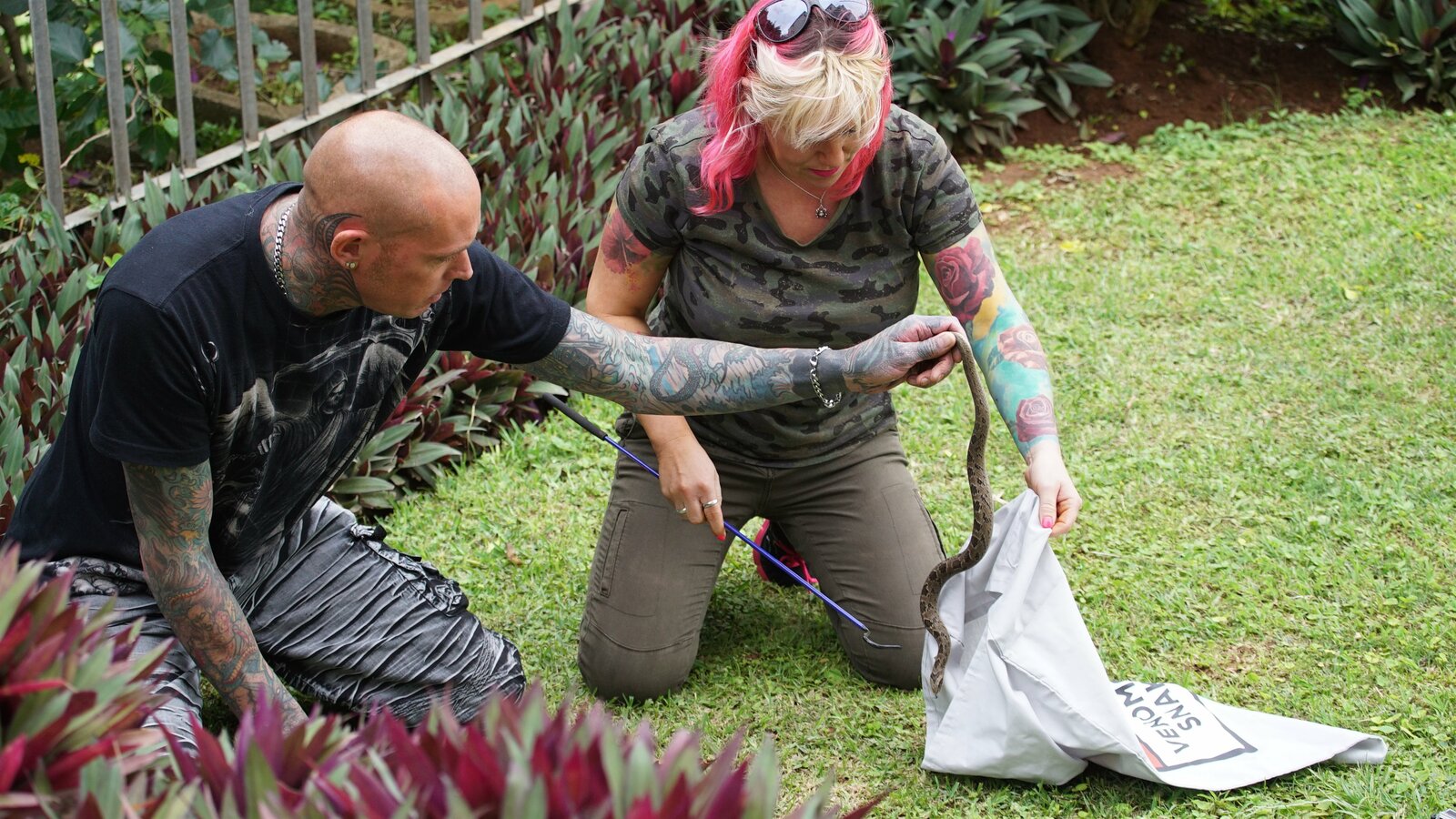
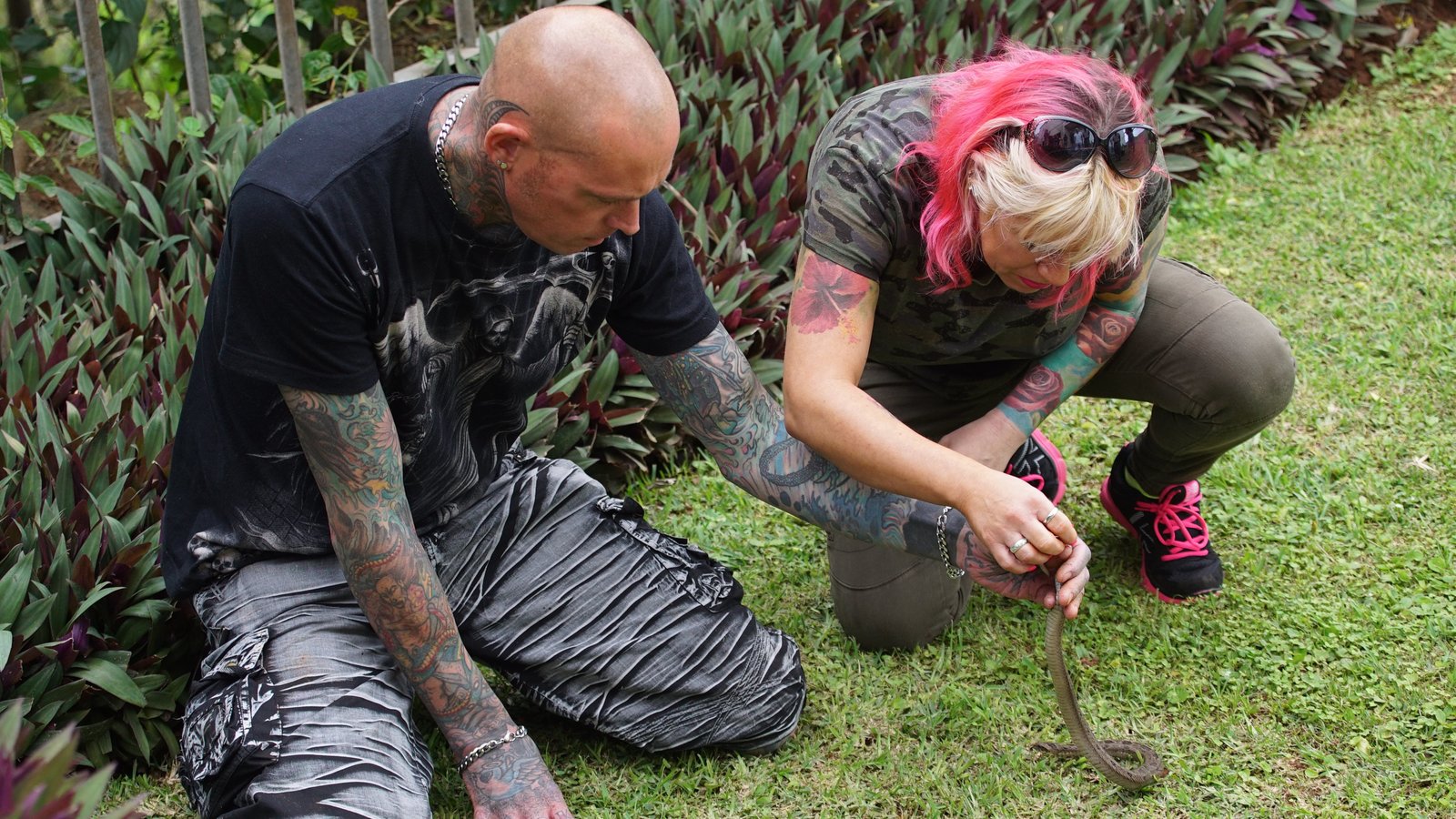
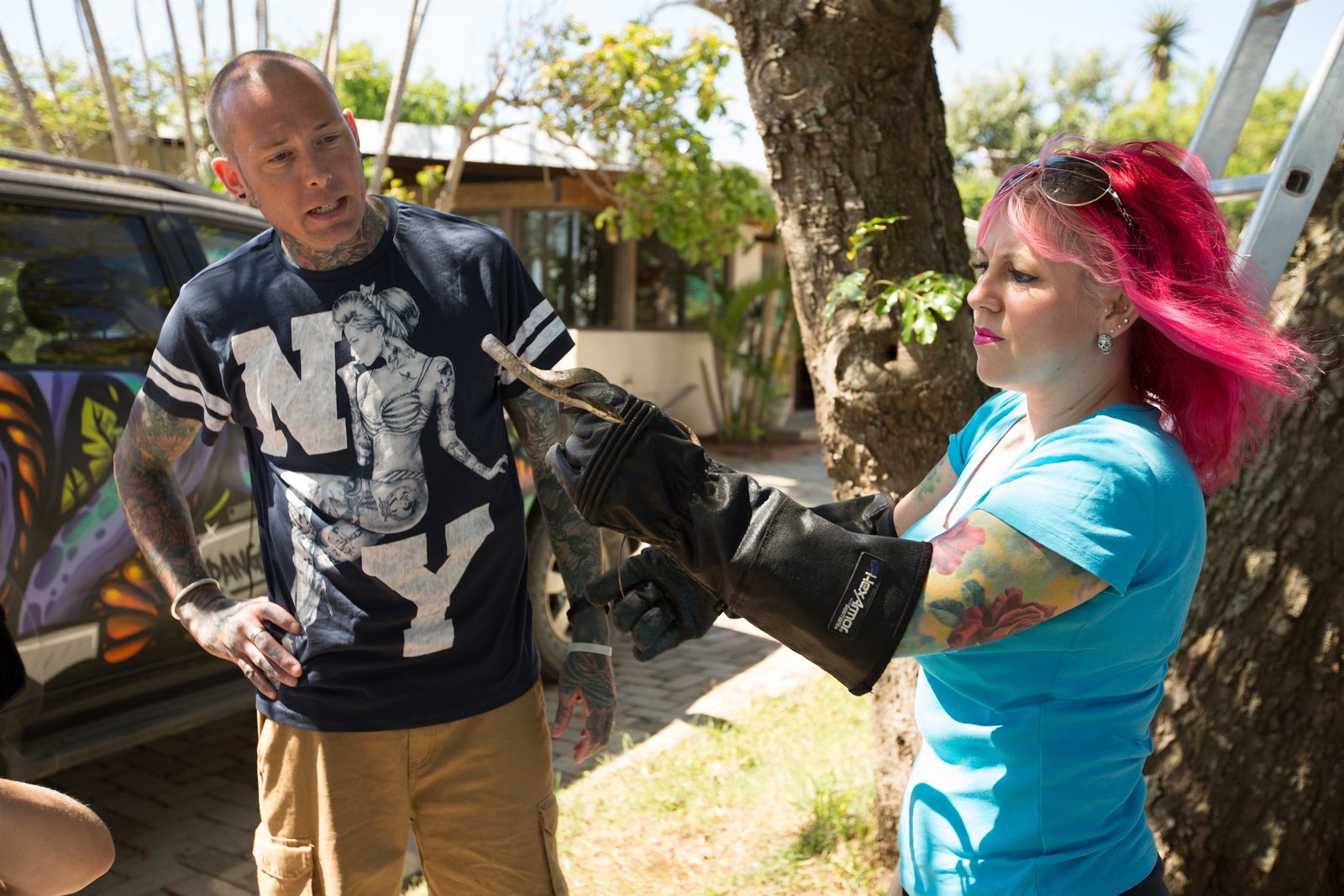
DURBAN, SOUTH AFRICA- Simon Keys and Susan Gillett standing next to a house in Durban, Simon holding a Brown house snake (Boaedon capensis), while examining it. Simon and Susan catch snakes in human habitations in and around Durban and translocate them to safer areas where they are less likely to come into contact with people. (Photo credit: National Geographic Channels/Frederick Higgs)
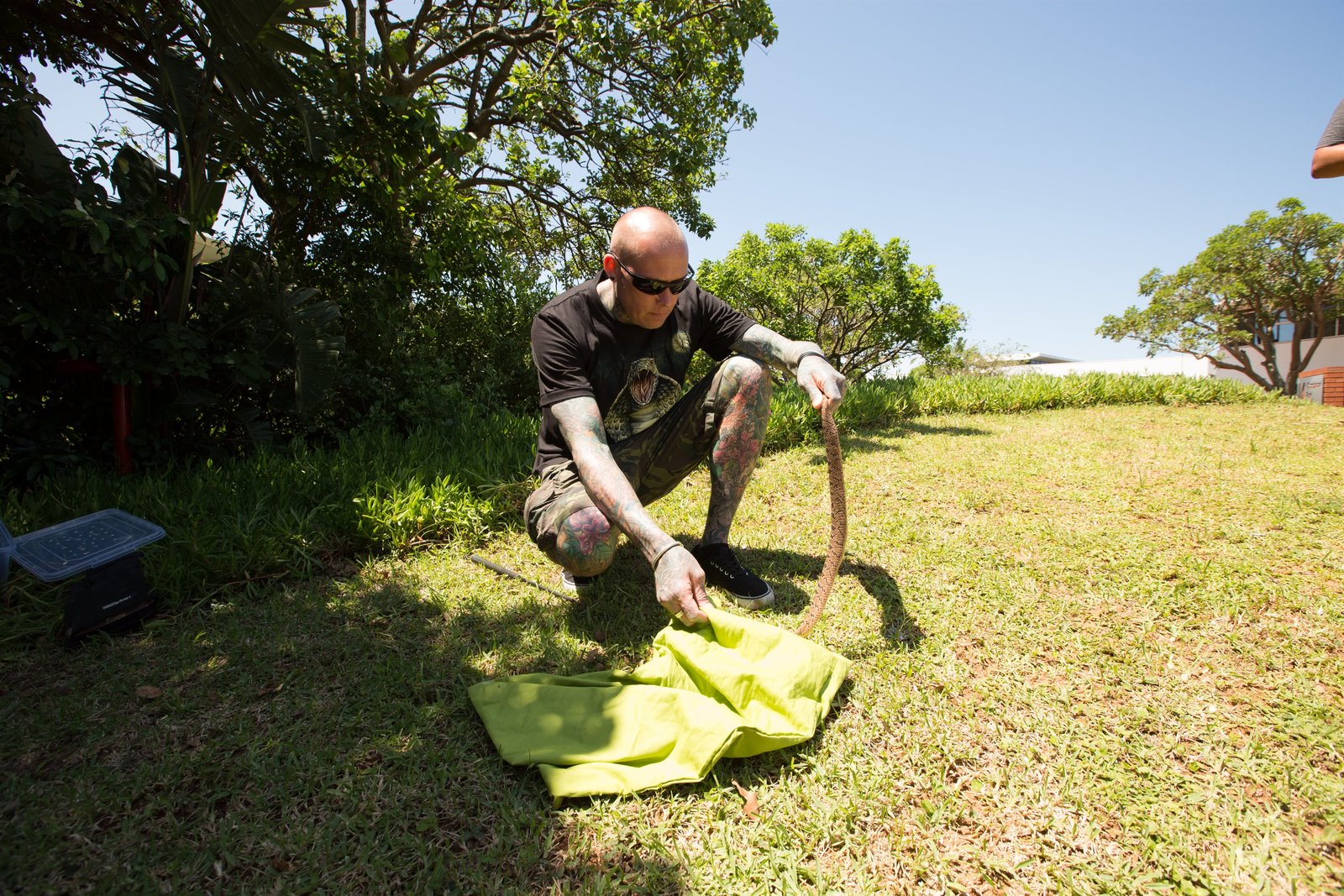
DURBAN, SOUTH AFRICA- Simon Keys holding a southern African python (Python natalensis), with the Durban train tracks in the background. Simon and Susan catch snakes in human habitations in and around Durban and translocate them to safer areas where they are less likely to come into contact with people.
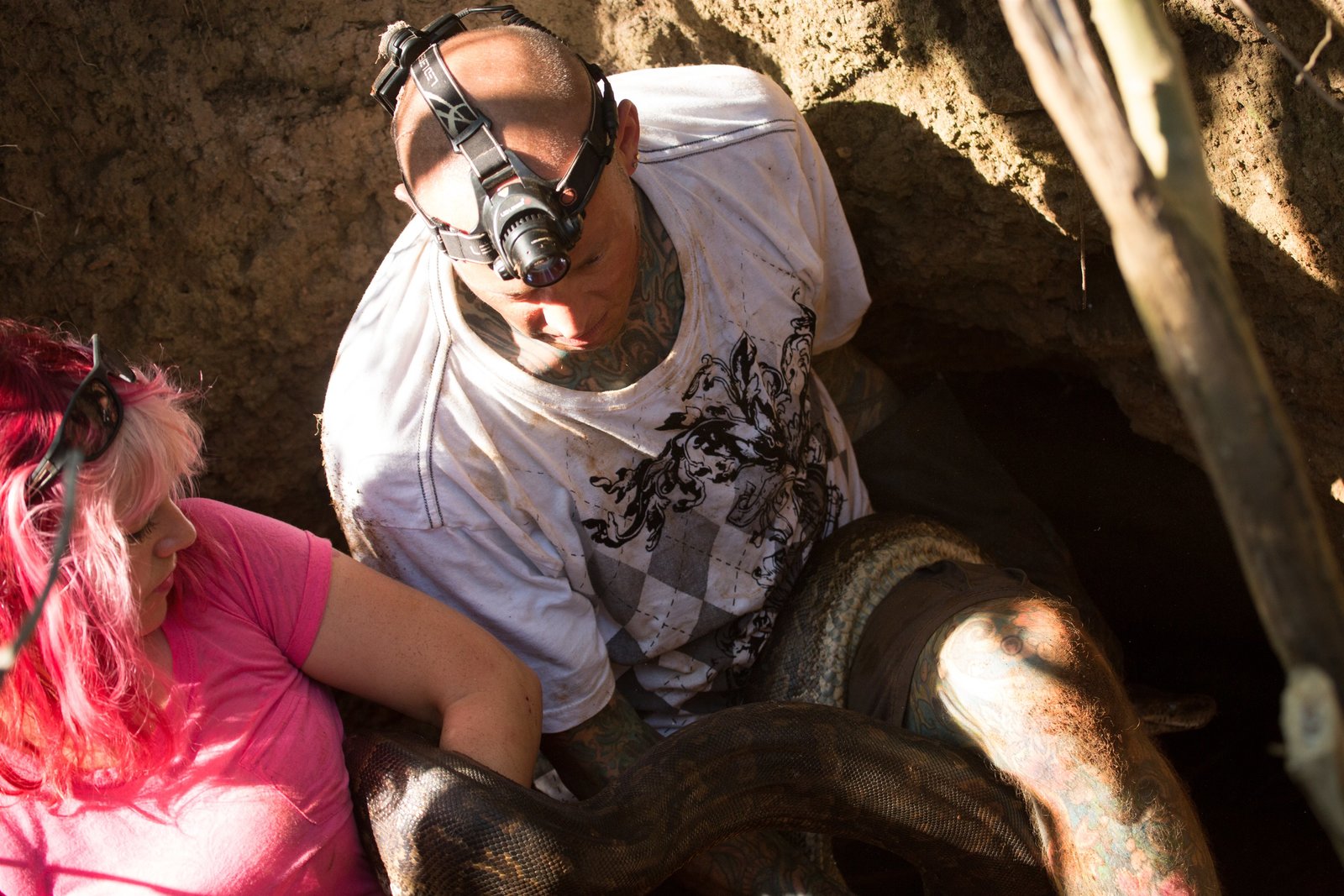
DURBAN, SOUTH AFRICA- A Southern African python (Python natalensis) being handled by Simon Keys, a snake catcher in Durban, KwaZulu-Natal. Simon is removing the snake from within an underground tunnel, with the help of Susan Gillett, Simon's girlfriend and partner in snake catching.
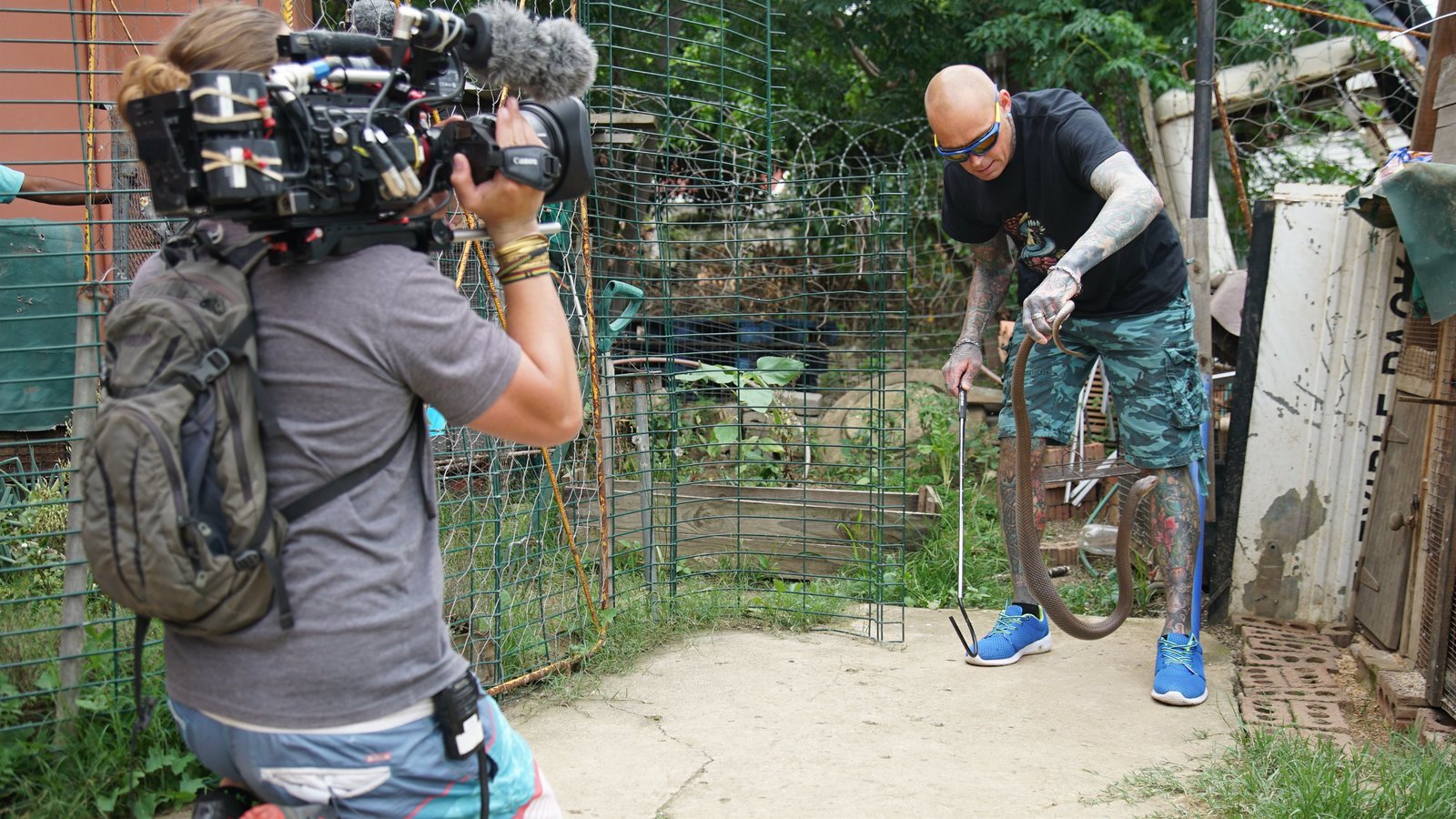
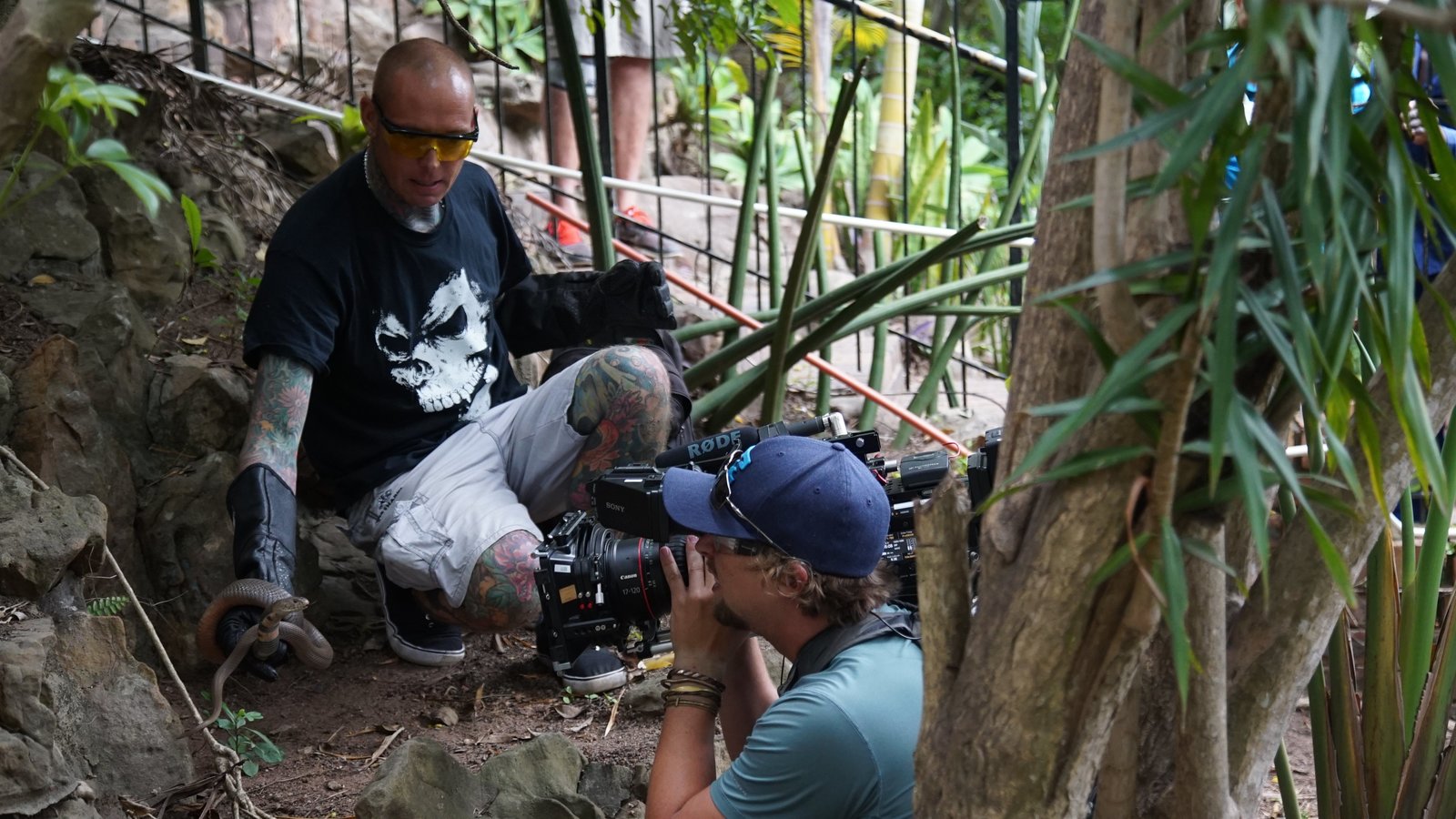
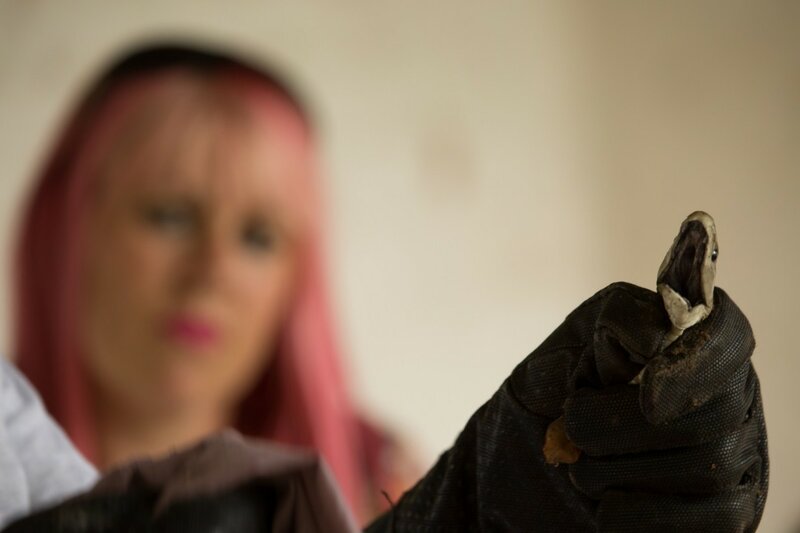
Durban, South Africa - Simon Keys with gloved hands holding a Mozambique spitting cobra (Naja mossambica) that he had safely extracted from inside an old tree stump. The gloves are specially designed, heavy-duty gloves which protect snake handlers from possible snake bites. (Earth Touch LTD/Daniel Philogene)
Durban, South Africa - Simon Keys and Siouxsie Gillett place a night adder (Causus rhombeatus) into a bag before transporting it to a more natural habitat (Earth Touch LTD/Daniel Philogene)
DURBAN, SOUTH AFRICA- Simon Keys and Susan Gillett standing on a wooden bridge after releasing a snake into its natural habitat. Simon and Susan catch snakes in human habitations and translocate them to safer areas where they are less likely to come into contact with people. (Photo credit: National Geographic Channels/Frederick Higgs)
DURBAN, SOUTH AFRICA - Simon Keys and Siouxsie Gillett carefully coaxing a Night adder (Causus rhombeatus) into emerging from the pillow case they used to keep it safely contained while transporting it.
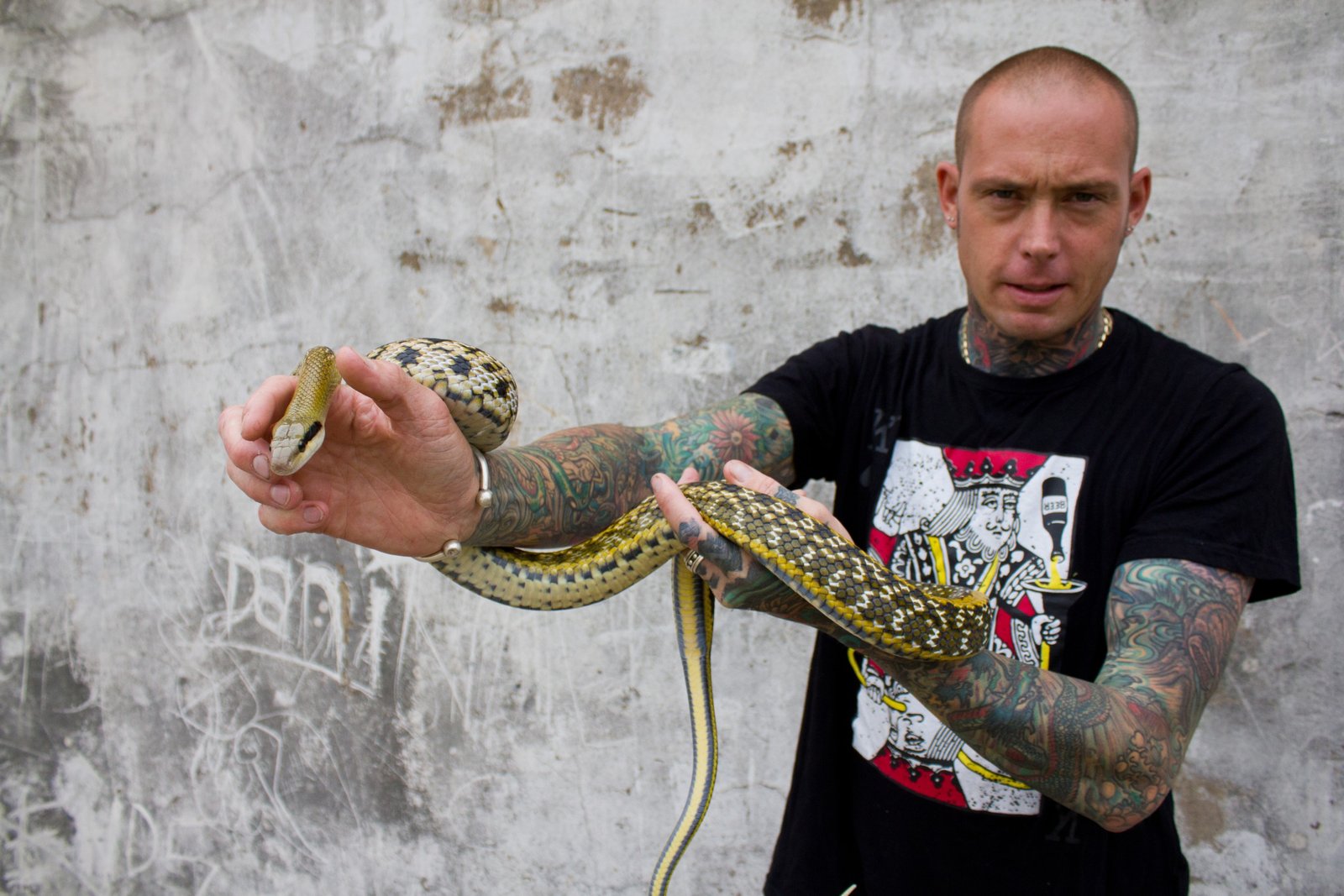
DURBAN, SOUTH AFRICA- Simon Keys and Susan Gillett. Simon holding a southern African python (Python natalensis), Susan with a a Beauty rat snake (Orthriophis taeniurus) with the Durban train tracks in the background. Simon and Susan catch snakes in human habitations in and around Durban and translocate them to safer areas where they are less likely to come into contact with people.
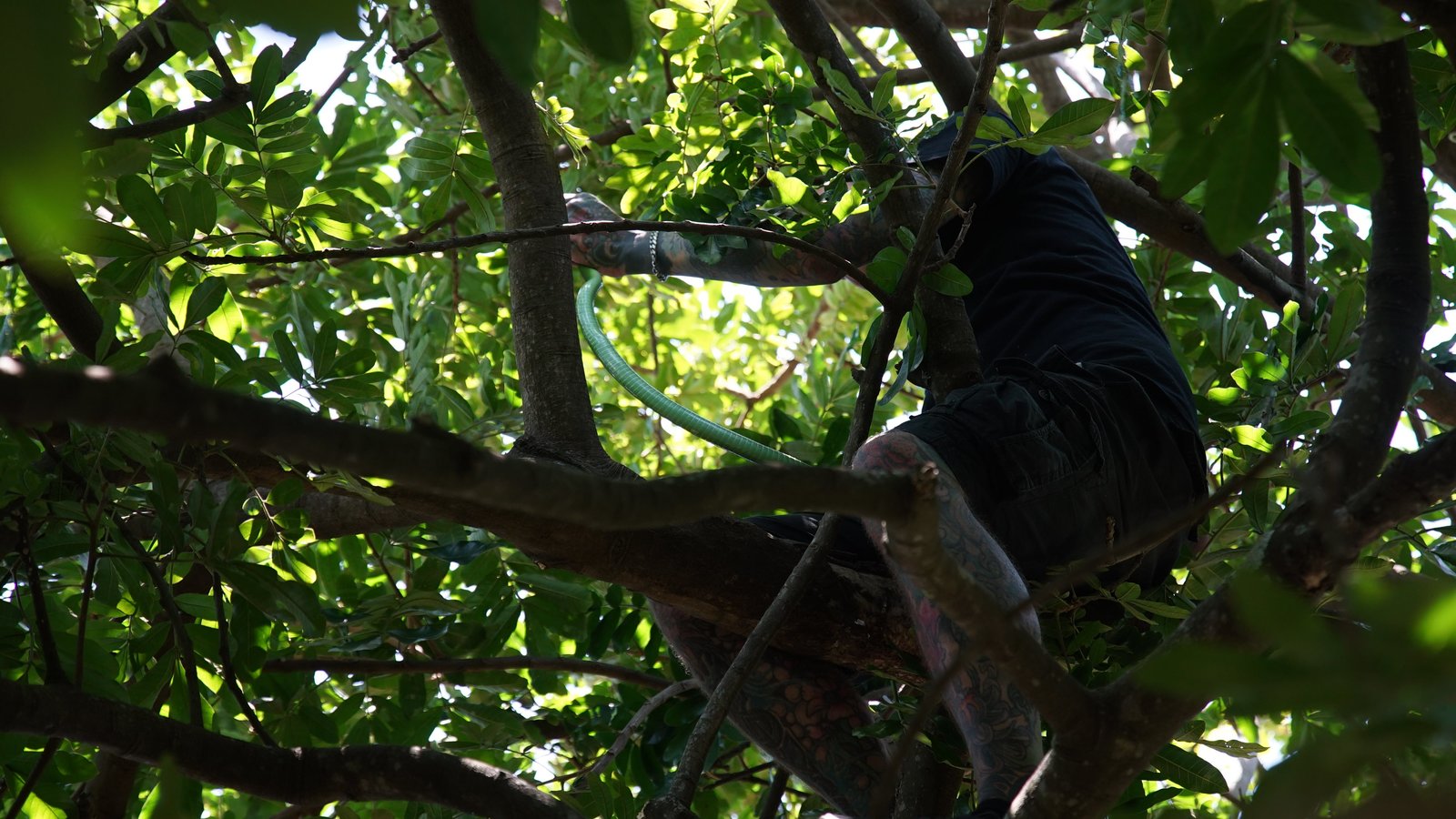
DURBAN, SOUTH AFRICA- Susan Gillett holding a Savanna vine snake (Thelotornis capensis), while Simon examines it. (Photo credit: National Geographic Channels/Frederick Higgs)
DURBAN, SOUTH AFRICA- Susan holding a Savanna vine snake (Thelotornis capensis), while Simon examines it. (Photo credit: National Geographic Channels/Frederick Higgs)
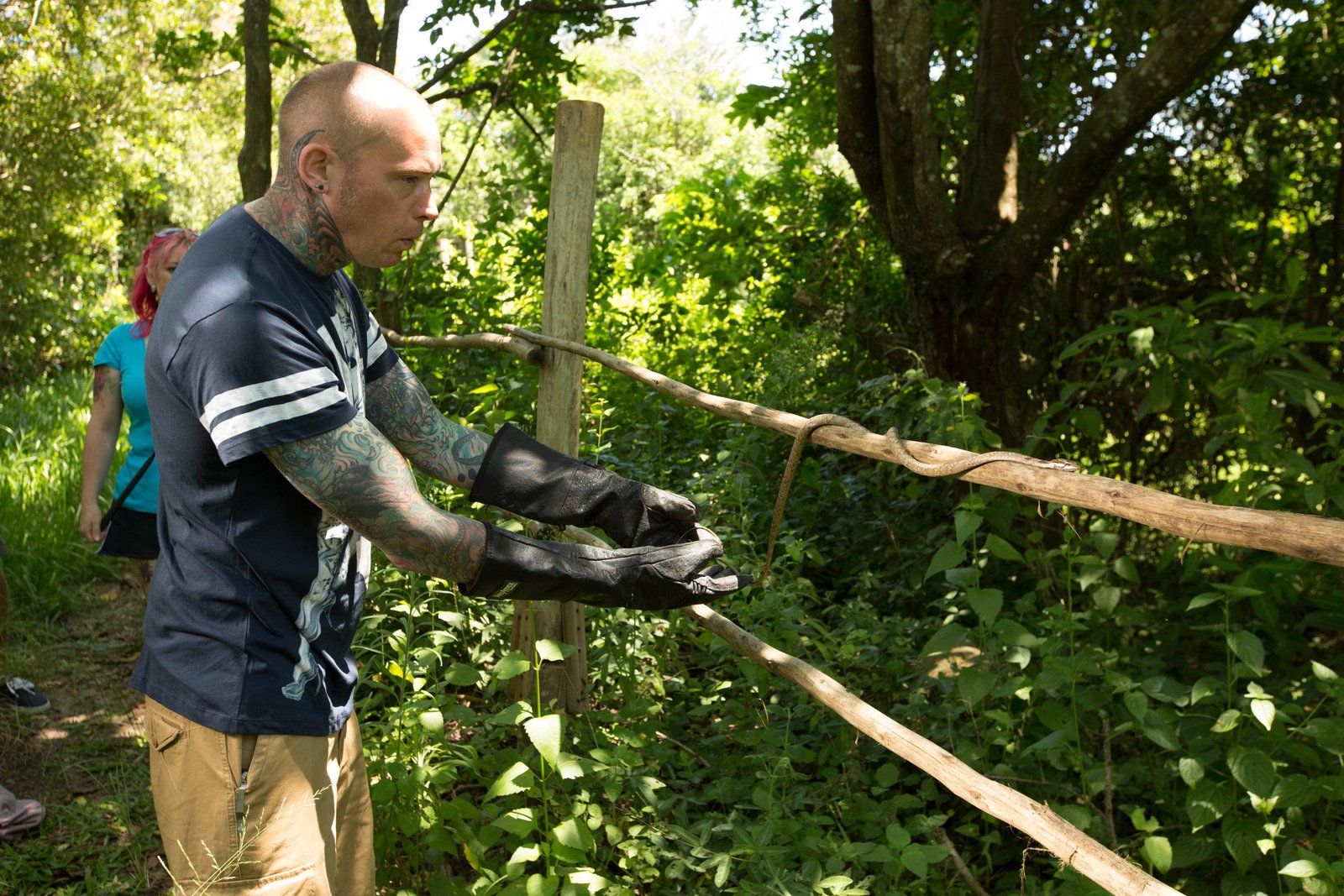
DURBAN, SOUTH AFRICA- Simon releasing a Savanna vine snake (Thelotornis capensis) onto a wooden fence, while Susan watches the release from further back. (Photo credit: National Geographic Channels/Frederick Higgs)
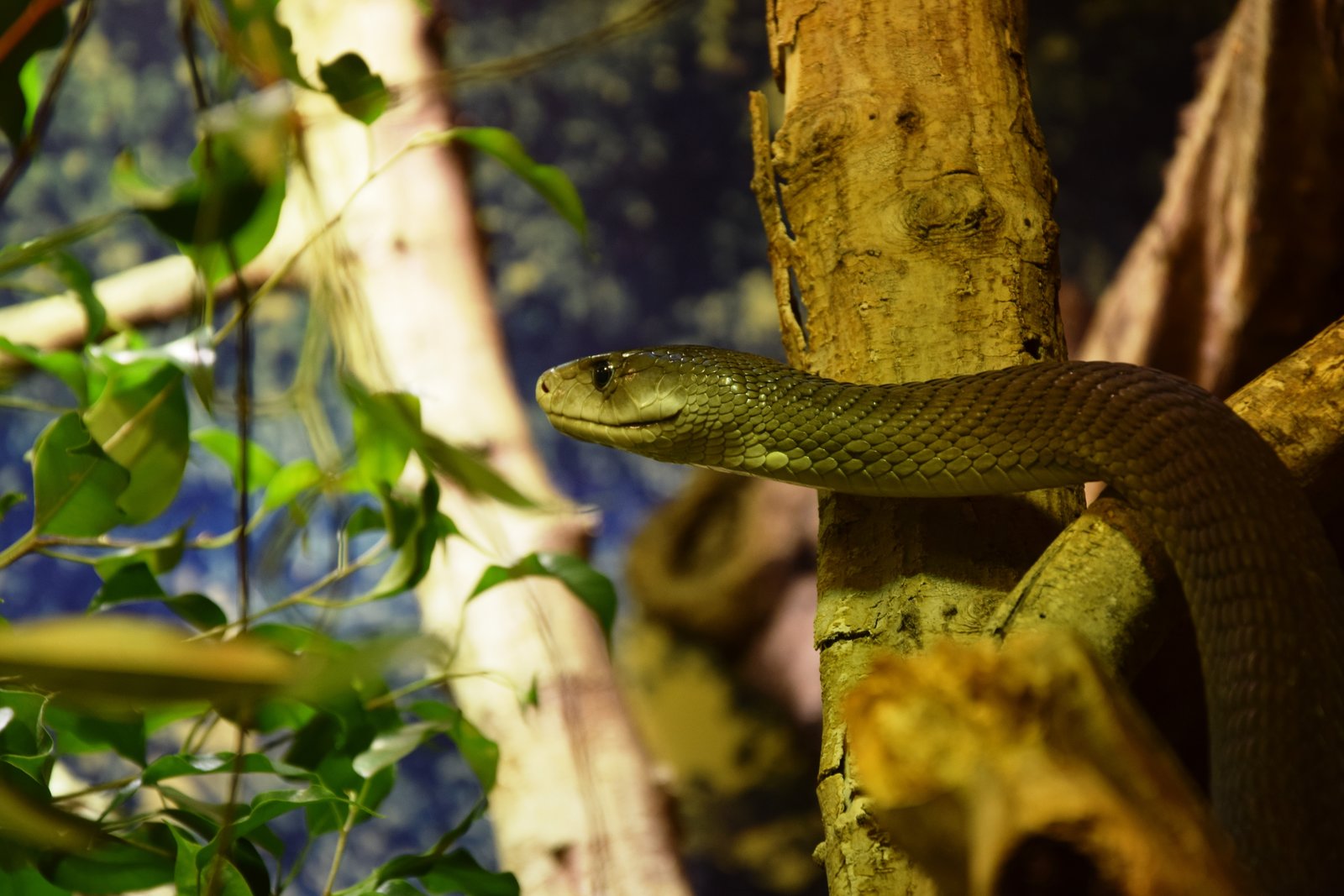
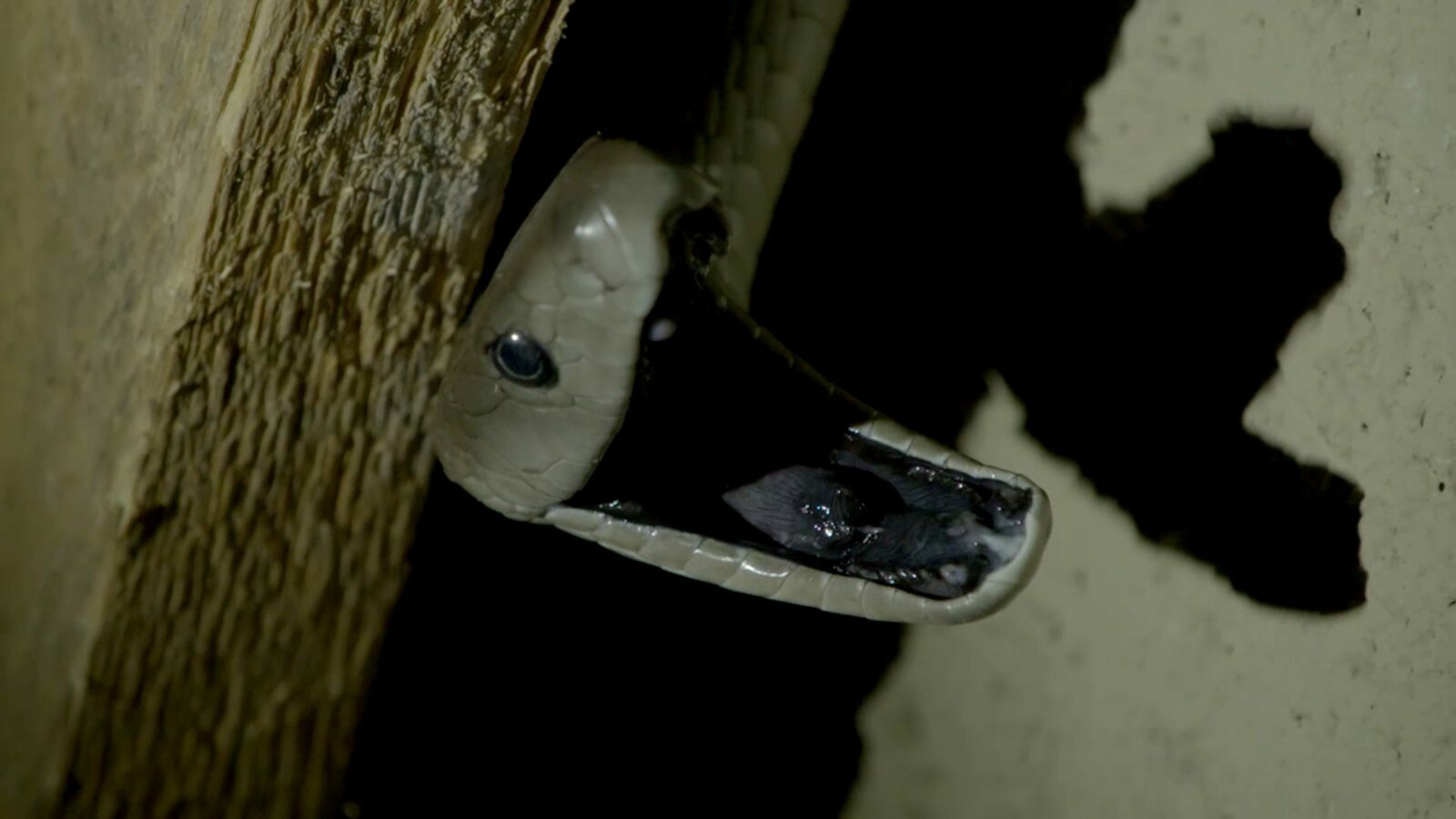
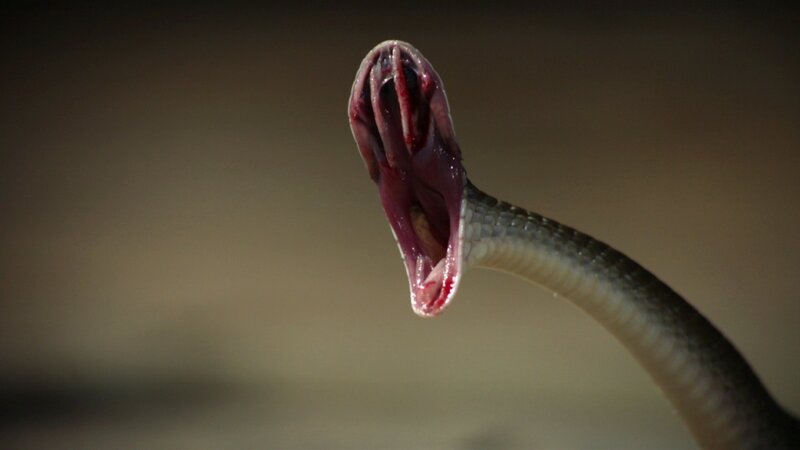
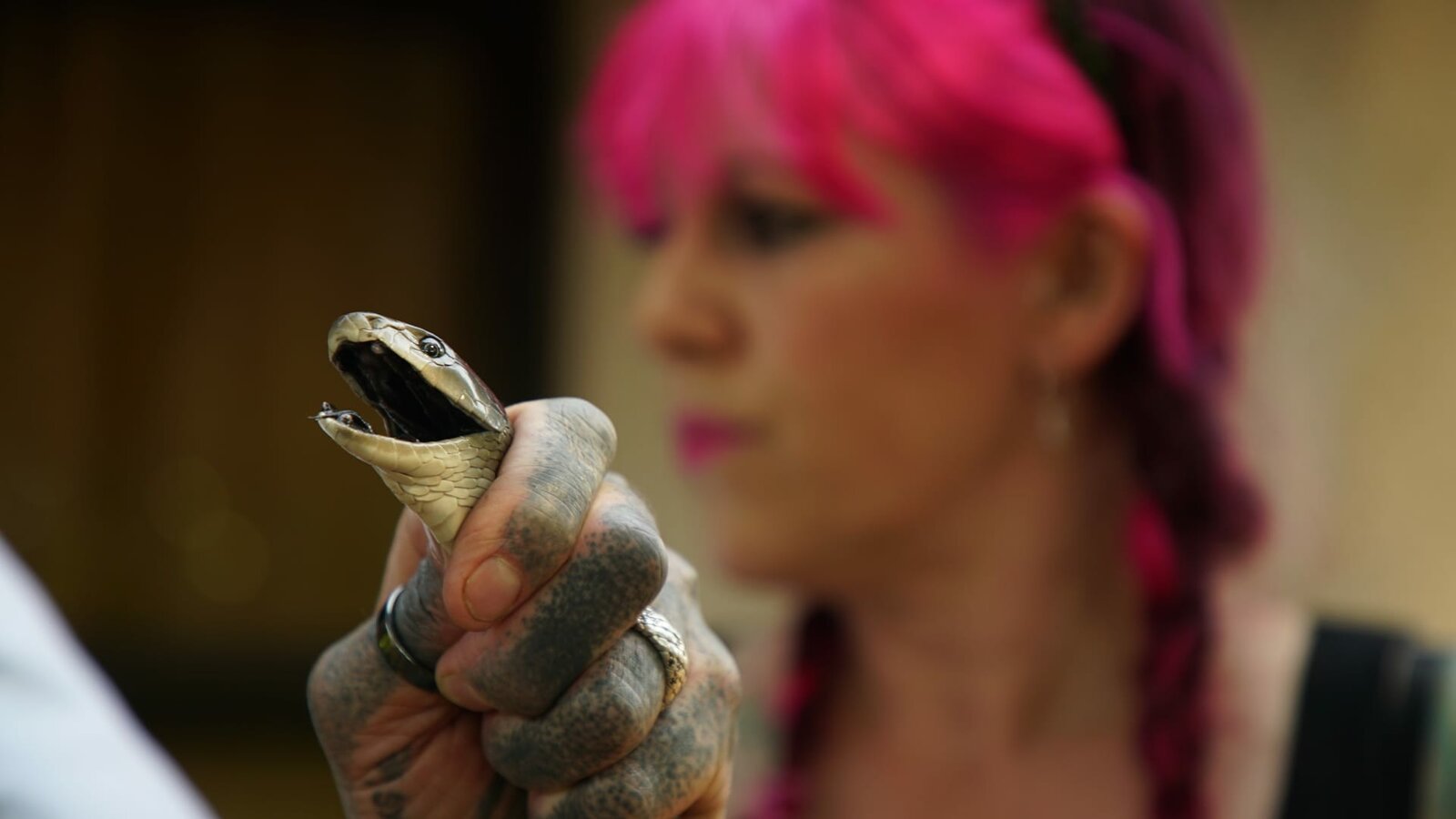
A gaping black mamba (Dendroaspis polylepis) which reveals the inky black mouth lining. This distinctive feature is what gives this snake its name rather than the color of its skin. (Earth Touch (Pty) Ltd/Riaan Venter)
DURBAN, SOUTH AFRICA- A light-hearted moment as Simon Keys and Siouxsie Gillett handle a juvenile Spotted bush snake. (Philothamnus semivariegatus). Spotted bush snakes are very common and completely harmless, feeding mainly on lizards and frogs. They have excellent eyesight and are extremely alert snakes. (Photo credit: National Geographic Channels/Frederick Higgs)
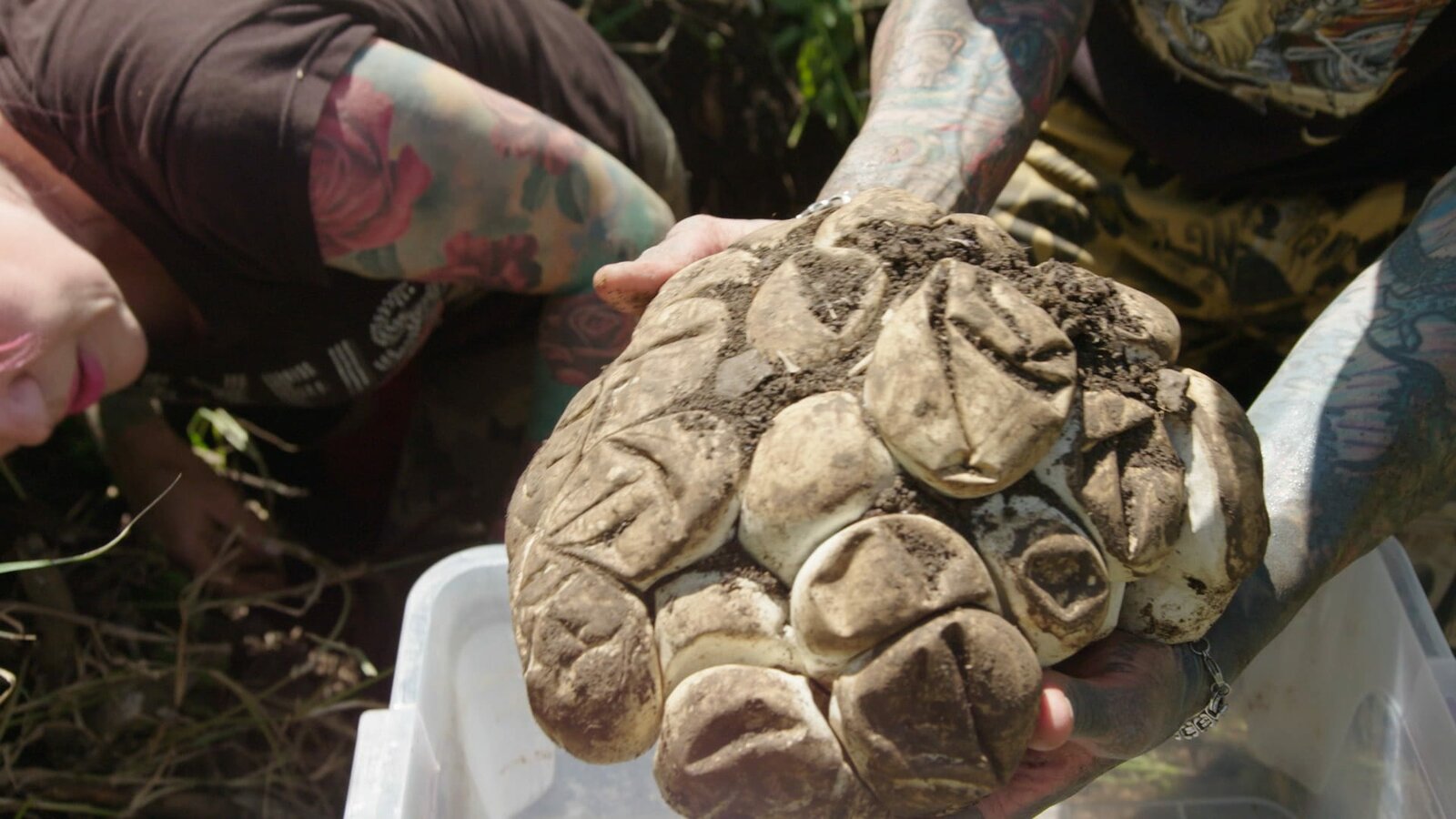
Siouxsie Gillett holds onto a clutch of African rock python (Python sebae) eggs - discovered while rescuing a female python from a construction site. (Earth Touch (Pty) Ltd/Riaan Venter)
DURBAN, SOUTH AFRICA- A light-hearted moment as Simon Keys and Siouxsie Gillett handle a juvenile Spotted bush snake. (Philothamnus semivariegatus). Spotted bush snakes are very common and completely harmless, feeding mainly on lizards and frogs. They have excellent eyesight and are extremely alert snakes. (Photo credit: National Geographic Channels/Frederick Higgs)
DURBAN, SOUTH AFRICA- A deadly Black mamba (Dendroaspis ploylepis) being handled in the foreground, and Susan Gillett observing it in background. Black mamba's are highly dangerous due to a potent neurotoxic venom, and therefore need to be handled with great care. (Photo Credit: National Geographic Channels/Garth McConnell)
DURBAN, SOUTH AFRICA- Simon puts protective goggles on as he faces a Mozambique spitting cobra (Naja mossambica), known for their deadly accurate and venomous spray. (Photo credit: National Geographic Channels/Frederick Higgs)
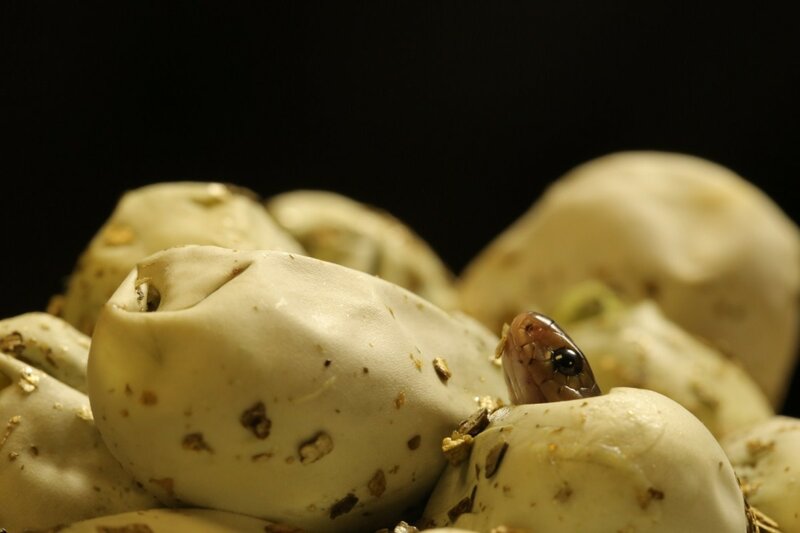
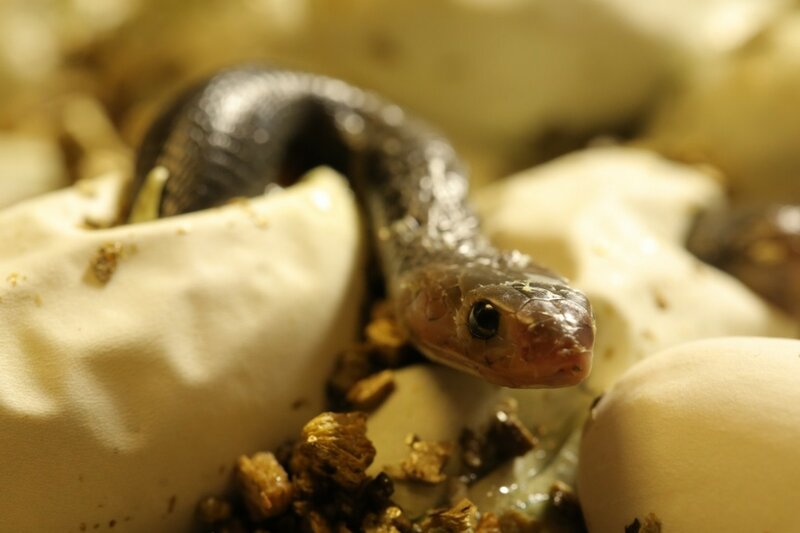
DURBAN, SOUTH AFRICA- A Mozambique Spitting Cobra hatchling emerging from it's egg, surrounded by other eggs. Black mambas are highly dangerous from birth, with fully developed venom glands and a defensive disposition. (Photo Credit: National Geographic Channels/Garth McConnell)
DURBAN, SOUTH AFRICA- A Mozambique Spitting Cobra hatchling emerging from it's egg, surrounded by other eggs. Black mambas are highly dangerous from birth, with fully developed venom glands and a defensive disposition. (Photo Credit: National Geographic Channels/Garth McConnell)
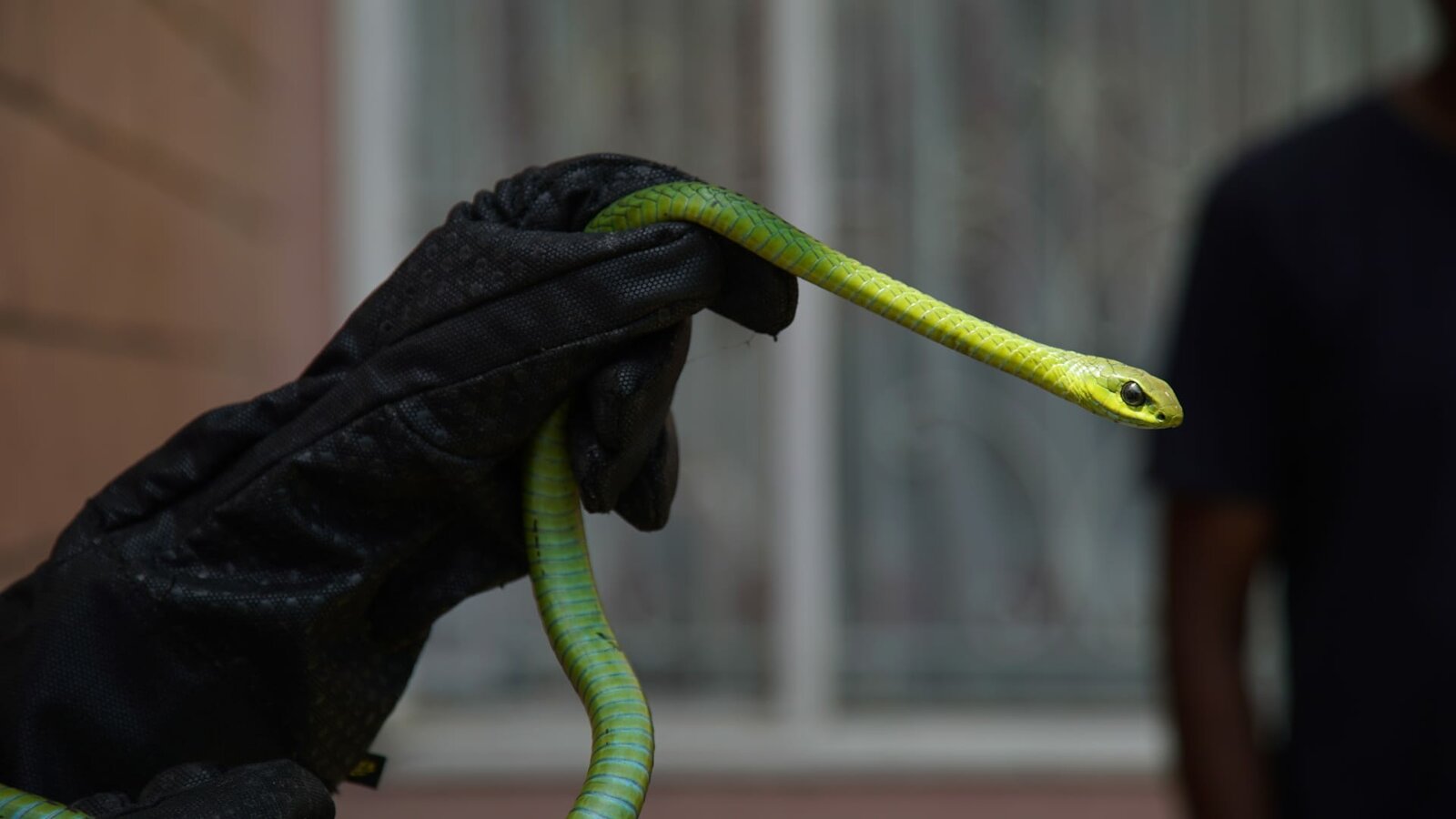
Close up shot of Siouxsie Gillett's gloved hand holding onto a green mamba (Dendroaspis angusticeps). These specialised gloves are bite resistant but not bite-proof so they are still sure to handle the snake carefully even with the gloves on.(National Geographic /Jed Kenny)
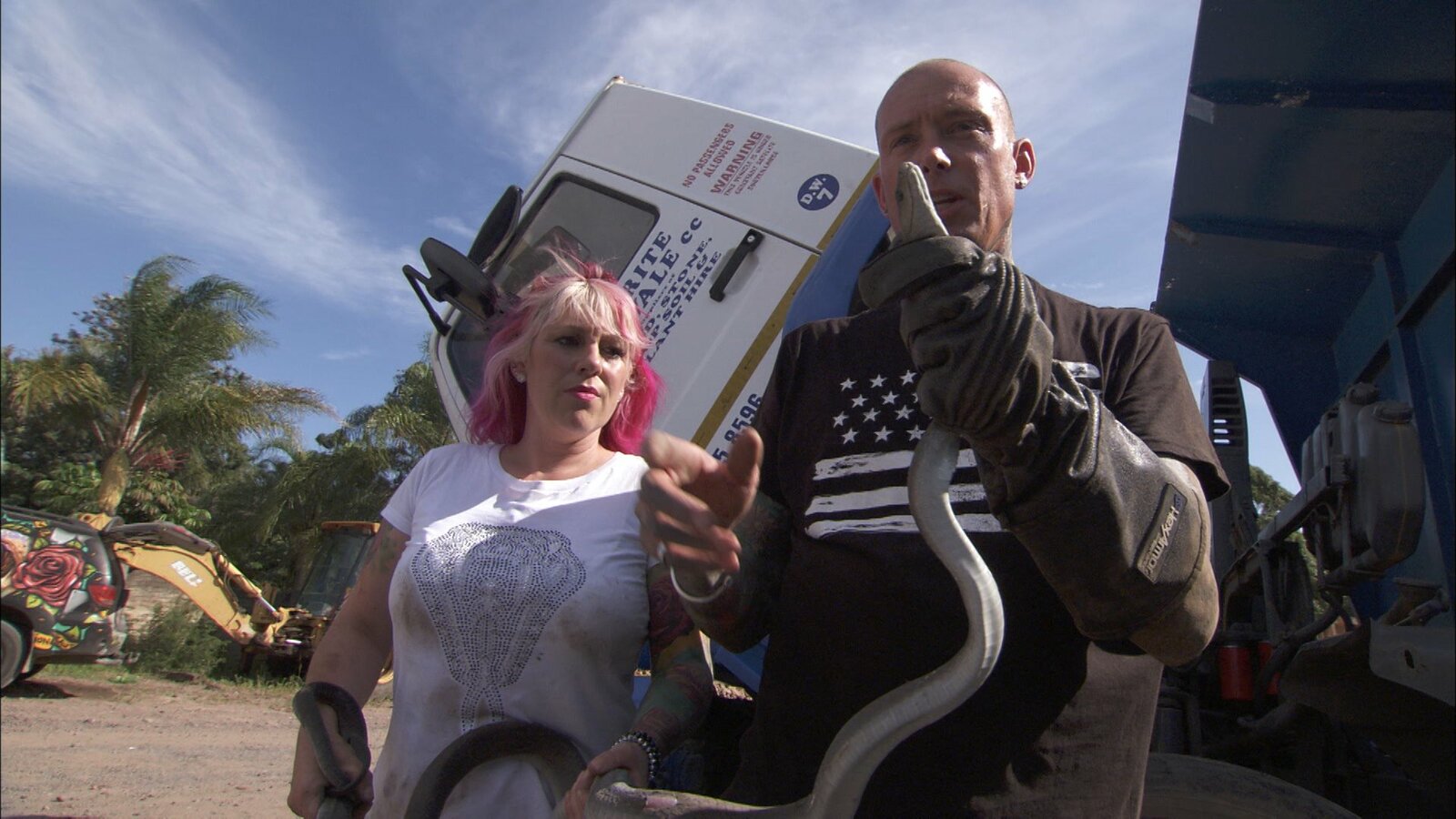
Simon Keys holding a deadly black mamba (Dendroaspis polylepis) behind the neck. This is a humane technique of securing the snake referred to as 'necking', ensuring the snake isn't harmed, and the snake handler is safe from a potential bite. Siouxsie Gillett is in the background. (National Geographic/Dylan Theron)
 Schlange im KinderbettBild: © Copyright © The National Geographic Channel.