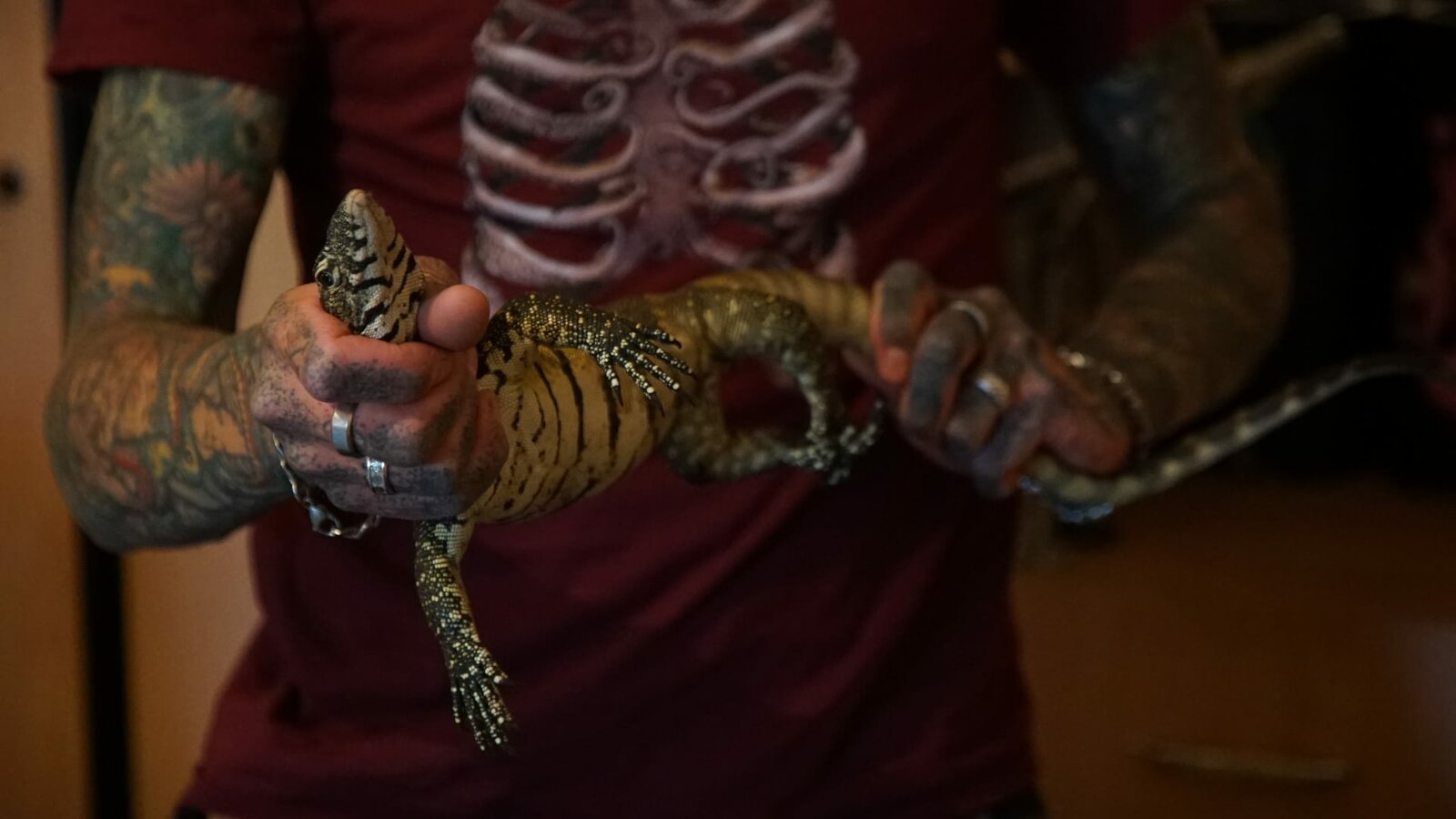
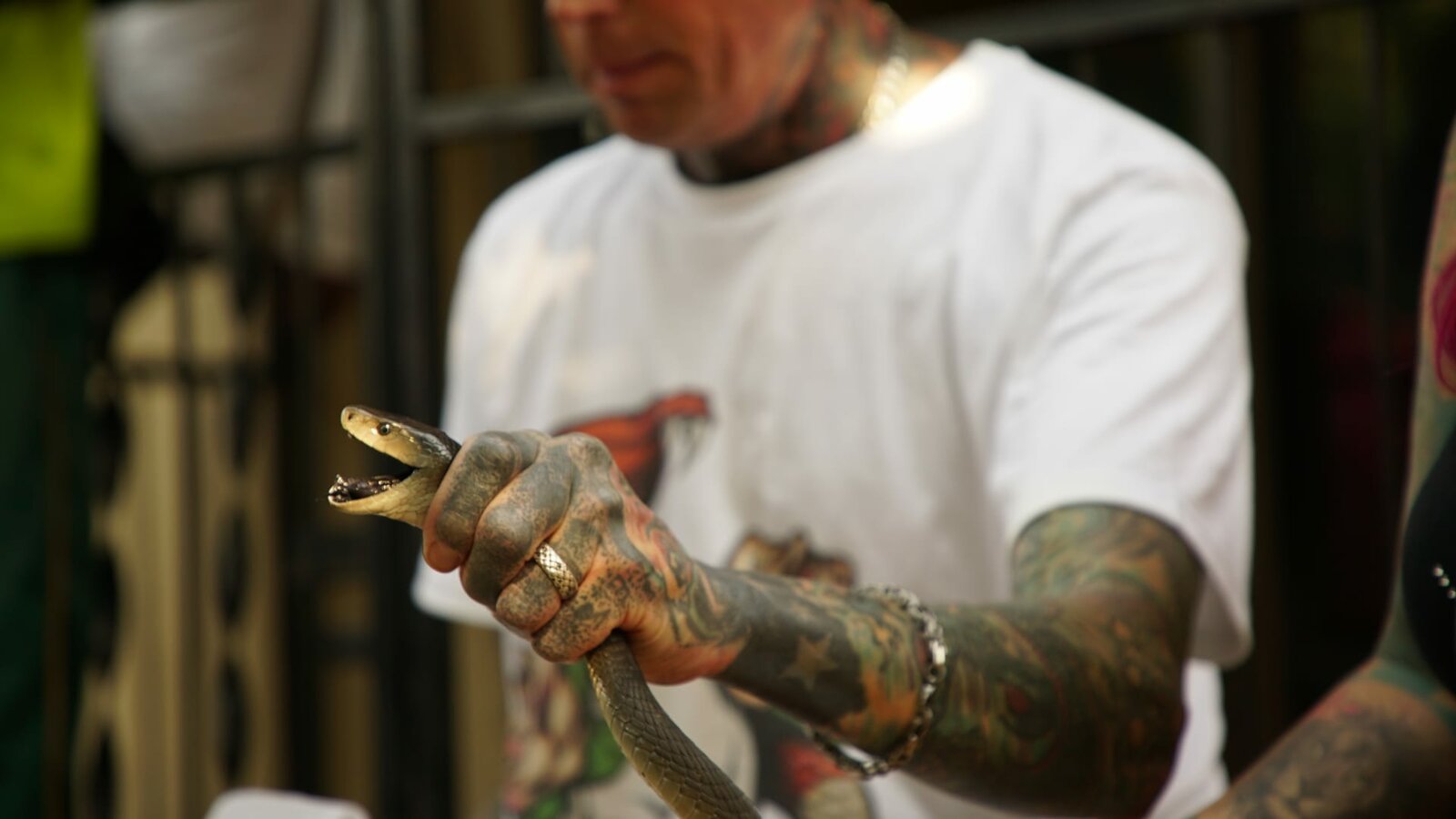
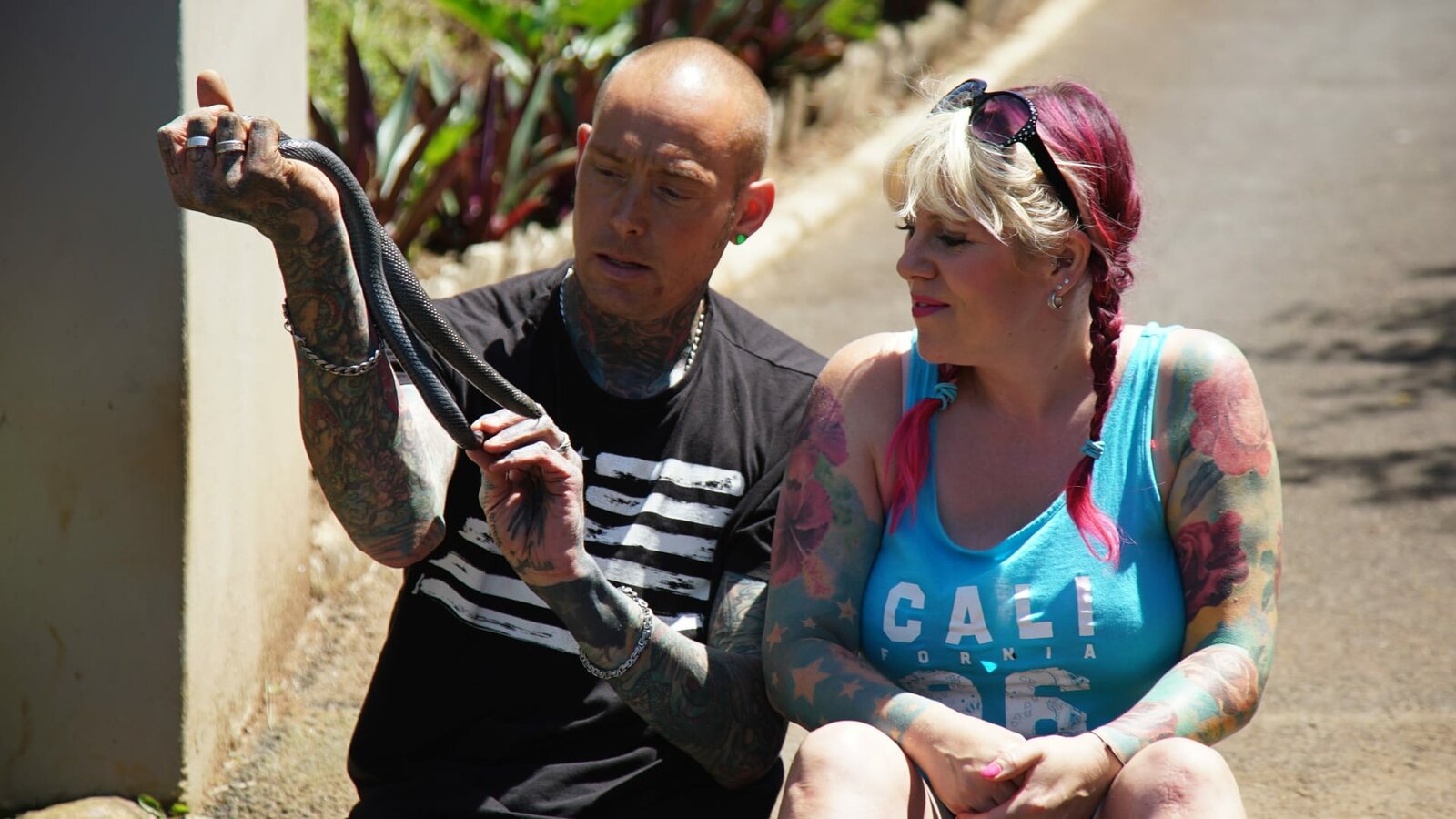
Simon Key's hand holding a deadly black mamba (Dendroaspis polylepis) behind the neck. This is a humane technique of securing the snake referred to as 'necking', ensuring the snake isn't harmed, and the snake handler is safe from a potential bite. (National Geographic/Dylan Theron)
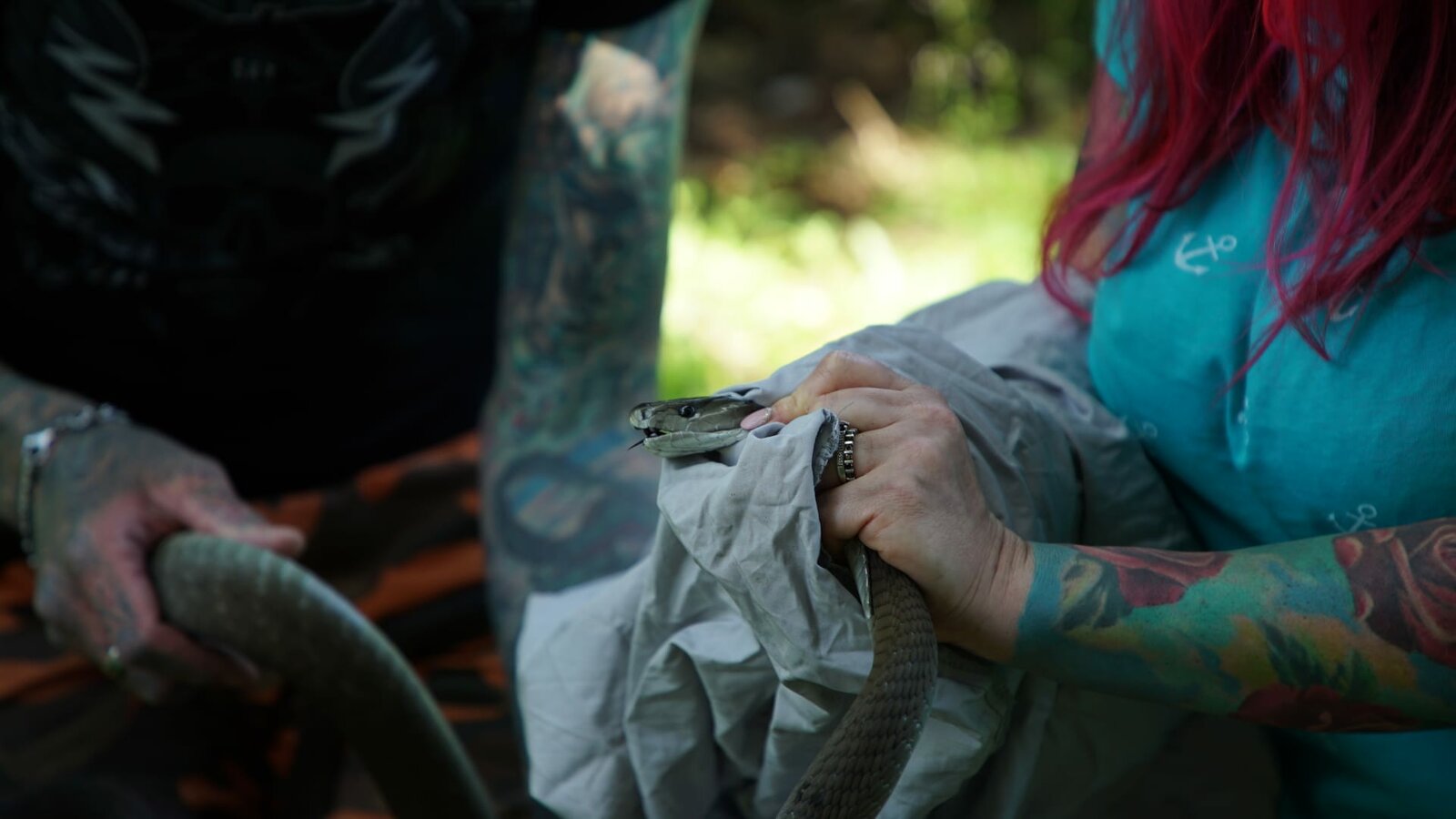
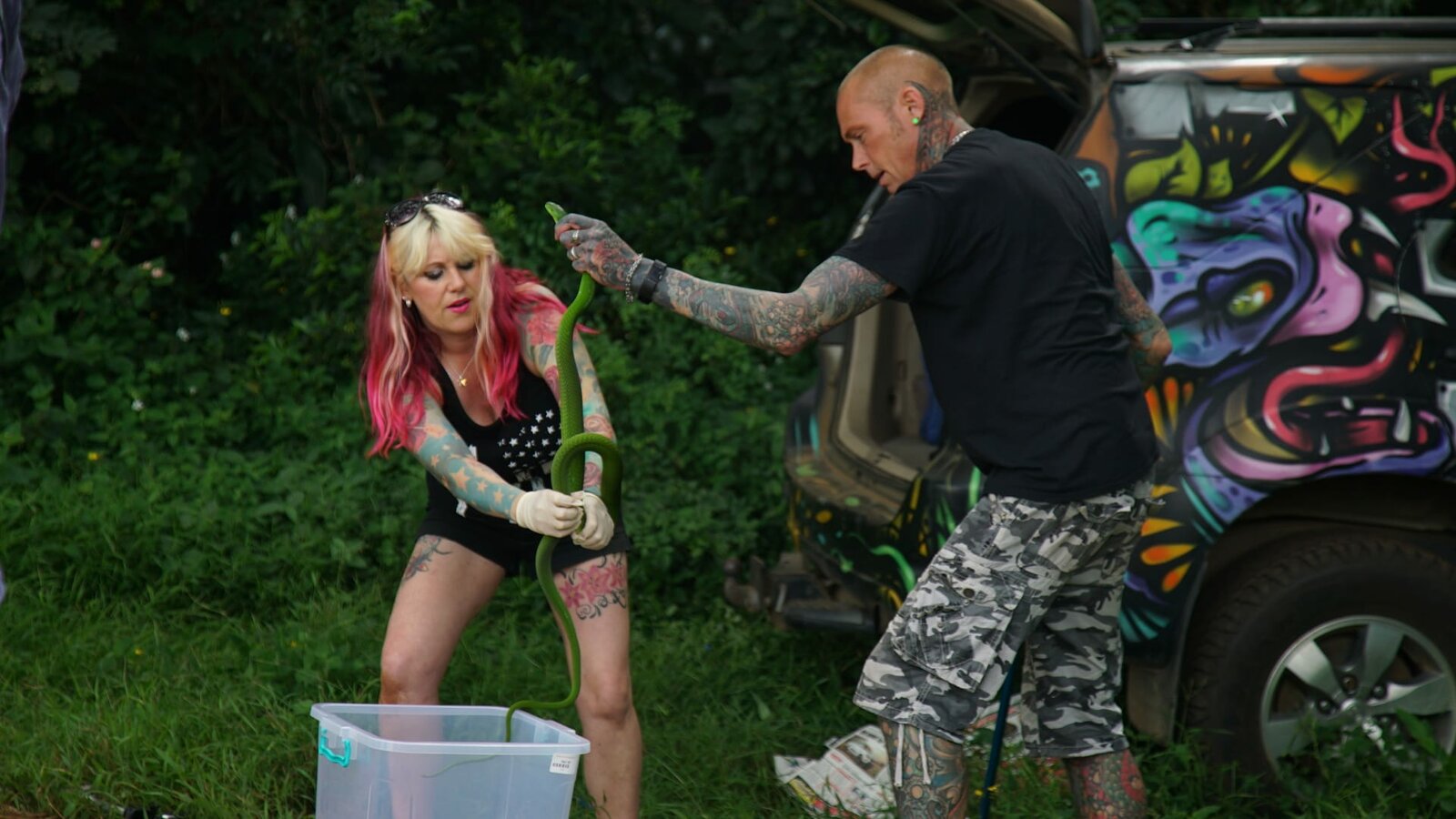
Siouxsie Gillett beginning the dangerous process of 'bagging' the black mamba (Dendroaspis polylepis) she had captured herself. (National Geographic/Dylan Theron)
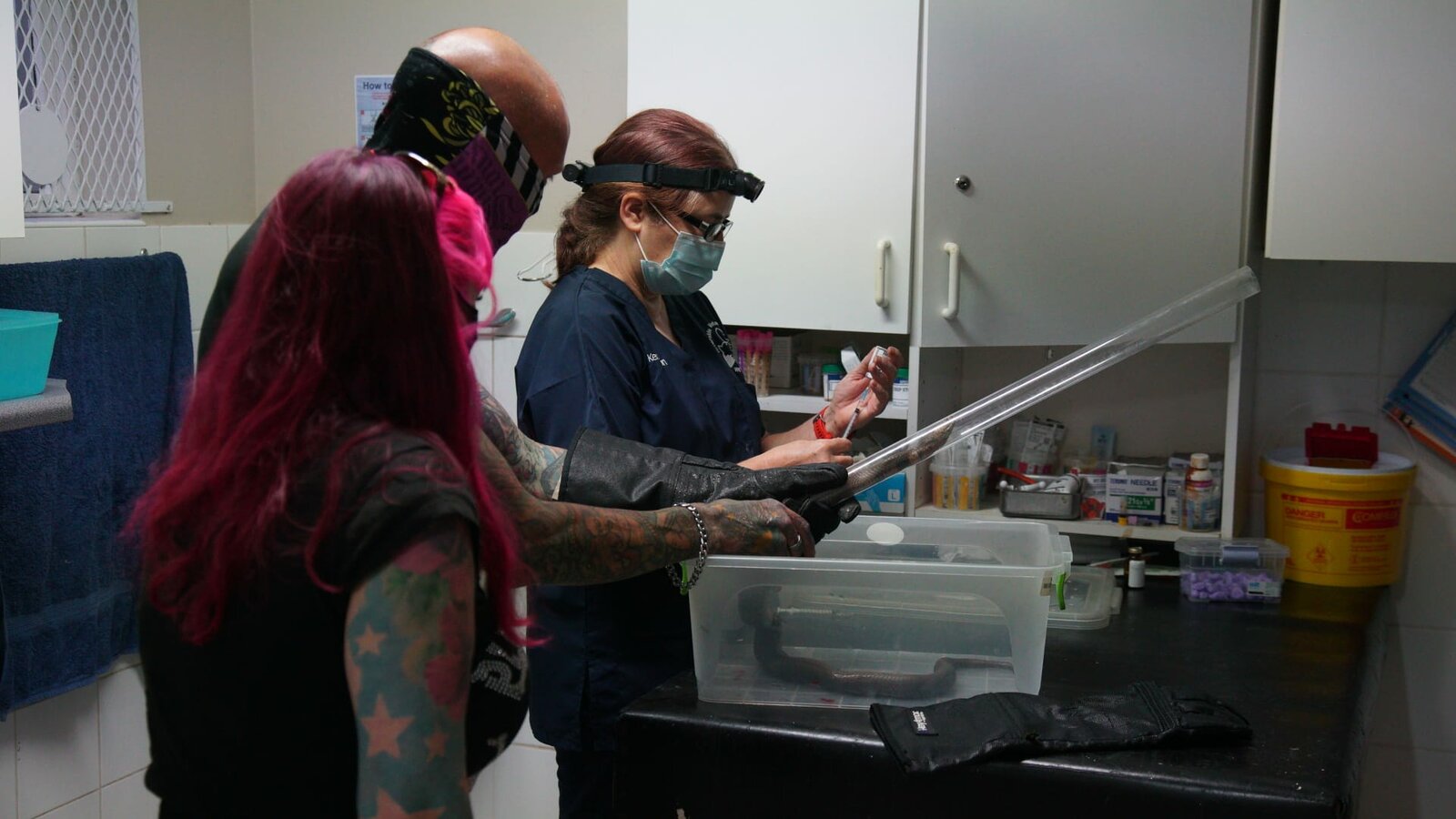
Simon Keys and Siouxsie Gillett with animal vet, Kerry Easson, as she tends to a severely injured Mozambique spitting cobra (Naja mossambica). (National Geographic/Dylan Theron)
Simon Keys and Siouxsie Gillett measuring the length of a black mamba (Dendroaspis polylepis) they had safely rescued from a home in Durban, South Africa. (National Geographic/Daniel Philogene)
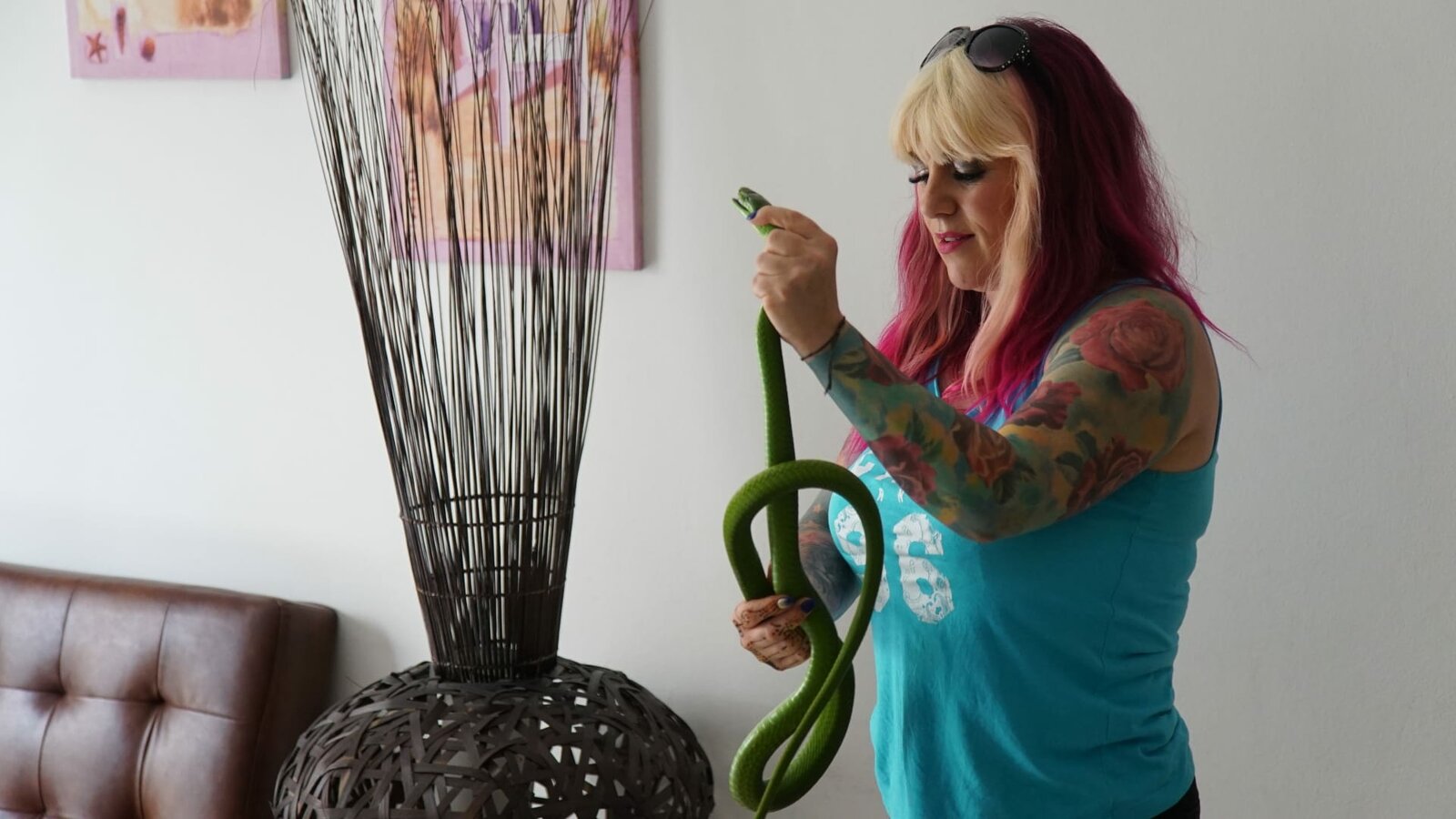
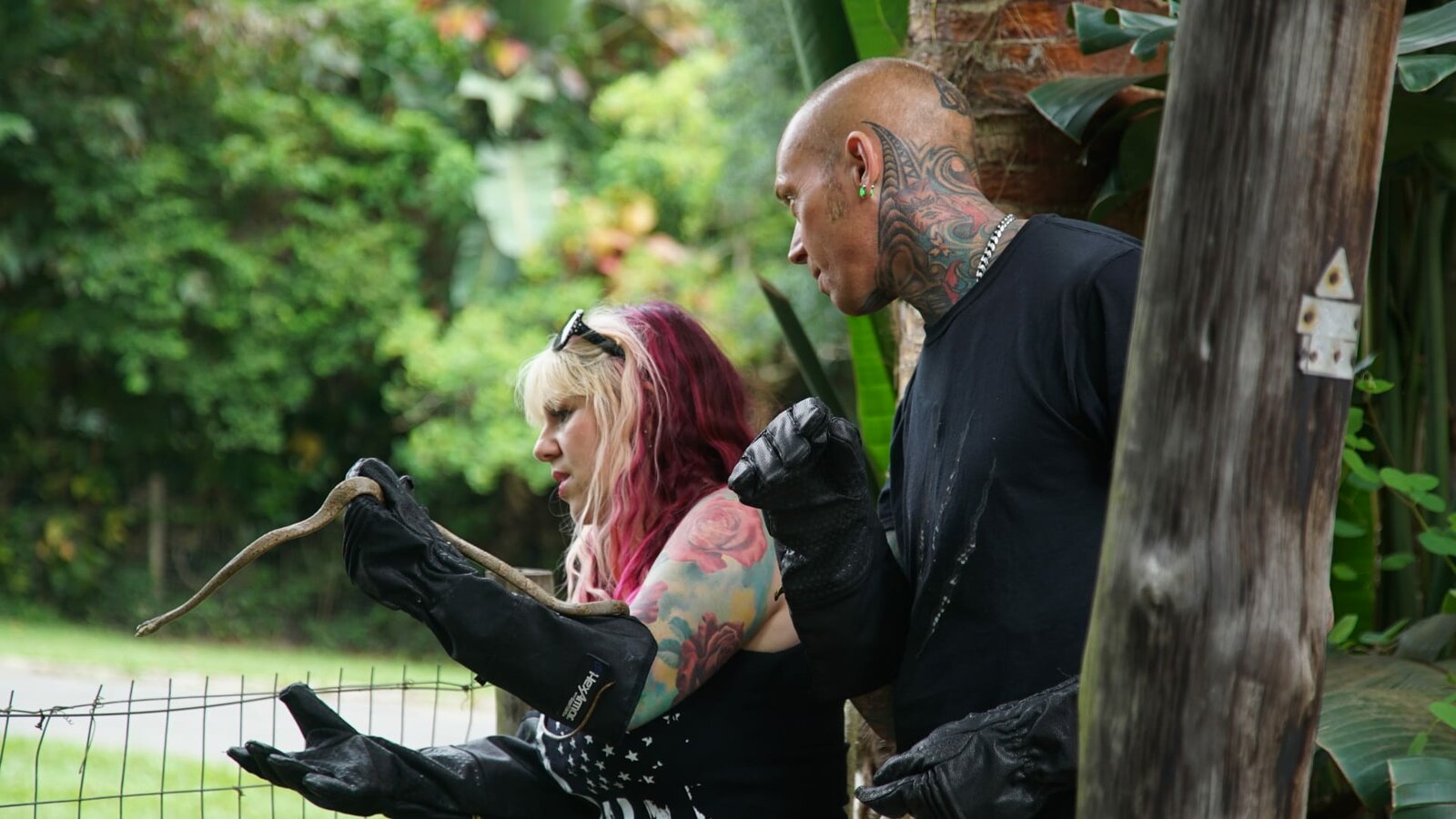
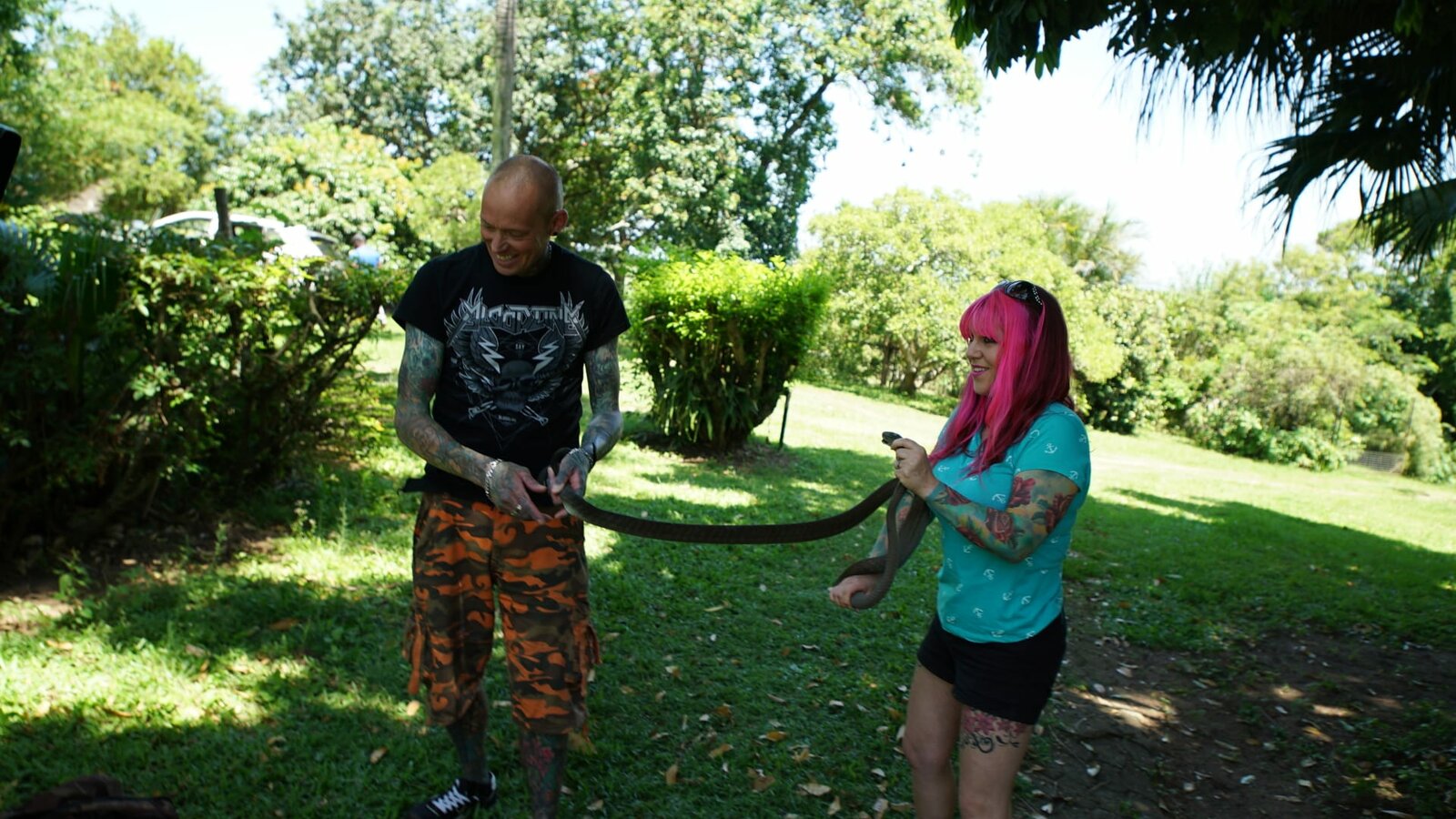
Siouxsie Gillett holding onto a deadly black mamba (Dendroaspis polylepis) after she had successfully caught the snake herself. (National Geographic/Dylan Theron)
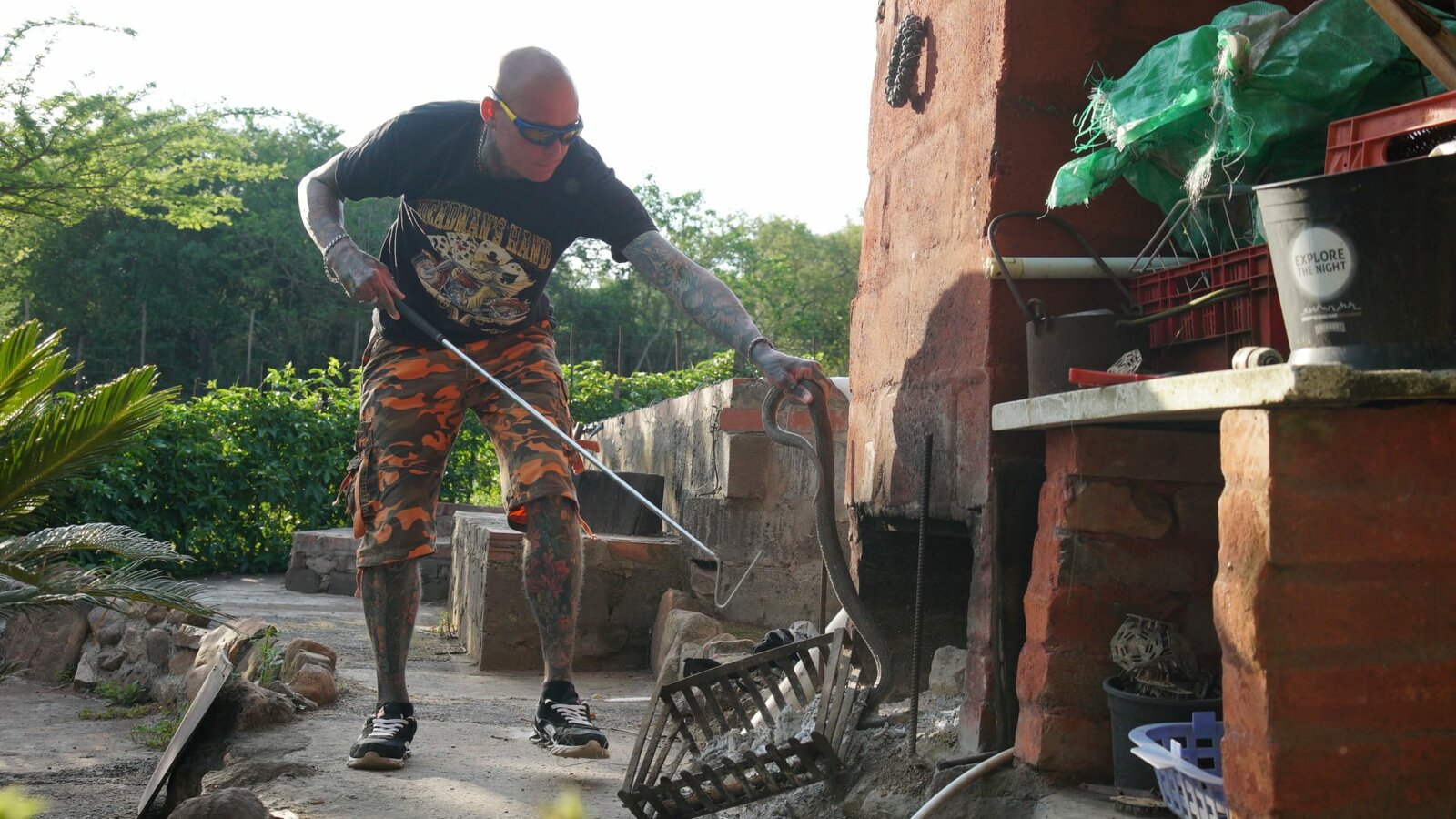
Simon Keys holding a venomous Mozambique spitting cobra (Naja mossambica) found in a residence in Durban, South Africa. Simon is wearing protective glasses to protect his eyes from the highly accurate aim this particular cobra is known for when spraying its venom. (National Geographic/Dylan Theron)
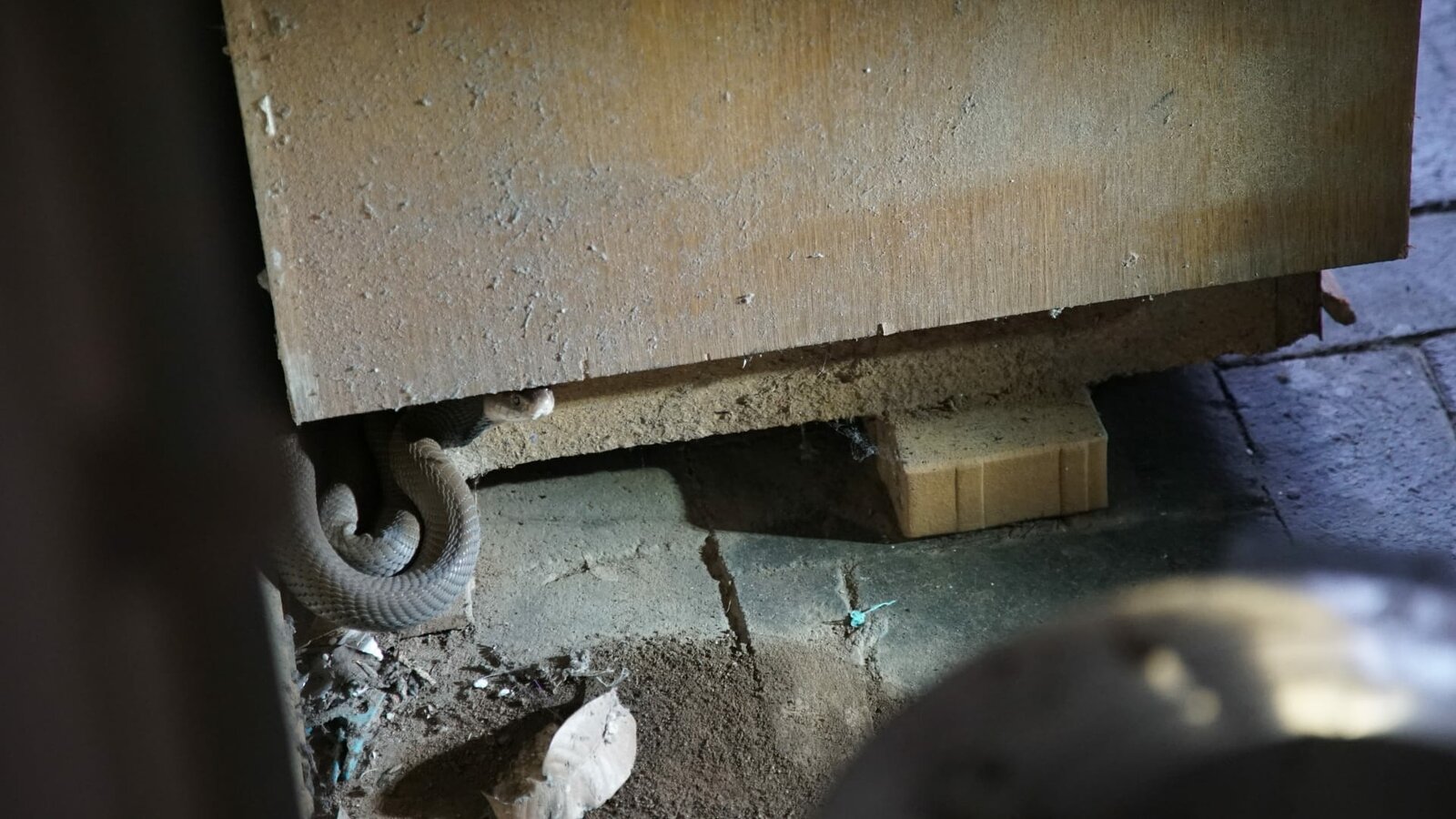
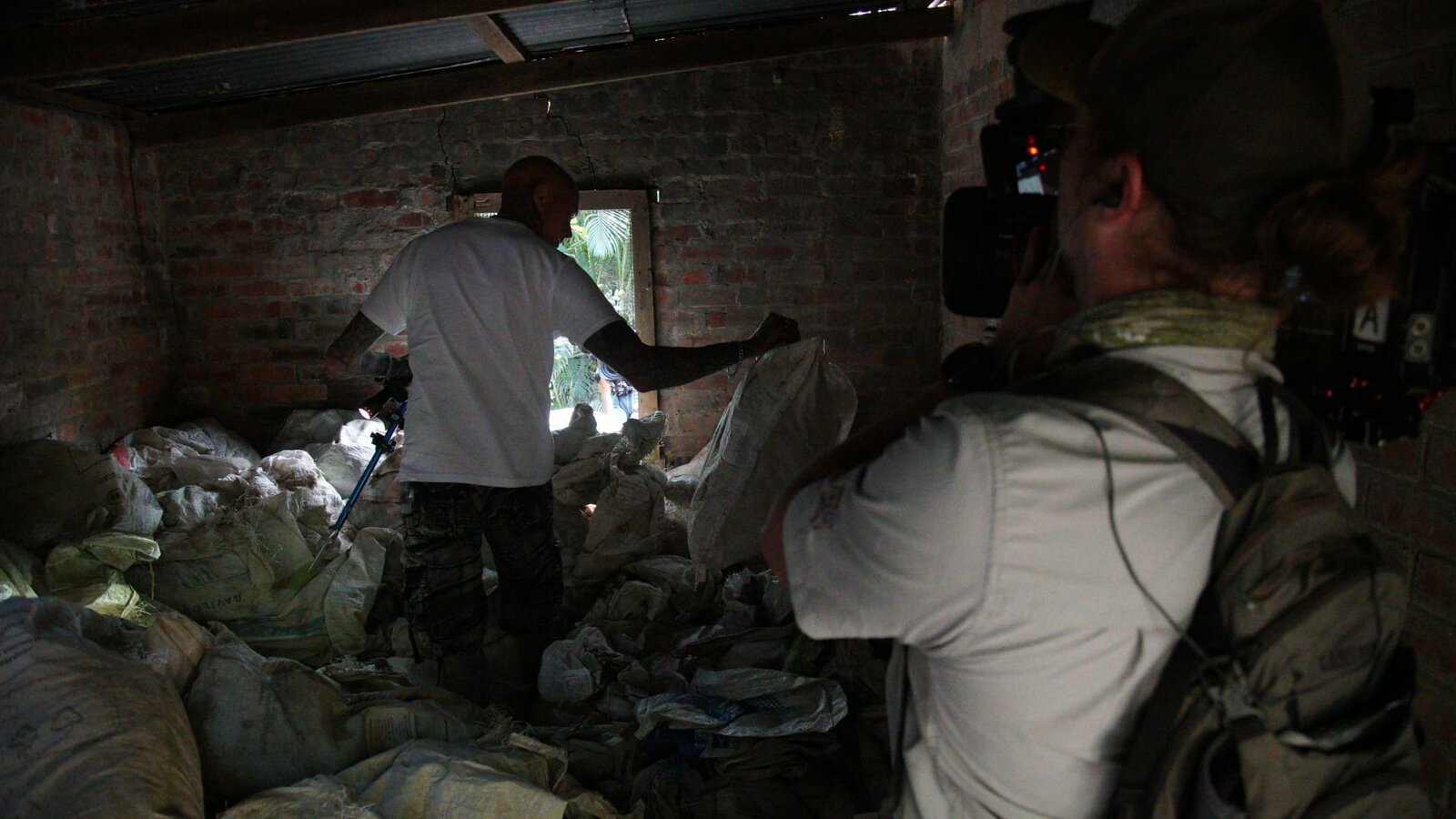
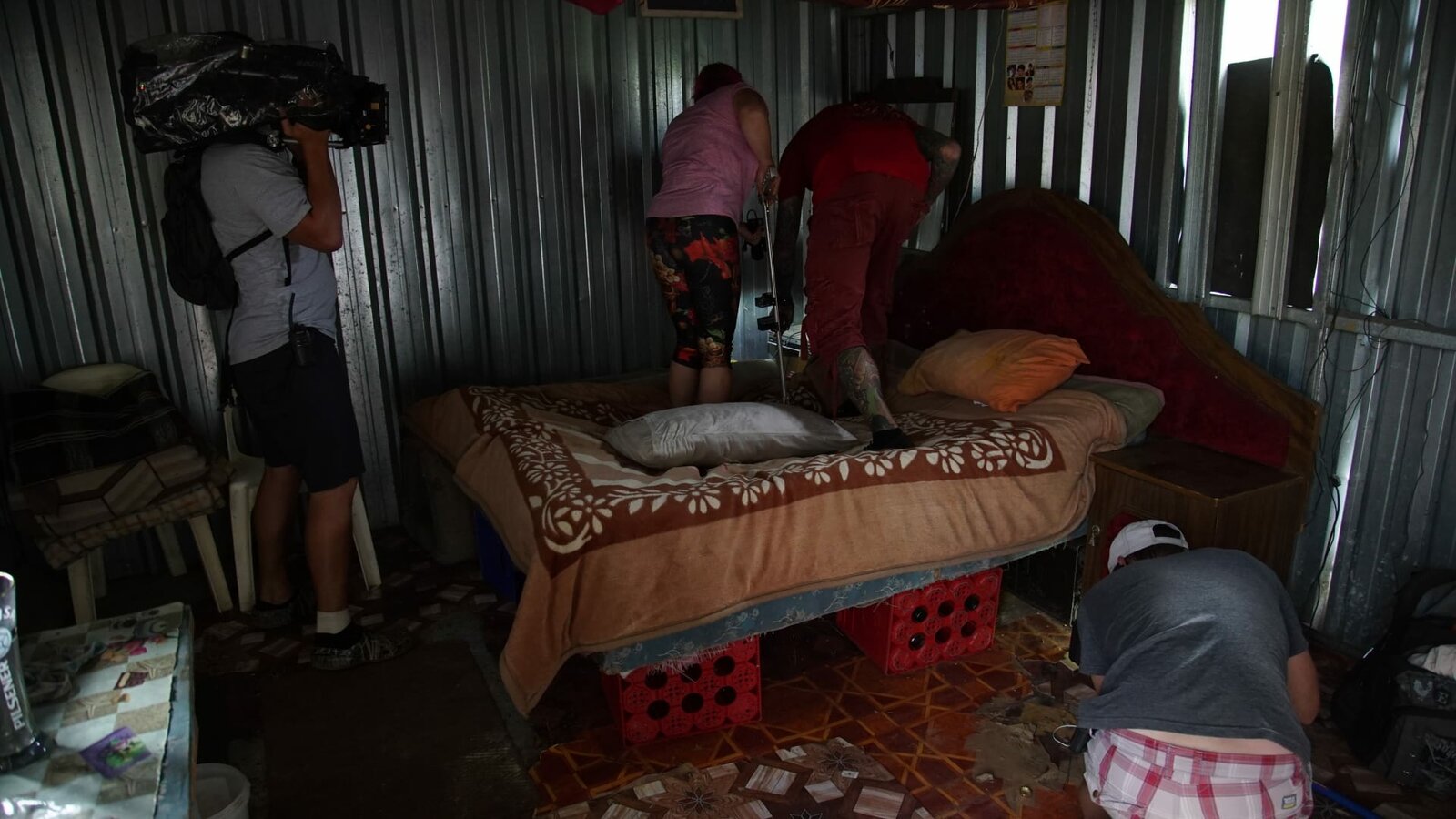
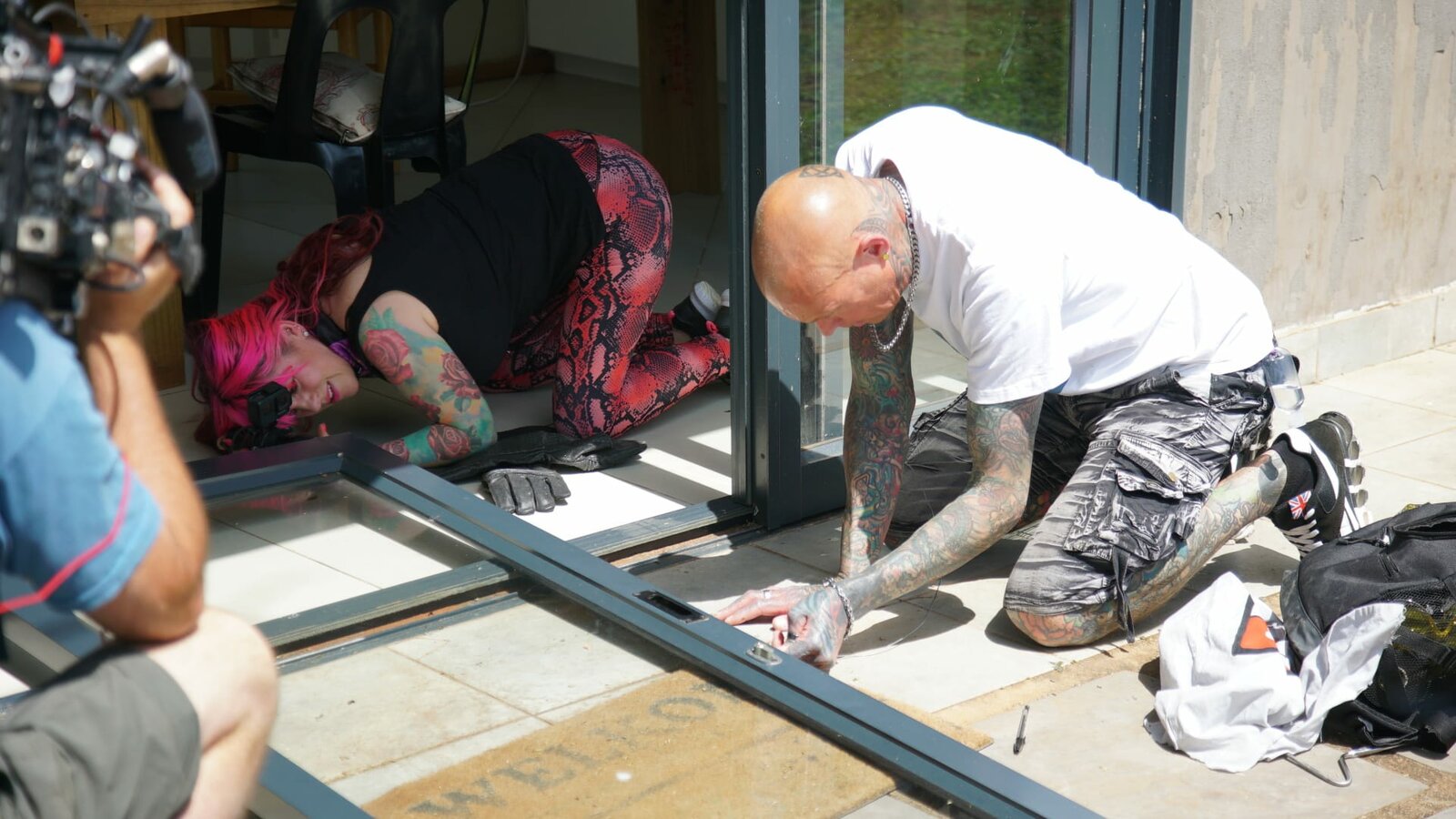
Simon Keys and Siouxsie Gillett find a Mozambique spitting cobra (Naja mossambica) in an old couch while cameraman James Boon captures the action.(National Geographic /Jed Kenny)
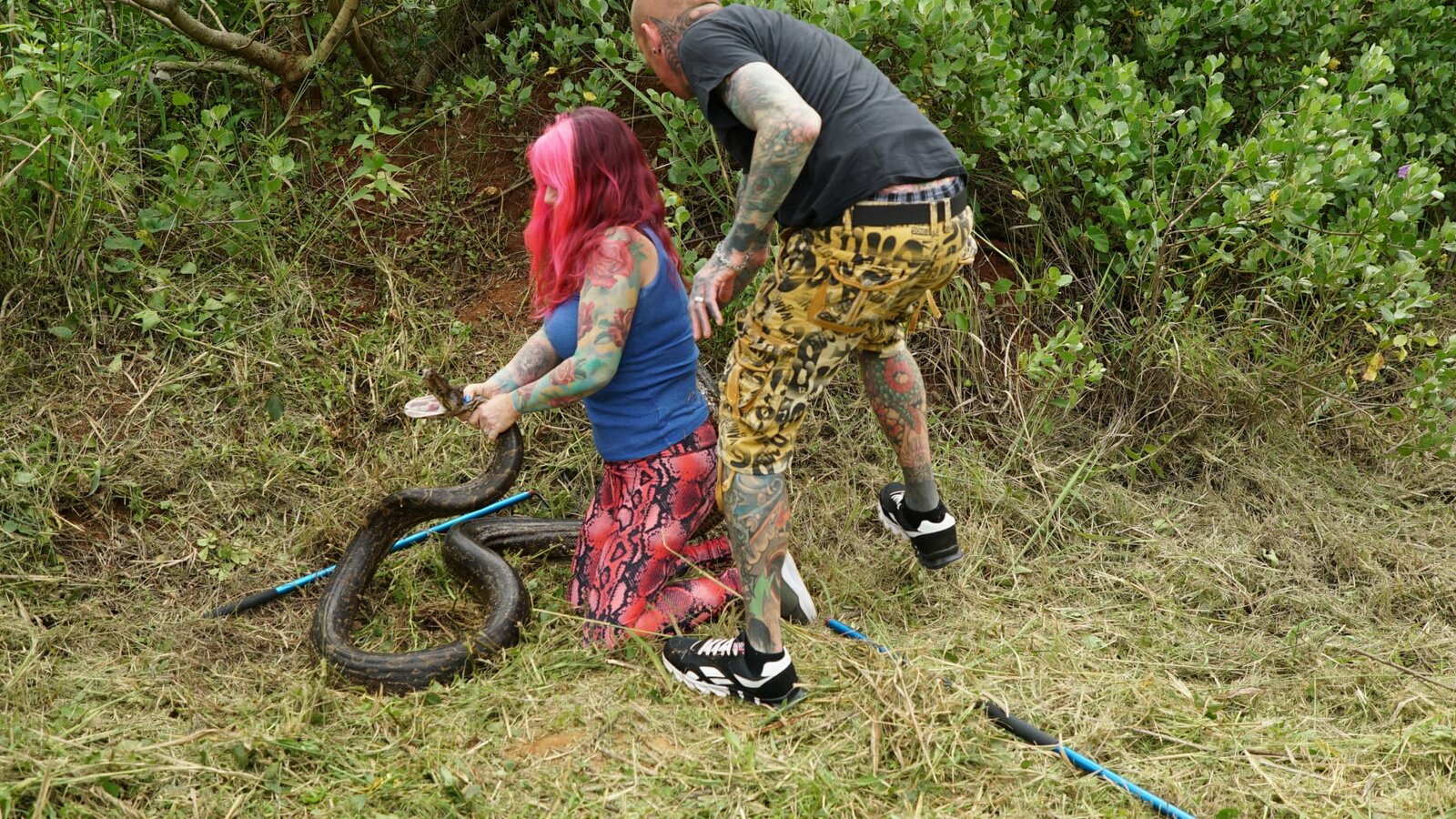
Simon Keys and Siouxsie Gillett securing an African rock python (Python sebae) found on a property in Durban, South Africa. (National Geographic/Dylan Theron)
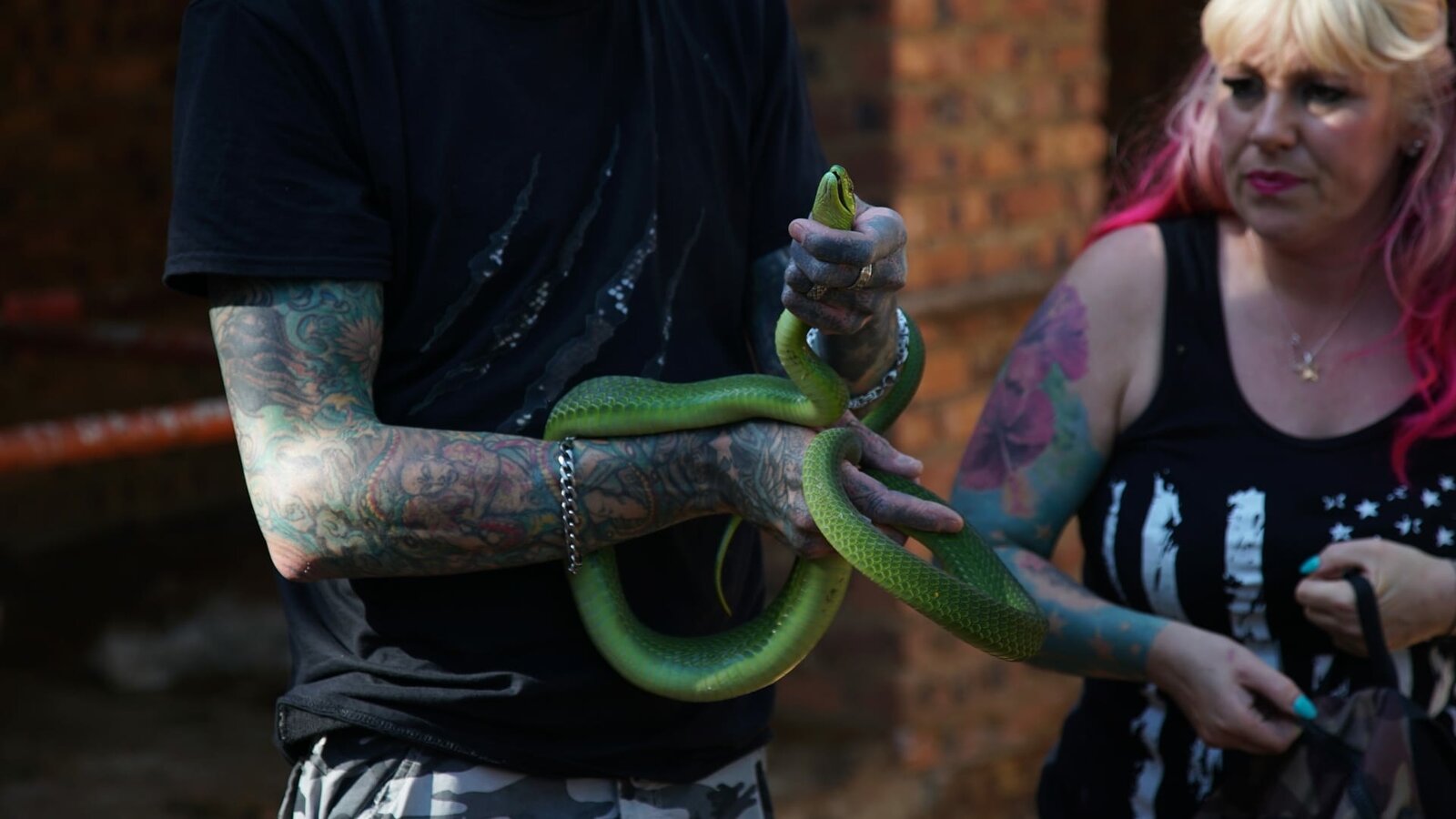
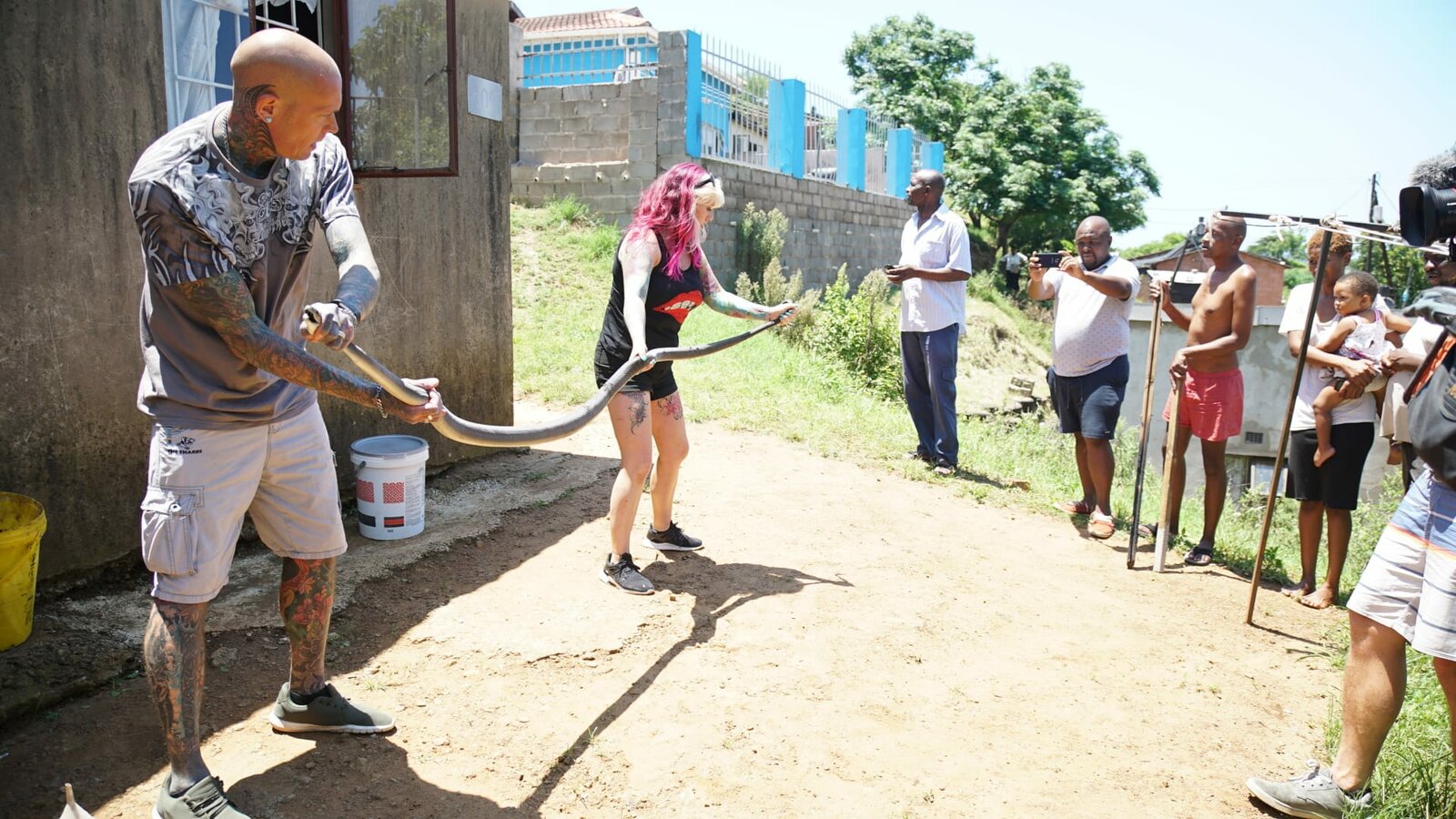
Simon Keys and Siouxsie Gillett holding a deadly black mamba (Dendroaspis polylepis) after Siouxsie successfully caught the snake herself. (National Geographic/Dylan Theron)
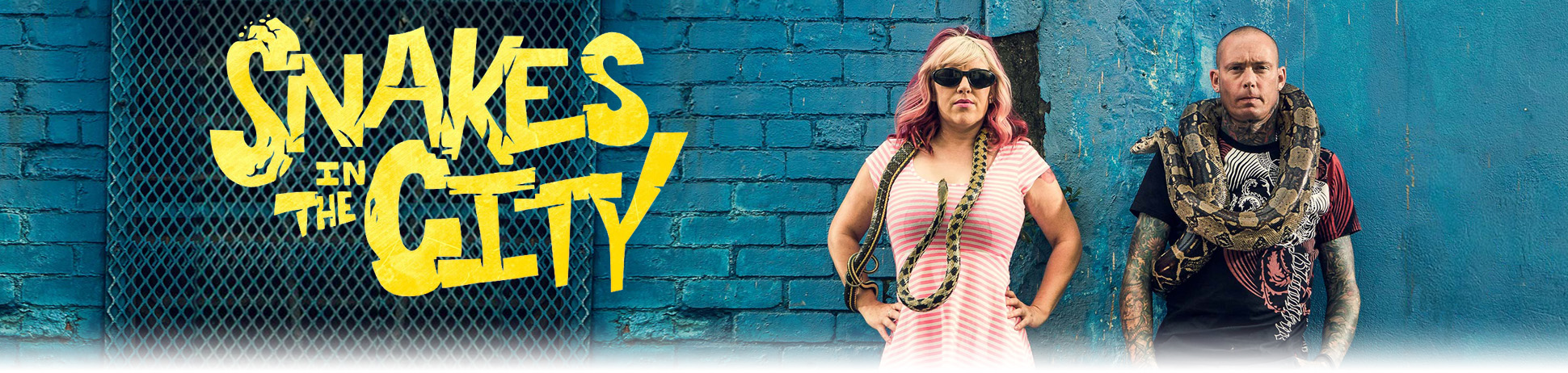
 Sommerzeit ist Mamba-ZeitBild: © Jed Kenny / National Geographic /Jed Kenny / National Geographic